


Adolescent opioid exposure in female rats: transgenerational effects on morphine analgesia and anxiety-like behavior in adult offspring
- PMID: 21138744
- PMCID: PMC3022078
- DOI: 10.1016/j.bbr.2010.11.059
Adolescent opioid exposure in female rats: transgenerational effects on morphine analgesia and anxiety-like behavior in adult offspring
Abstract
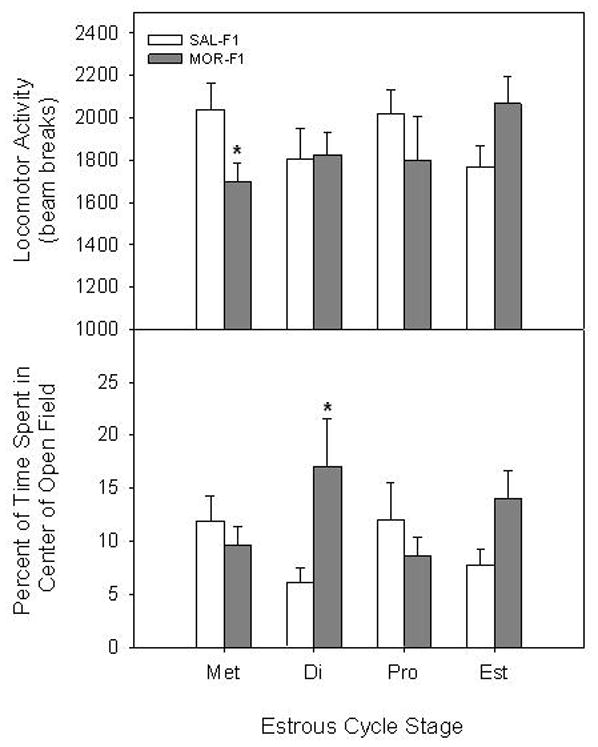
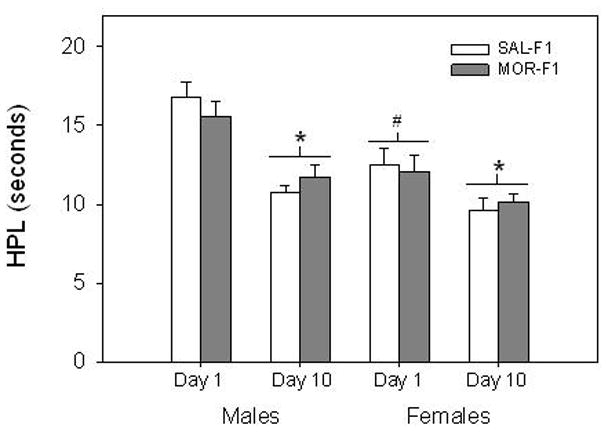
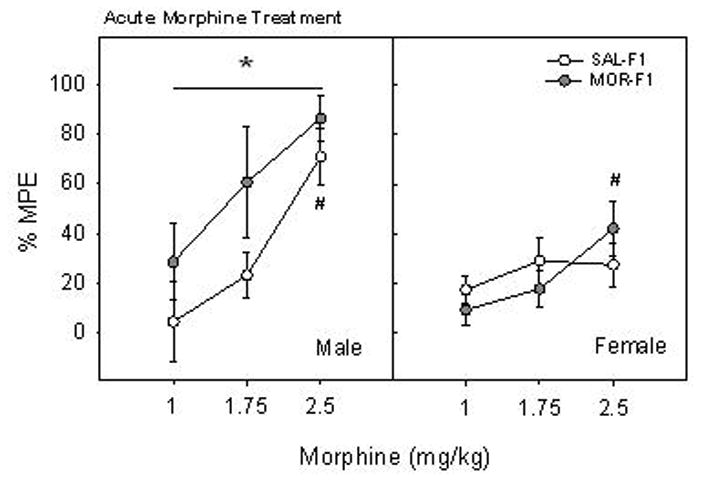
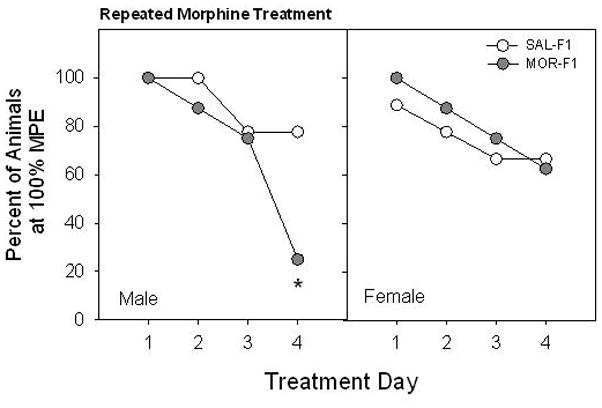
The use of narcotics by adolescent females is a growing problem, yet very little is known about the long-term consequences for either the user or her future offspring. In the current study, we utilized an animal model to examine the transgenerational consequences of opiate exposure occurring during this sensitive period. Female rats were exposed to increasing doses of morphine or its saline vehicle twice daily during adolescent development (postnatal days 30-40), after which they remained drug free. At 60 days of age, all females were mated and their adult offspring were tested for anxiety-like behavior and sensitivity to morphine. Specifically, offspring of adolescent morphine (MOR-F1)- or saline (SAL-F1)-exposed mothers were tested for acute locomotor responses in an open field, followed by testing of acute or chronic morphine analgesia on the hot plate. Open field testing indicated alterations in anxiety-like behavior in MOR-F1 female offspring, with effects dependent upon the stage of the estrus cycle. Hot plate testing revealed sex differences in baseline pain threshold and morphine sensitivity in all offspring, regardless of maternal exposure. However, when compared to their SAL-F1 counterparts, MOR-F1 male offspring demonstrated significantly increased sensitivity to the analgesic effects of acute morphine, and developed analgesic tolerance more rapidly following chronic morphine treatment. The findings indicate that prior opiate exposure during early adolescence in females produces sex-specific alterations of both emotionality and morphine sensitivity in their progeny.
Copyright © 2010 Elsevier B.V. All rights reserved.
Figures
References
-
- Sung HE, Richter L, Vaughan R, Johnson PB, Thom B. Nonmedical use of prescription opioids among teenagers in the united states: Trends and correlates. J Adolesc Health. 2005;37:44–51. - PubMed
-
- Johnston LOMPM, Bachman JG, Schulenberg JE. Overview of key findings, 2007. National Institute on Drug Abuse (NIDA); 2008. Monitoring the future: National results on adolescent drug use.
-
- Genazzani AR, Bernardi F, Monteleone P, Luisi S, Luisi M. Neuropeptides, neurotransmitters, neurosteroids, and the onset of puberty. Ann N Y Acad Sci. 2000;900:1–9. - PubMed
-
- Byrnes EM. Chronic morphine exposure during puberty decreases postpartum prolactin secretion in adult female rats. Pharmacol Biochem Behav. 2005a;80:445–451. - PubMed
