


Distribution and clearance of PEG-single-walled carbon nanotube cancer drug delivery vehicles in mice
- PMID: 21143032
- PMCID: PMC3175610
- DOI: 10.2217/nnm.10.90
Distribution and clearance of PEG-single-walled carbon nanotube cancer drug delivery vehicles in mice
Abstract
Aims: To study the distribution and clearance of polyethylene glycol (PEG)-ylated single-walled carbon nanotube (SWCNTs) as drug delivery vehicles for the anticancer drug cisplatin in mice.
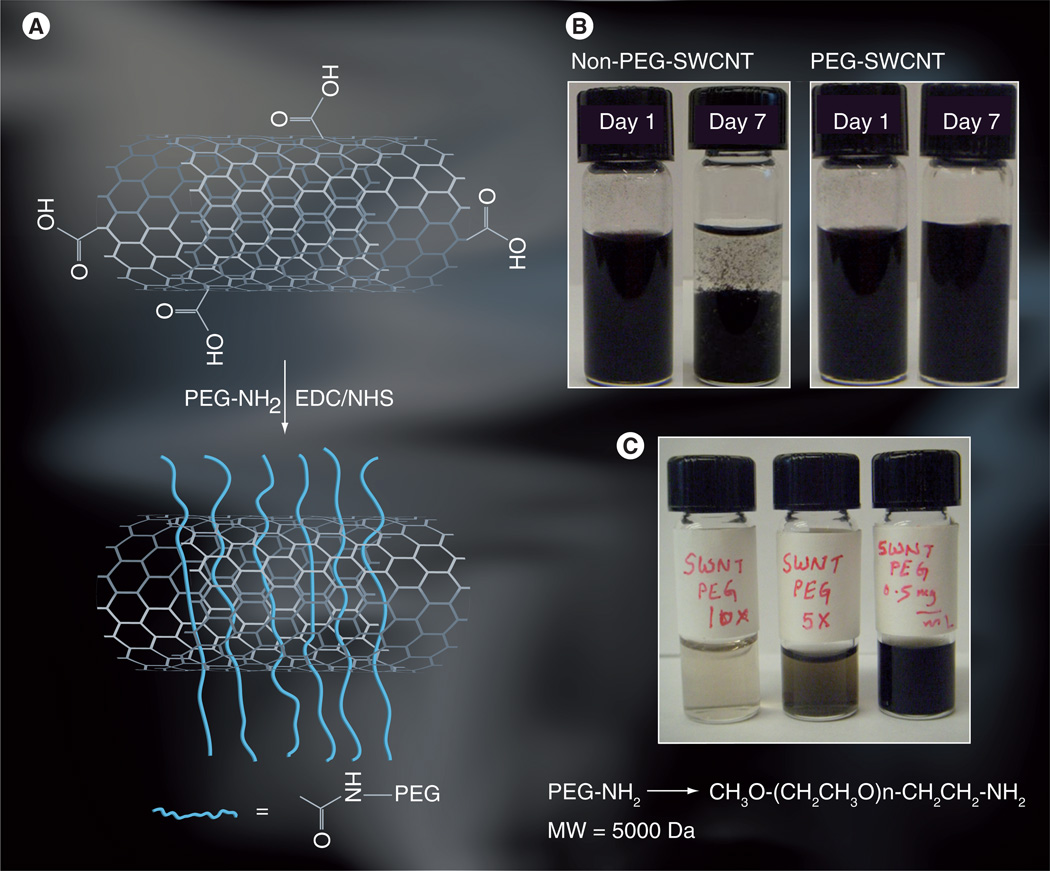
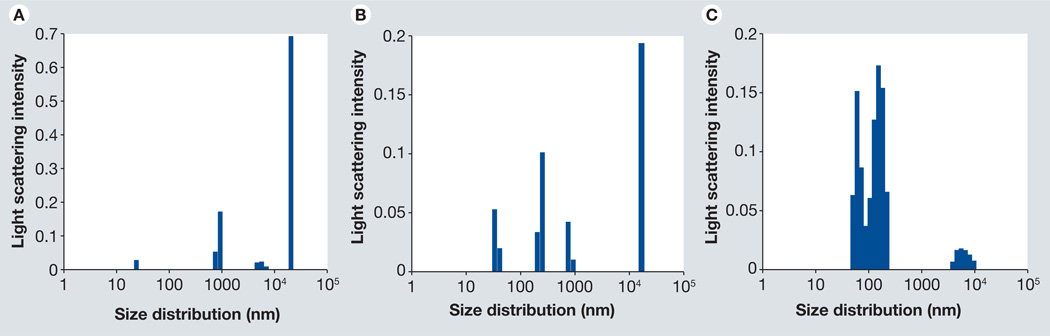
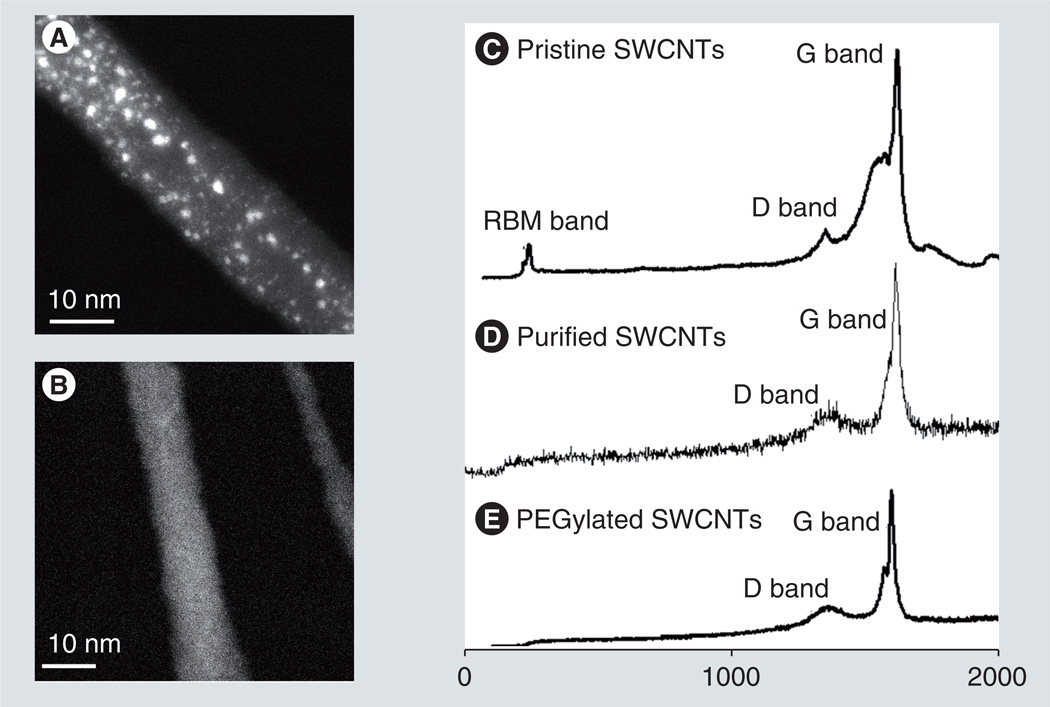
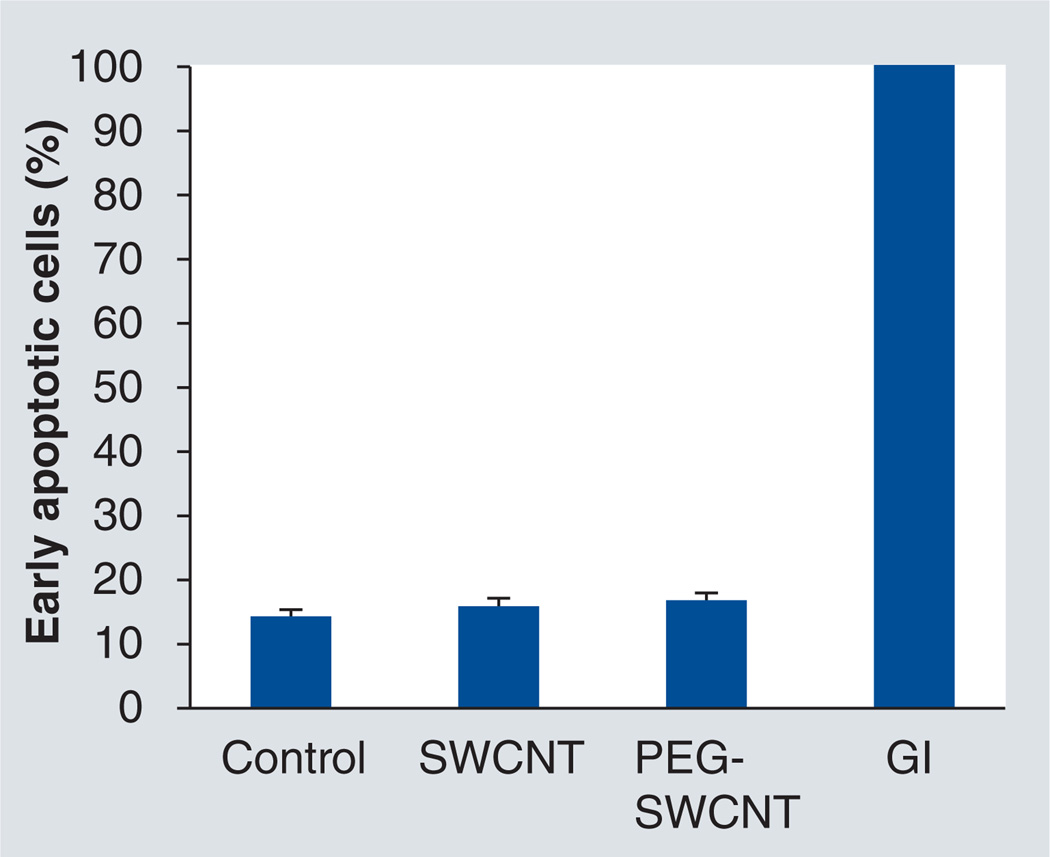
Materials & methods: PEG layers were attached to SWCNTs and dispersed in aqueous media and characterized using dynamic light scattering, scanning transmission electron microscopy and Raman spectroscopy. Cytotoxicity was assessed in vitro using Annexin-V assay, and the distribution and clearance pathways in mice were studied by histological staining and Raman spectroscopy. Efficacy of PEG-SWCNT-cisplatin for tumor growth inhibition was studied in mice.
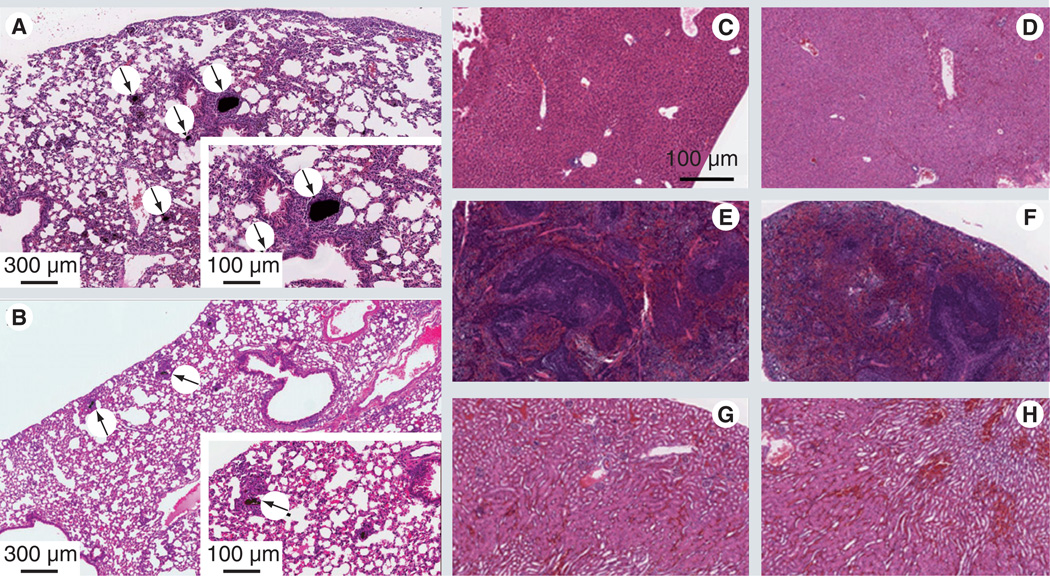
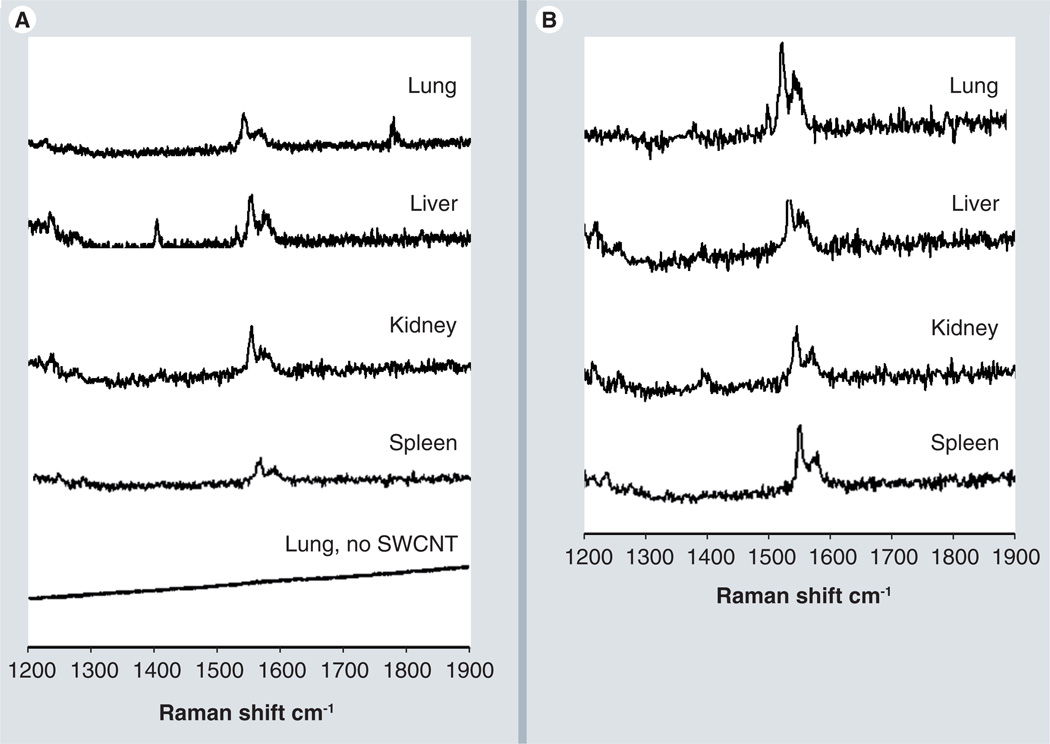
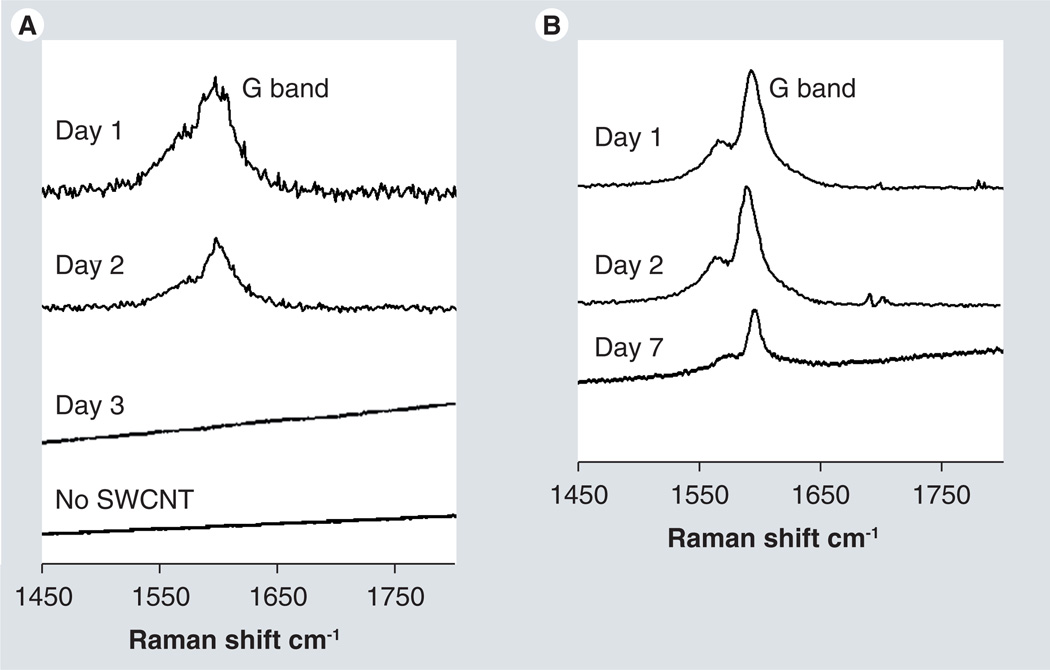
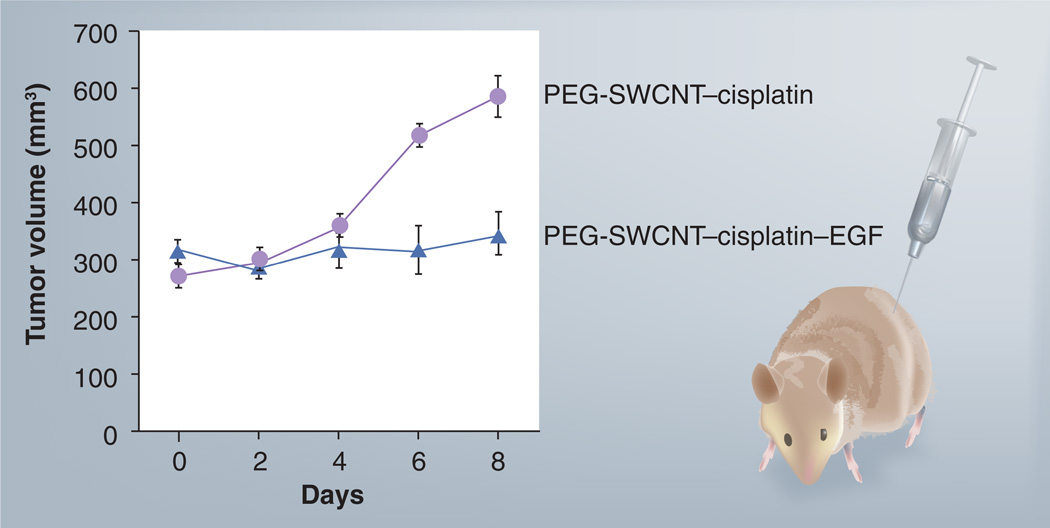
Results & discussion: PEG-SWCNTs were efficiently dispersed in aqueous media compared with controls, and did not induce apoptosis in vitro. Hematoxylin and eosin staining, and Raman bands for SWCNTs in tissues from several vital organs from mice injected intravenously with nanotube bioconjugates revealed that control SWCNTs were lodged in lung tissue as large aggregates compared with the PEG-SWCNTs, which showed little or no accumulation. Characteristic SWCNT Raman bands in feces revealed the presence of bilary or renal excretion routes. Attachment of cisplatin on bioconjugates was visualized with Z-contrast scanning transmission electron microscopy. PEG-SWCNT-cisplatin with the attached targeting ligand EGF successfully inhibited growth of head and neck tumor xenografts in mice.
Conclusions: PEG-SWCNTs, as opposed to control SWCNTs, form more highly dispersed delivery vehicles that, when loaded with both cisplatin and EGF, inhibit growth of squamous cell tumors.
Conflict of interest statement
The authors have no other relevant affiliations or financial involvement with any organization or entity with a financial interest in or financial conflict with the subject matter or materials discussed in the manuscript apart from those disclosed.
No writing assistance was utilized in the production of this manuscript.
Figures
References
-
- Hirsch A. Functionalization of single-walled carbon nanotubes. Angew. Chem. Int. Ed. 2002;41:1853–1859. - PubMed
-
-
Bianco A, Kostarelos K, Prato M. Opportunities and challenges of carbon-based nanomaterials for cancer therapy. Expert Opin. Drug Deliv. 2008;5:331–342. •• Describes the biomedical applications of a variety of carbon nanomaterials studied, especially nanotubes. Discusses the potential benefits and risks of carbon nanomaterials towards clinical application.
-
-
- Dillon AC, Yudasaka M, Dresselhaus MS. Employing Raman spectroscopy to qualitatively evaluate the purity of carbon single-wall nanotube materials. J. Nanosci. Nanotechnol. 2004;4:691–703. - PubMed
-
- Kam S, Dai H. Carbon nanotubes as intracellular protein transporters. generality and biological functionality. J. Am. Chem. Soc. 2005;127:6021–6026. - PubMed
-
- Yang R, Yang X, Zhang Z, et al. Single-walled carbon nanotubes-mediated in vivo and in vitro delivery of siRNA into antigen-presenting cells. Gene Therapy. 2006;13:1714–1723. - PubMed
Publication types
MeSH terms
Substances
Grants and funding
LinkOut - more resources
Full Text Sources
Other Literature Sources
