. 2010 Dec 9;68(5):964-77.
doi: 10.1016/j.neuron.2010.11.017.

Drosophila pacemaker neurons require g protein signaling and GABAergic inputs to generate twenty-four hour behavioral rhythms

Affiliations

Drosophila pacemaker neurons require g protein signaling and GABAergic inputs to generate twenty-four hour behavioral rhythms

David Dahdal et al. Neuron. .

Abstract

Intercellular signaling is important for accurate circadian rhythms. In Drosophila, the small ventral lateral neurons (s-LN(v)s) are the dominant pacemaker neurons and set the pace of most other clock neurons in constant darkness. Here we show that two distinct G protein signaling pathways are required in LN(v)s for 24 hr rhythms. Reducing signaling in LN(v)s via the G alpha subunit Gs, which signals via cAMP, or via the G alpha subunit Go, which we show signals via Phospholipase 21c, lengthens the period of behavioral rhythms. In contrast, constitutive Gs or Go signaling makes most flies arrhythmic. Using dissociated LN(v)s in culture, we found that Go and the metabotropic GABA(B)-R3 receptor are required for the inhibitory effects of GABA on LN(v)s and that reduced GABA(B)-R3 expression in vivo lengthens period. Although no clock neurons produce GABA, hyperexciting GABAergic neurons disrupts behavioral rhythms and s-LN(v) molecular clocks. Therefore, s-LN(v)s require GABAergic inputs for 24 hr rhythms.


Figures

Figure 1
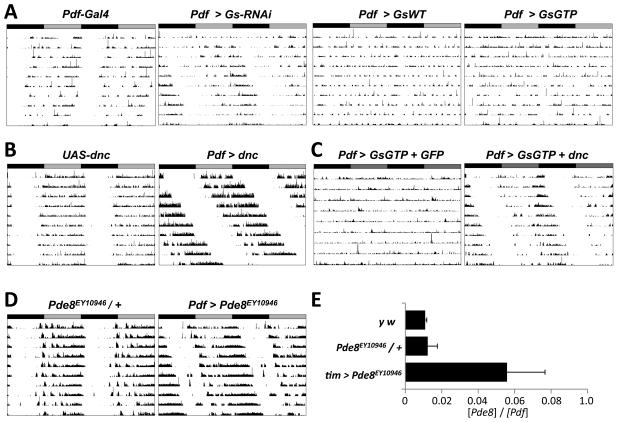
Figure 1. Normal Gs signaling in LNvs is required for 24hr locomotor rhythms
A-D: Representative actograms showing locomotor activity in DD of flies with manipulations to Gs signaling in LNvs. Actograms are double-plotted with gray and black bars indicating prior LD cycles. (A) Left: Control fly homozygous for two Pdf-Gal4 transgenes with 24.0hr period. The next three panels (from left to right) show activity of flies with Pdf-Gal4 expressing transgenes with RNAi directed against Gs (Pdf > Gs-RNAi), wild type Gs (Pdf > Gs) or constitutively active Gs (Pdf > Gs-GTP). Pdf > Gs-RNAi flies had longer period rhythms (25.0hr) than controls (p<.0001 vs PdfGal4 and UAS-Gs-RNAi / + flies). Pdf > Gs and Pdf > Gs-GTP flies were either arrhythmic or had weaker rhythms than controls. (B) Left: fly with a UAS-dnc transgene (UAS-dnc, 24.0hr). Right: fly with UAS-dnc expressed in LNvs (Pdf > dnc, 26.6hr). Pdf > dnc flies have longer periods than controls (p<.001). (C) Flies with Pdf-Gal4 expressing UAS-Gs-GTP and either a UAS-CD8::GFP transgene (Pdf > GsGTP + GFP, left) or a UAS-dnc transgene (Pdf > GsGTP + dnc, right). (D) Left: Fly heterozygous for a P-element in Pde8 (Pde8EY10946 / +, 24.2hr). Right: Fly with Pde8 mis-expressed in LNvs (Pdf > Pde8EY10946, 25.0hr, right). Pdf > Pde8EY10946 flies have longer periods than controls (p<.001). (E) RNA was isolated from heads of y w and Pde8EY10946 / + control flies and from flies with tim(UAS)-Gal4 mis-expressing Pde8EY10946 (tim > Pde8EY10946). Levels of Pde8 and Pdf RNA were measured by qPCR and the relative level (Pde8 : Pdf) plotted, with error bars showing SEM. Since tim > Pde8EY10946 flies have more Pde8 RNA than controls (p<0.01), Gal4-activated Pde8EY10946 mis-expresses Pde8.
Figure 2
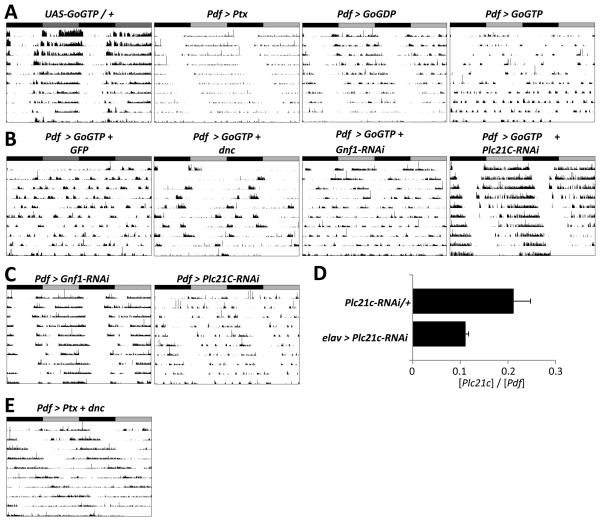
Figure 2. Go signaling in LNvs requires Plc21C for 24hr behavioral rhythms
Representative actograms for flies in DD as in Figure 1. (A) Left: A control fly heterozygous for a constitutively active Go transgene (UAS-Go-GTP / +, 23.6 hr). The next panels (left to right) show activity of flies with Pdf-Gal4 expressing transgenes with Pertussis toxin (Pdf > Ptx, 25.2hr), constitutively inactive Go (Pdf > Go-GDP, 25.0hr) or constitutively active Go (Pdf > Go-GTP). Pdf > Ptx and Pdf > Go-GDP flies had significantly longer rhythms than controls (p<.001 vs Pdf-Gal4). Pdf > Go-GTP flies either became arrhythmic during DD or had shorter rhythms than control flies (22.3hr, p<.001 vs Pdf-Gal4 and UAS-Go-GTP / + flies). (B) Pdf > Go-GTP flies expressing a third transgene. From left to right: UAS-CD8::GFP control (Pdf > Go-GTP + GFP), UAS-dnc (Pdf > Go-GTP + dnc), control RNAi to Gnf1 (Pdf > Go-GTP + Gnf1-RNAi) and RNAi to Plc21C (Pdf > Go-GTP + Plc21C-RNAi). Pdf > Go-GTP + Plc21CRNAi flies had stronger rhythms than Pdf > Go-GTP + Gnf1-RNAi flies (p <.001). (C) Flies with a control RNAi (Pdf > Gnf1-RNAi, 24.3hr, left) or RNAi against Plc21C (Pdf > Plc21C, 25.1hr, right). Pdf > Plc21C-RNAi flies have longer periods than control flies (p<.001 vs Pdf > Gnf1). (D) qPCR on RNA isolated from adult fly heads from either UAS-Plc21C-RNAi / + heterozygotes or flies with elav-Gal4 expressing UAS-Plc21C-RNAi in post-mitotic neurons (elav > Plc21CRNAi). The relative levels of Plc21C and Pdf RNA are plotted. elav > Plc21C-RNAi flies have less Plc21C RNA than controls (p=0.05). (E) Locomotor activity of a fly co-expressing UAS-dnc and UAS-Ptx in LNvs (Pdf > dnc + Ptx). Pdf > dnc + Ptx flies had longer periods (28.4hr) than Pdf > dnc and Pdf > Ptx flies (p <.001).
Figure 3
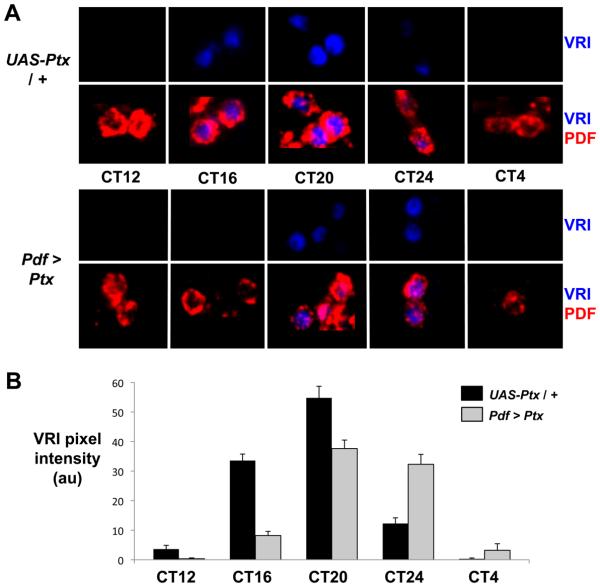
Figure 3. Molecular clock progression is delayed by inhibiting Go signaling
(A) Representative confocal images of s-LNvs on days 3-4 in DD stained for VRI (blue) and PDF (red) in UAS-Ptx / + control flies (top panels) and Pdf > Ptx flies (bottom). Data is quantified in (B) for UAS-Ptx / + controls (black) and Pdf > Ptx (gray) with error bars showing SEM.
Figure 4
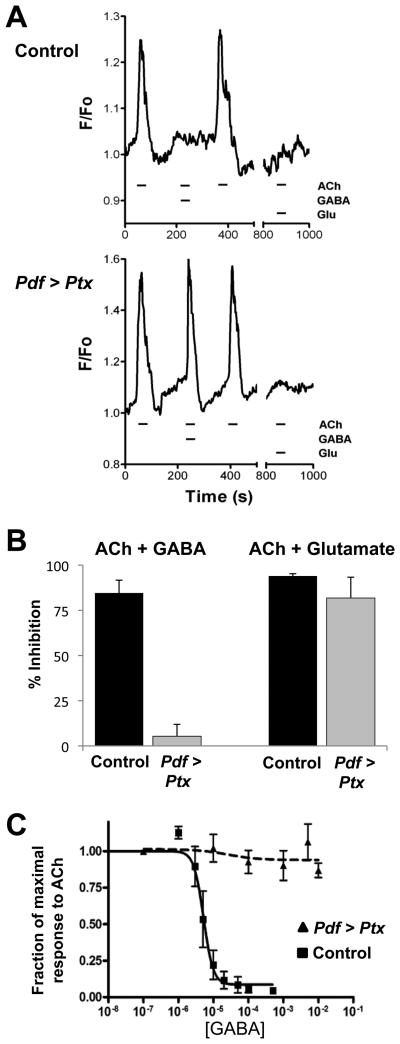
Figure 4. Go is required for the inhibitory effects of GABA on larval LNvs
(A) Representative fluorescence measurements from dissociated larval LNvs when 10μM acetylcholine (ACh) was applied alone or together with 100μM GABA or glutamate (Glu). Upper traces are LNvs with Pdf-Gal4 expressing UAS-G-CaMP (Control). Lower traces are LNvs with Pdf-Gal4 expressing UAS-G-CaMP and UAS-Ptx (Pdf > Ptx). (B) Quantitation of inhibition by GABA (left) or glutamate (right) of 10μM ACh-induced Ca2=-responses for Control (black) and Pdf > Ptx (gray) LNvs. Ptx prevented GABA-mediated inhibition (p<.001 vs Pdf > G-CaMP, n=9) but had no effect on glutamate inhibition (p>.2, n=5). (C) Dose-response curve for GABA on Control (squares, solid line) and Pdf > Ptx (triangles, dashed line) LNvs. IC50 for control LNvs is 3.8μM but was unmeasurable for Pdf > Ptx LNvs.
Figure 5
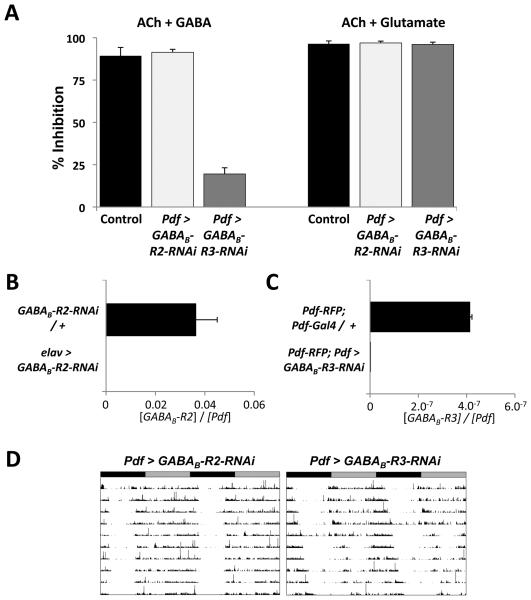
Figure 5. RNAi to the metabotropic GABA receptor GABAB-R3 subunit reduces inhibition by GABA and lengthens period of adult locomotor rhythms
(A) Quantification of inhibition of Ca2=-responses for ACh + GABA (left) or ACh + glutamate (right) compared to ACh. LNvs from larvae with Pdf-Gal4 and UAS-G-CaMP and either no other transgenes (Control, black bars, 89% inhibition), UAS-GABAB-R2-RNAi on Chr. III (Pdf > GABAB-R2-RNAi, light gray, 91% inhibition, p>.5 vs Control) or UAS-GABAB-R3-RNAi (Pdf > GABAB-R3-RNAi, dark gray, 19.5% inhibition, p<.001 vs Control). (B) Adult head RNA levels of GABAB-R2 and Pdf were measured as in Figure 2 from either UAS-GABAB-R2-RNAi heterozygotes (GABAB-R2-RNAi / +) or flies with elav-Gal4 expressing UAS-GABAB-R2-RNAi (elav > GABAB-R2-RNAi). GABAB-R2 RNA levels were lower in elav > GABAB-R2-RNAi flies (p<0.01). (C) GABAB-R3 and Pdf RNA levels measured by qPCR on amplified RNA from adult LNvs isolated from Pdf-RFP; Pdf-Gal4 / + controls or flies which also had UAS-GABAB-R3-RNAi (PdfRFP; Pdf > GABAB-R3-RNAi). GABAB-R3 RNA levels were reduced in Pdf-RFP; Pdf > GABABR3-RNAi flies (p<0.02). Pdf RNA levels were ~2.5-fold higher with GABAB-R3-RNAi flies and so the extent of knockdown with this RNAi transgene (>400-fold) may be over-estimated. (D) Representative actograms of adult flies expressing either GABAB-R2-RNAi (Pdf > GABABR2-RNAi, left) or GABAB-R3-RNAi (Pdf > GABAB-R3-RNAi, right) in LNvs. Pdf > GABAB-R3-RNAi flies have longer period rhythms than Pdf > GABAB-R2-RNAi flies (24.9hr vs 24.3hr, p <.001).
Figure 6
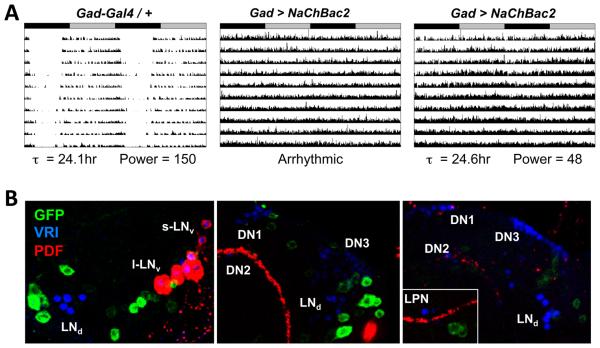
Figure 6. Hyper-exciting GABAergic neurons causes behavioral arrhythmicity
(A) Representative actograms of heterozygous control Gad-Gal4 / + fly (left) and two flies with Gad-Gal4 expressing UAS-NaChBac2 (Gad > NaChBac2, center and right). ClockLab marked the Gad > NaChBac2 center fly as arrhythmic while the fly on the right as having a period of 24.6hr and a low power rhythm. Rhythmic Gad > NaChBac2 flies had weaker power rhythms then control flies (p<.001). (B) Localization of Gad-Gal4 expression using a UAS-CD8::GFP reporter in three individual brains stained at ZT20 with antibodies to GFP (green), VRI (blue, marks all clock neurons) and PDF (red). Although some GFP+ neurons are close to VRI+ clock neurons, there is no obvious co-localization of VRI and GFP. Images are representative of 13 brain lobes.
Figure 7
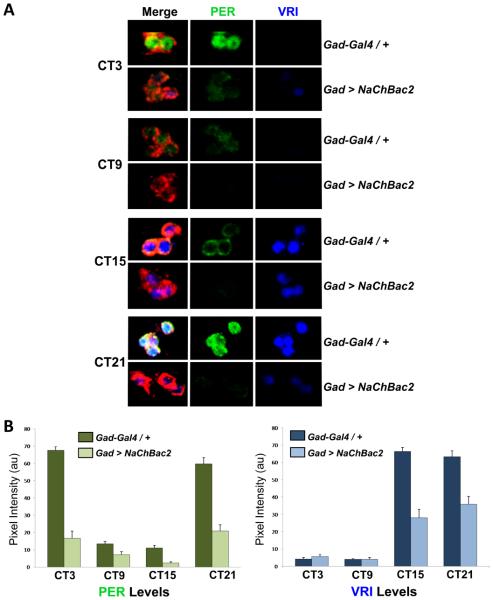
Figure 7. Hyper-exciting GABAergic neurons disrupts s-LNv molecular rhythms
(A) Representative confocal images of s-LNvs at 4 timepoints on day 3 in DD using antibodies to PER (green), VRI (blue), and PDF (red) in Gad-Gal4 / + control flies (top panels) and Gad > NaChBac2 flies (bottom panels). Data are quantified in (B) for Gad-Gal4 / + controls (dark green and dark blue bars for PER and VRI respectively) and for Gad > NaChBac2 (light green and light blue) with SEM shown. Experiments were carried out on 3 separate days with at least 12 brains and 30 clearly identifiable s-LNvs measured in total.

References

    1. Agosto J, Choi JC, Parisky KM, Stilwell G, Rosbash M, Griffith LC. Modulation of GABAA receptor desensitization uncouples sleep onset and maintenance in Drosophila. Nat Neurosci. 2008;11:354–359. - PMC - PubMed
    1. Albert JL, Lingle CJ. Activation of nicotinic acetylcholine receptors on cultured Drosophila and other insect neurones. J Physiol. 1993;463:605–630. - PMC - PubMed
    1. Allada R, Emery P, Takahashi JS, Rosbash M. Stopping time: the genetics of fly and mouse circadian clocks. Annu Rev Neurosci. 2001;24:1091–1119. - PubMed
    1. Balsalobre A, Damiola F, Schibler U. A serum shock induces circadian gene expression in mammalian tissue culture cells. Cell. 1998;93:929–937. - PubMed
    1. Blanchard FJ, Collins B, Cyran SA, Hancock DH, Taylor MV, Blau J. The transcription factor Mef2 is required for normal circadian behavior in Drosophila. J Neurosci. 2010;30:5855–5865. - PMC - PubMed

Publication types

MeSH terms

Substances

LinkOut - more resources