. 2010 Dec 10;143(6):911-23.
doi: 10.1016/j.cell.2010.11.029.

Loss of anion transport without increased sodium absorption characterizes newborn porcine cystic fibrosis airway epithelia

Affiliations

Loss of anion transport without increased sodium absorption characterizes newborn porcine cystic fibrosis airway epithelia

Jeng-Haur Chen et al. Cell. .

Abstract

Defective transepithelial electrolyte transport is thought to initiate cystic fibrosis (CF) lung disease. Yet, how loss of CFTR affects electrolyte transport remains uncertain. CFTR⁻(/)⁻ pigs spontaneously develop lung disease resembling human CF. At birth, their airways exhibit a bacterial host defense defect, but are not inflamed. Therefore, we studied ion transport in newborn nasal and tracheal/bronchial epithelia in tissues, cultures, and in vivo. CFTR⁻(/)⁻ epithelia showed markedly reduced Cl⁻ and HCO₃⁻ transport. However, in contrast to a widely held view, lack of CFTR did not increase transepithelial Na(+) or liquid absorption or reduce periciliary liquid depth. Like human CF, CFTR⁻(/)⁻ pigs showed increased amiloride-sensitive voltage and current, but lack of apical Cl⁻ conductance caused the change, not increased Na(+) transport. These results indicate that CFTR provides the predominant transcellular pathway for Cl⁻ and HCO₃⁻ in porcine airway epithelia, and reduced anion permeability may initiate CF airway disease.


Figures

Figure 1
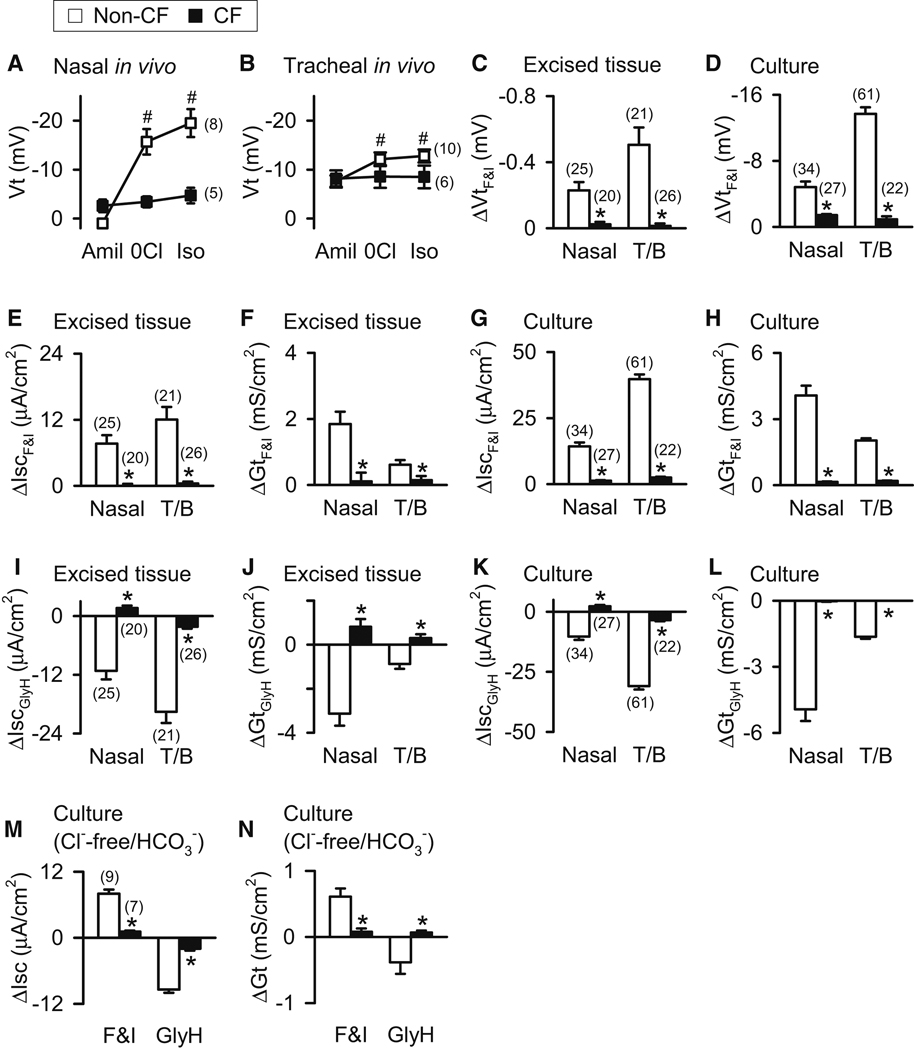
Figure 1. Loss of CFTR decreases anion transport in CF airway epithelia
Data are means ± SE from newborn CFTR+/+ (open symbols and bars) and CFTR−/− (closed symbols and bars) pigs. Amiloride (100 µM) was present on the apical surface in all cases. Numbers in parentheses indicate n, * indicates P<0.05 between CF and non-CF, and T/B indicates tracheal/bronchial. A,B. Vt measured in vivo in nasal and tracheal epithelia in the presence of amiloride (100 µM), during perfusion with a Cl-free solution (0Cl) containing amiloride, and during perfusion with a Cl-free solution containing isoproterenol (10 µM) and amiloride. Nasal epithelia include data from 4 non-CF and 4 CF pigs that were previously reported (Rogers et al., 2008b). # indicates P<0.05 compared to initial value. C–H. Change in Vt, Isc, and Gt induced by adding 10 µM forskolin and 100 µM IBMX (ΔVtF&I, ΔIscF&I, and ΔGtF&I) to excised and cultured nasal and tracheal/bronchial epithelia. I–L. Change in Isc (ΔIscGlyH) and Gt (ΔGtGlyH) following addition of GlyH-101 (100 µM) to excised and cultured nasal and tracheal/bronchial epithelia. M–N. CFTR-mediated HCO3 transport in cultured tracheal epithelia. Solution was Cl-free and contained 25 mM HCO3. Data are ΔIsc and ΔGt following addition of forskolin and IBMX and GlyH-101. See also Fig. S1.
Figure 2
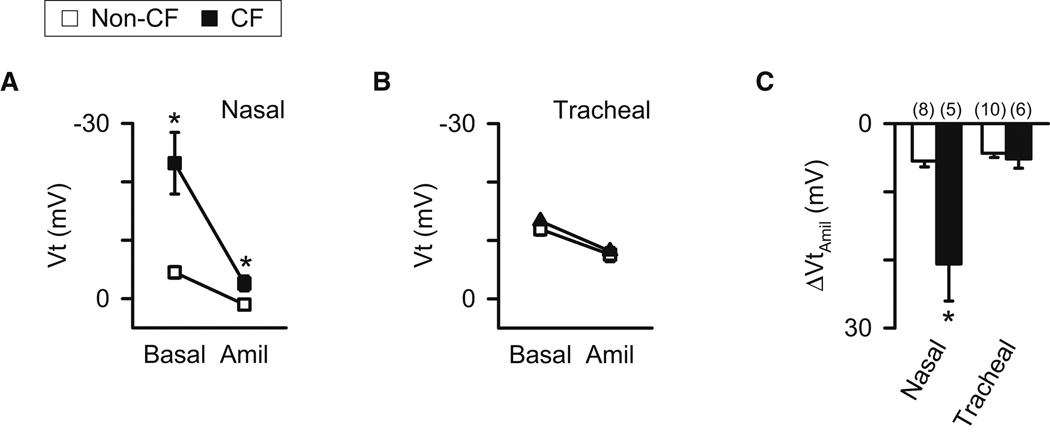
Figure 2. Vt in vivo is abnormal in CF nasal epithelia, but not tracheal epithelia
Data are means ± SE from CFTR+/+ (open symbols and bars) and CFTR−/− (closed symbols and bars) pigs. A,B. Effects of amiloride (100 µM) on nasal and tracheal Vt in vivo. C. Amiloride-sensitive change in Vt (ΔVtamiloride) in vivo. * indicates P<0.05 compared to non-CF.
Figure 3
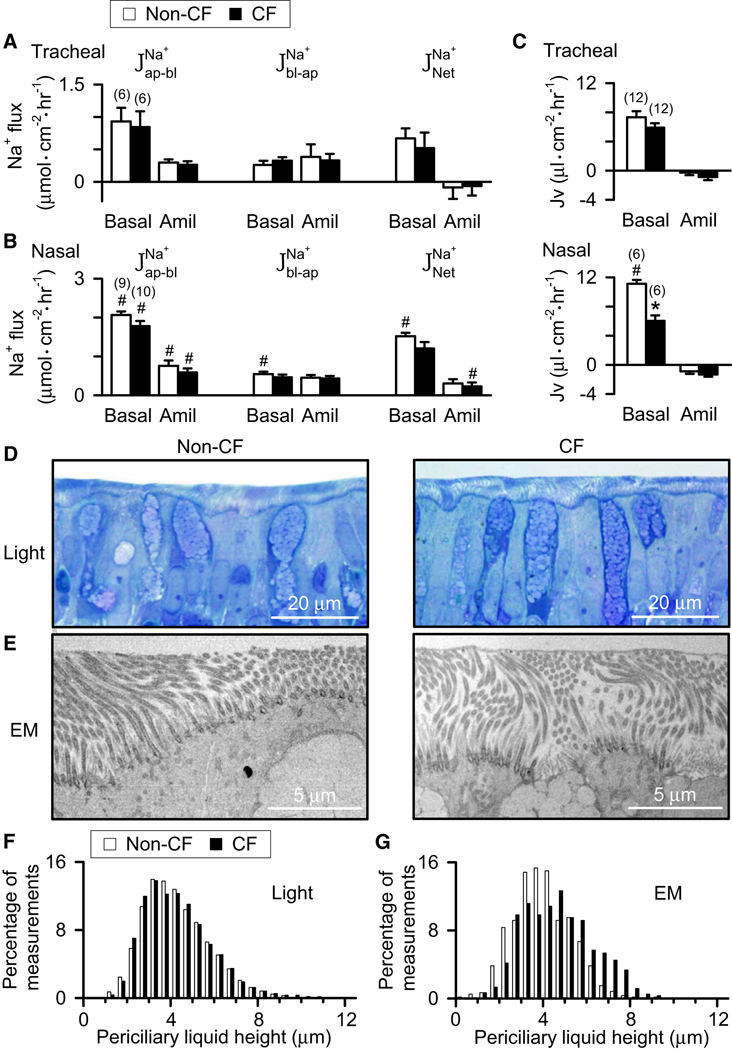
Figure 3. Porcine CF epithelia do not hyperabsorb Na+
Data are means ± SE from newborn CFTR+/+ (open bars) and CFTR−/− (closed bars) pigs. Numbers in parentheses indicate n; * indicates P<0.05. A,B. Isotopic 22Na+ unidirectional and net Na+ flux rates under basal conditions and after adding 100 µM amiloride apically. JapblNa+ indicates Na+ flux from the apical (ap) to the basolateral (bl) surface, JblapNa+ indicates flux in the opposite direction, and JnetNa+ indicates net flux. # indicates that value in nasal epithelia differed from that in tracheal epithelia, p < 0.05. C. Rate of liquid absorption (Jv) in differentiated primary cultures of nasal and tracheal epithelia under basal conditions and after adding 100 µM amiloride apically. # indicates that value in nasal epithelia differed from that in tracheal epithelia, p < 0.05. In panels A–C, the basal electrophysiological properties of matched epithelia are shown in Table S2. D. Examples of light microscopic images of tracheal epithelia. Note heterogeneity in depth of periciliary liquid in both non-CF and CF epithelia. E. Examples of transmission electron microscopic images of tracheal epithelia showing periciliary liquid. F. Histogram of periciliary liquid depth over tracheal epithelia obtained from light microscopic images. N=9,140 non-CF and 6,260 CF measurements. Multiple images were made from each of 4 segments of trachea obtained from 8 non-CF and 5 CF animals. See Methods for additional details. Three observers unaware of genotype then measured periciliary liquid depth using a standardized protocol. A linear mixed model and maximum likelihood estimation were used to calculate means and standard errors allowing for variability between observers, measurements, images, segments and pigs. There was no significant difference between periciliary liquid depth in non-CF and CF epithelia (p=0.96), and the difference was 0.71 µm or less with 95% confidence. The residual variability on the same image had an estimated standard deviation of 1.29 µm and between images was 0.60 µm. For comparison, non-CF trachea was air-exposed and showed a reduced height of periciliary liquid (2.81 µm). G. Histogram of periciliary liquid depth measured from transmission electron microscopic images. N=600 measurements for each genotype and 5 animals per genotype. There was no significant difference in periciliary liquid depth between non-CF and CF, p=0.12. For comparison the standard deviations of measurements on an image and between images were both 0.95 µm.
Figure 4
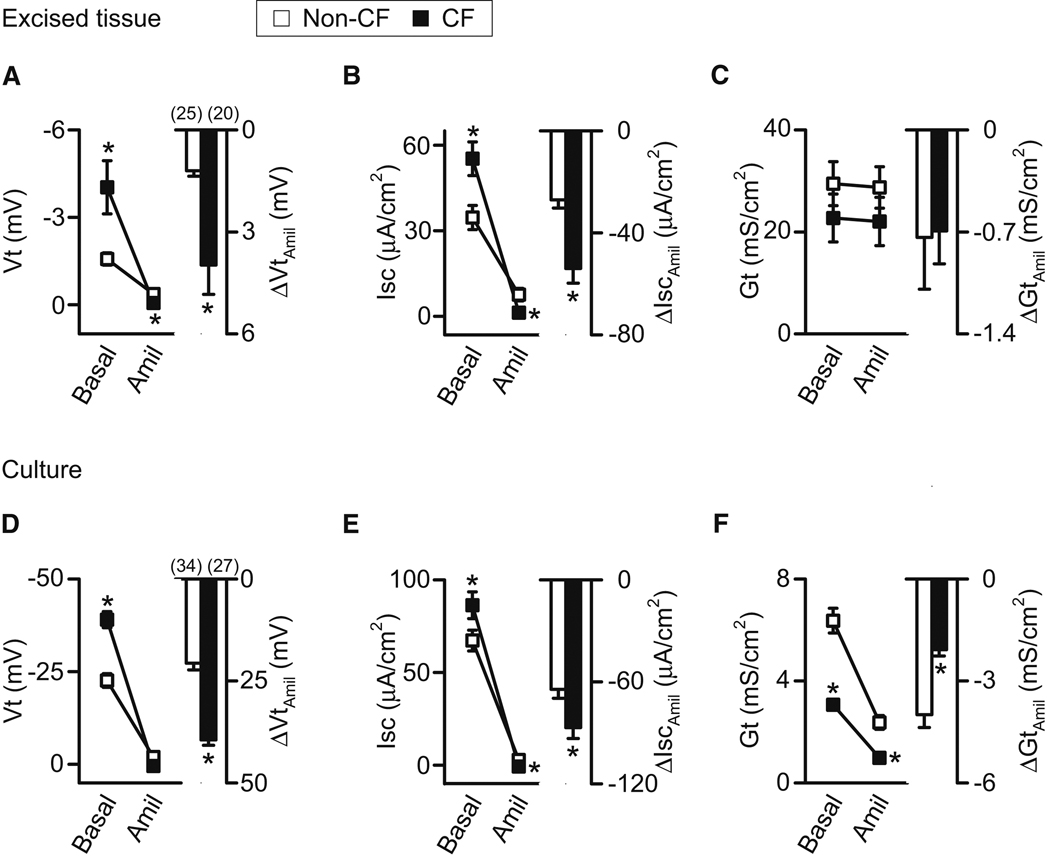
Figure 4. Amiloride alters electrical properties in non-CF and CF nasal epithelia
Data are means ± SE from CFTR+/+ (open symbols and bars) and CFTR−/− (closed symbols and bars) pigs. Numbers in parentheses indicate n, and * indicates P<0.05. A–F. Effects of adding amiloride (100 µM) to the apical solution on Vt, Isc and Gt of freshly excised (A–C) and differentiated primary cultures (D–F) of nasal epithelia. ΔVtamil, ΔIscamil, and ΔGtamil indicate changes induced by amiloride. See also Fig. S2.
Figure 5
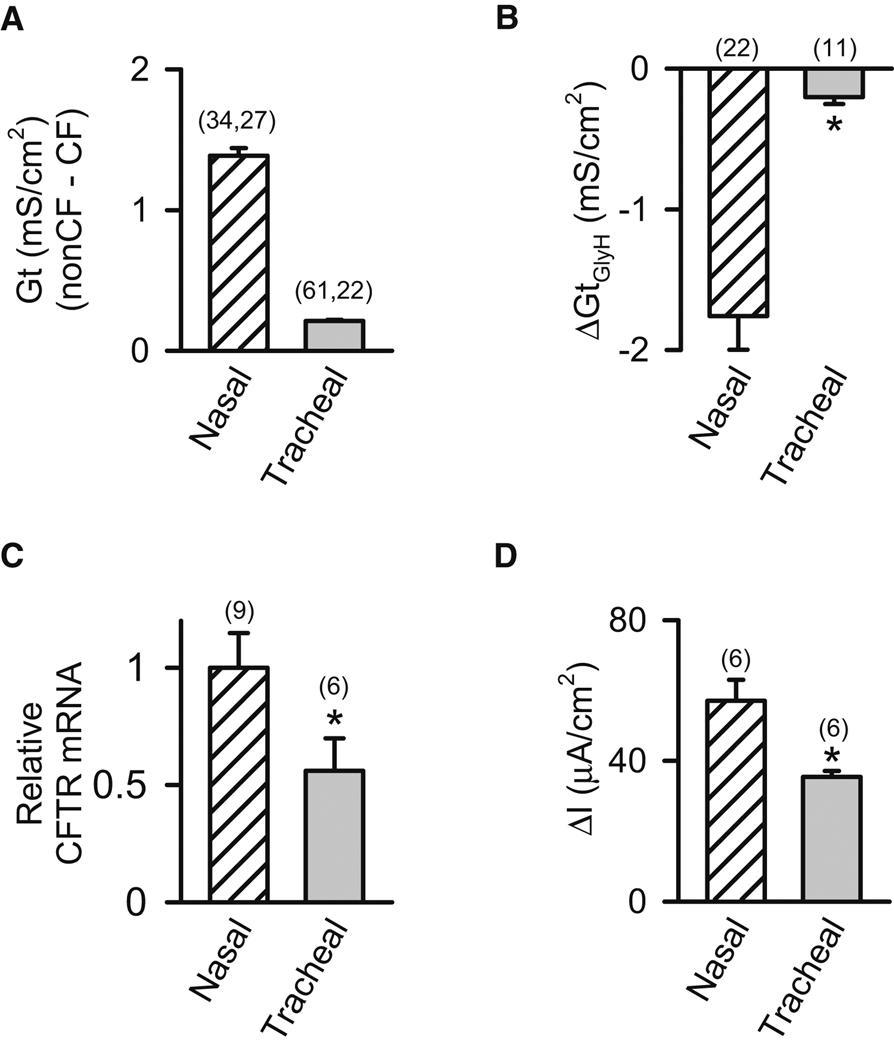
Figure 5. Non-CF nasal epithelia have a larger Cl conductance than tracheal/bronchial epithelia
Data are means ± SE from nasal (cross-hatched bars) and tracheal/bronchial (shaded bars) epithelia. Amiloride (100 µM) was present on the apical surface in panels A, B, and D. Numbers in parentheses indicate n, and * indicates P<0.05. A. Difference between Gt in cultured non-CF and CF epithelia. B. Change in Gt (ΔGtGlyH) following addition of 100 µM GlyH-101 to cultured non-CF epithelia. C. Relative CFTR mRNA by q-RT-PCR in primary cultures of non-CF epithelia. D. Apical Cl currents measured in nasal and tracheal epithelia from non-CF cultured epithelia. Apical solution was Cl-free with 100 µM amiloride, 100 µM DIDS, 10 µM forskolin, and 100 µM IBMX, and basolateral solution contained 139.8 mM Cl. Data are current following permeabilization of basolateral membrane with nystatin (0.36 mg.ml−1). See also Fig. S3.
Figure 6
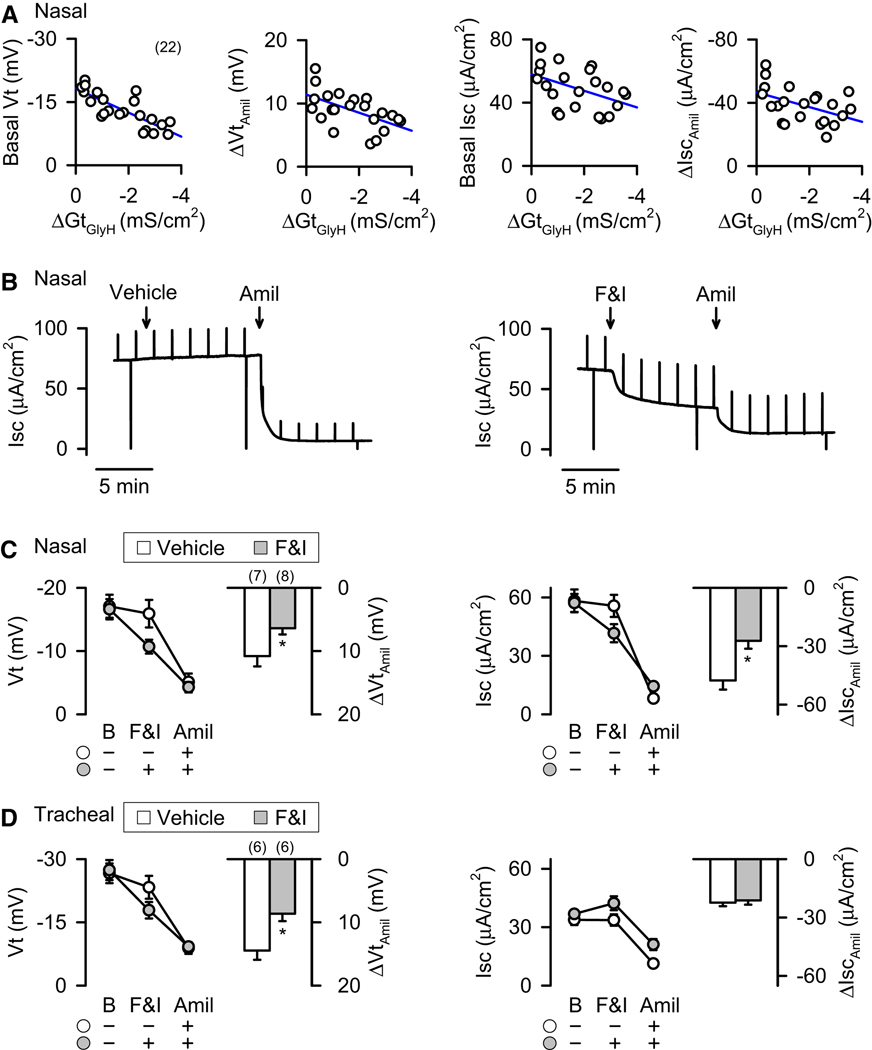
Figure 6. Increased Cl conductance is associated with reduced basal and amiloride-sensitive Vt and Isc
A. Relationship between basal Vt, ΔVtamil, basal Isc, and ΔIscamil and the change in Gt produced by adding apical 100 µM GlyH-101 (ΔGtGlyH) in the presence of amiloride. Epithelia were cultured non-CF nasal epithelia. Each data point represents a different epithelium. Blue lines indicate linear regression fits to data. Correlation coefficients and p values were: basal Vt, R = −0.831, p < 0.001; ΔVtamil, R = 0.592, p < 0.005; basal Isc, R = −0.495, p < 0.02; and ΔIscamil, R = 0.450, p < 0.05. Spearman rank order correlation was used to test statistical significance. B,C. Effect of 10 µM forskolin and 100 µM IBMX (F&I) or vehicle control on basal Vt and Isc and on changes induced by 100 µM amiloride in cultured nasal epithelia. Panel B shows representative experiments, and panel C shows means ± SE. “B” indicates basal. * indicates P<0.05 vs. vehicle controls. D. Same as panel C, except tracheal epithelia.
Figure 7
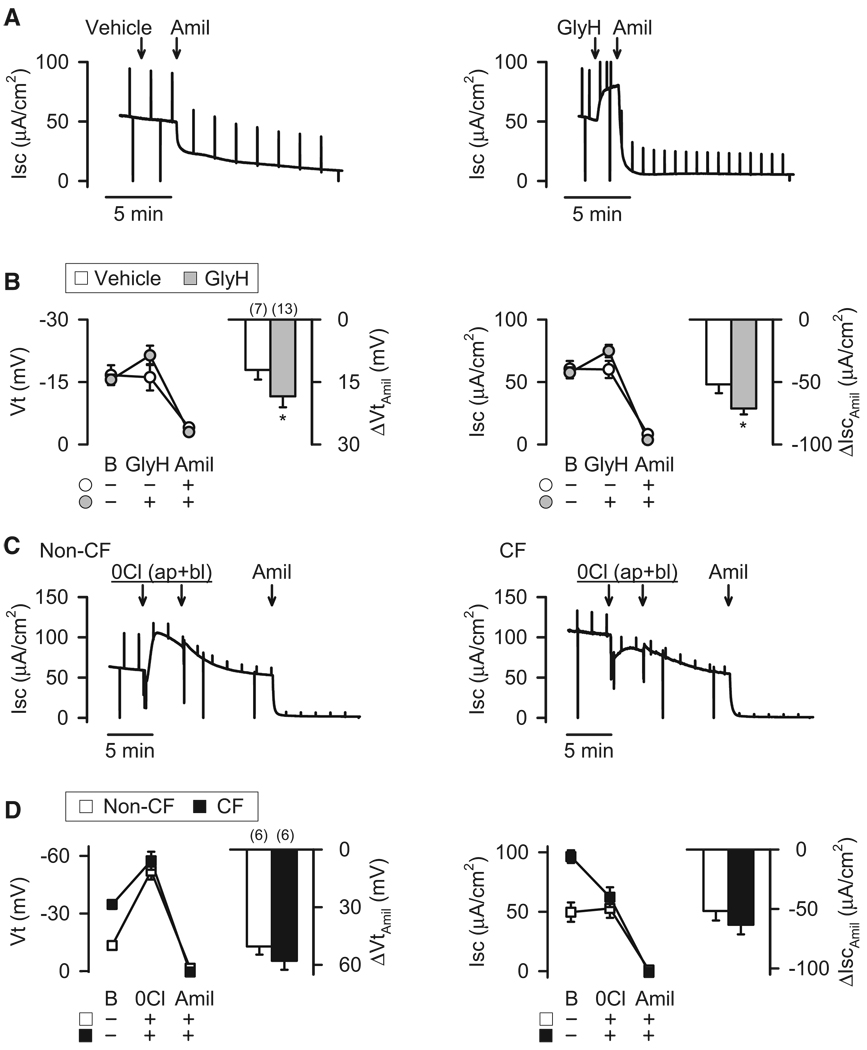
Figure 7. A decreased Cl conductance reduces the difference between CF and non-CF Vt and Isc
Epithelia were cultured non-CF nasal epithelia. A,B. Effect of GlyH-101 (100 µM) on Vt and Isc and the response to 100 µM amiloride. Panel A shows representative experiments, and panel B shows means ± SE. “B” indicates basal. * indicates P<0.05 vs. vehicle controls. C,D. Effect of Cl-free apical (ap) and basolateral (bl) solutions on the response to amiloride in non-CF and CF epithelia. Panel C shows representative experiments in non-CF (left) and CF (right) epithelia, and panel D shows means ± SE. The two arrows for the change to Cl-free solution in panel C indicate two exchanges of bathing solution. * indicates P<0.05 vs. non-CF controls.

References

    1. Azad AK, Rauh R, Vermeulen F, Jaspers M, Korbmacher J, Boissier B, Bassinet L, Fichou Y, des Georges M, Stanke F, et al. Mutations in the amiloride-sensitive epithelial sodium channel in patients with cystic fibrosis-like disease. Hum Mutat. 2009;30:1093–1103. - PubMed
    1. Baker E, Jeunemaitre X, Portal AJ, Grimbert P, Markandu N, Persu A, Corvol P, MacGregor G. Abnormalities of nasal potential difference measurment in Liddle's syndrome. J Clin Invest. 1998;102:10–14. - PMC - PubMed
    1. Bates D, Maechler M. Ime4: Linear mixed-effects models using S4 classes. R package version. 2009 R package version 0999375-32 http://CRAN.R-project.org/package=lme4.
    1. Boucher RC. Airway surface dehydration in cystic fibrosis: pathogenesis and therapy. Annu Rev Med. 2007;58:157–170. - PubMed
    1. Boucher RCJ, Cotton CU, Gatzy JT, Knowles MR, Yankaskas JR. Evidence for reduced Cl− and increased Na+ permeability in cystic fibrosis human primary cell cultures. J Physiol. 1988;405:77–103. - PMC - PubMed

Publication types

Substances