


Genes and abdominal aortic aneurysm
- PMID: 21146954
- PMCID: PMC3058859
- DOI: 10.1016/j.avsg.2010.09.004
Genes and abdominal aortic aneurysm
Abstract
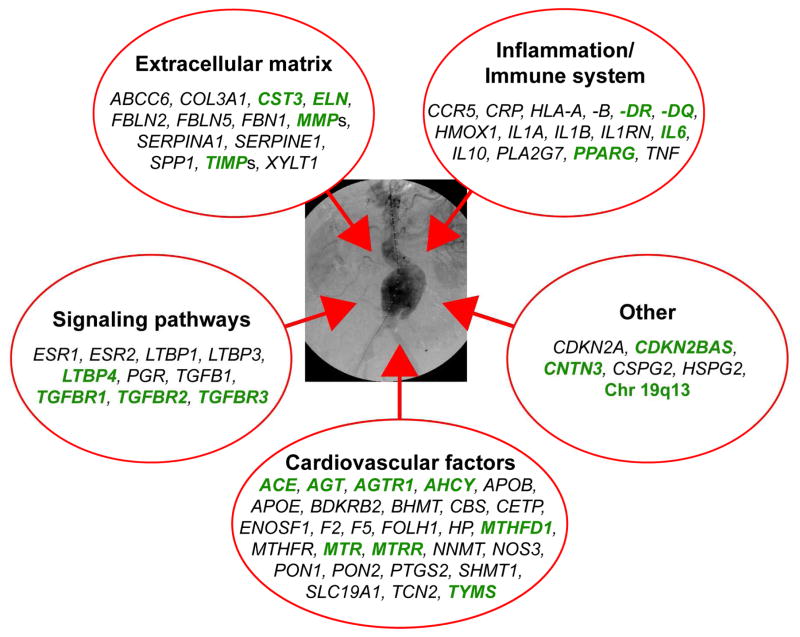
Abdominal aortic aneurysm (AAA) is a multifactorial disease with a strong genetic component. Since the first candidate gene studies were published 20 years ago, approximately 100 genetic association studies using single nucleotide polymorphisms (SNPs) in biologically relevant genes have been reported on AAA. These studies investigated SNPs in genes of the extracellular matrix, the cardiovascular system, the immune system, and signaling pathways. Very few studies were large enough to draw firm conclusions and very few results could be replicated in another sample set. The more recent unbiased approaches are family-based DNA linkage studies and genome-wide genetic association studies, which have the potential of identifying the genetic basis for AAA, only when appropriately powered and well-characterized large AAA cohorts are used. SNPs associated with AAA have already been identified in these large multicenter studies. One significant association was of a variant in a gene called contactin-3, which is located on chromosome 3p12.3. However, two follow-up studies could not replicate this association. Two other SNPs, which are located on chromosome 9p21 and 9q33, were replicated in other samples. The two genes with the strongest supporting evidence of contribution to the genetic risk for AAA are the CDKN2BAS gene, also known as ANRIL, which encodes an antisense ribonucleic acid that regulates expression of the cyclin-dependent kinase inhibitors CDKN2A and CDKN2B, and DAB2IP, which encodes an inhibitor of cell growth and survival. Functional studies are now needed to establish the mechanisms by which these genes contribute toward AAA pathogenesis.
Copyright © 2011 Annals of Vascular Surgery Inc. Published by Elsevier Inc. All rights reserved.
Figures
References
-
- Alcorn HG, Wolfson SK, Jr, Sutton-Tyrrell K, et al. Risk factors for abdominal aortic aneurysms in older adults enrolled in The Cardiovascular Health Study. Arterioscler Thromb Vasc Biol. 1996;16(8):963–70. - PubMed
-
- Cowan JA, Jr, Dimick JB, Henke PK, et al. Epidemiology of aortic aneurysm repair in the United States from 1993 to 2003. Ann N Y Acad Sci. 2006;1085:1–10. - PubMed
-
- Wahlgren CM, Larsson E, Magnusson PK, et al. Genetic and environmental contributions to abdominal aortic aneurysm development in a twin population. J Vasc Surg. 2009 - PubMed
-
- Nischan J, Lenk GM, Boddy AM, et al. Abdominal Aortic Aneurysms - A Complex Genetic Disease. In: Morel ALaE., editor. Aneurysms Types, Risks, Formation and Treatment. Nova Science Publishers, Inc; 2009. pp. 35–93.
-
- Shantikumar S, Ajjan R, Porter KE, et al. Diabetes and the abdominal aortic aneurysm. Eur J Vasc Endovasc Surg. 2010;39(2):200–7. - PubMed
Publication types
MeSH terms
Grants and funding
LinkOut - more resources
Full Text Sources
Other Literature Sources
Molecular Biology Databases
Miscellaneous
