


Bacterial killing by dry metallic copper surfaces
- PMID: 21148701
- PMCID: PMC3028699
- DOI: 10.1128/AEM.01599-10
Bacterial killing by dry metallic copper surfaces
Abstract
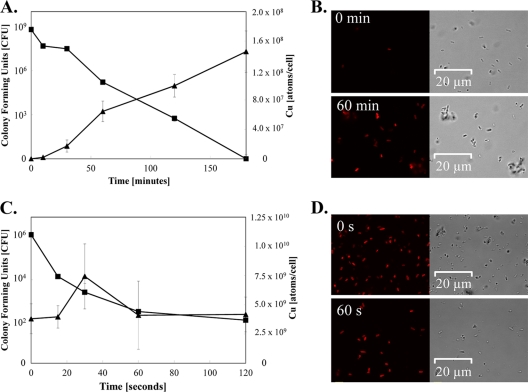
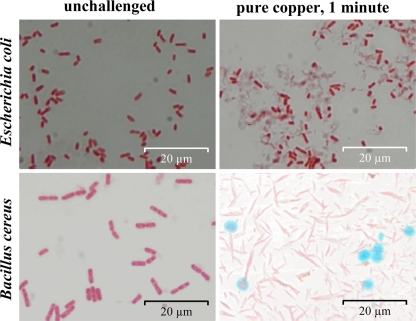
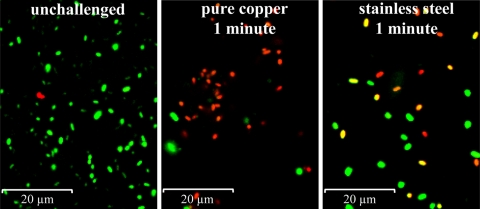
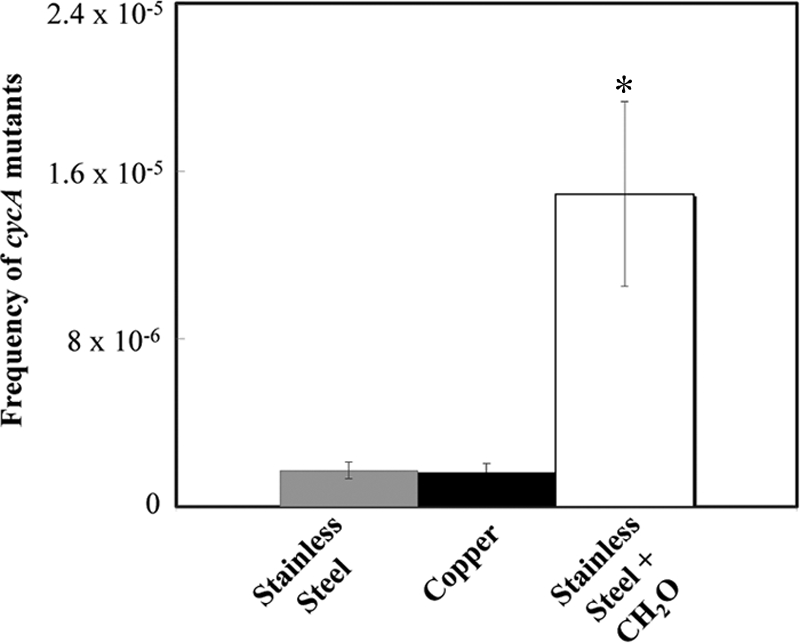
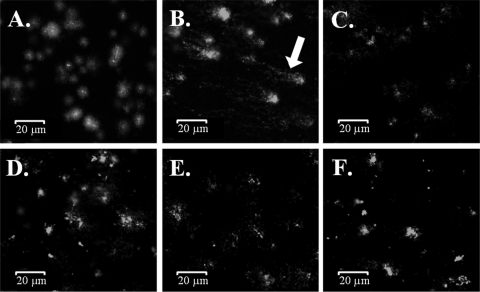
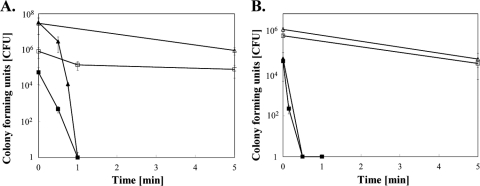
Metallic copper surfaces rapidly and efficiently kill bacteria. Cells exposed to copper surfaces accumulated large amounts of copper ions, and this copper uptake was faster from dry copper than from moist copper. Cells suffered extensive membrane damage within minutes of exposure to dry copper. Further, cells removed from copper showed loss of cell integrity. Acute contact with metallic copper surfaces did not result in increased mutation rates or DNA lesions. These findings are important first steps for revealing the molecular sensitive targets in cells lethally challenged by exposure to copper surfaces and provide a scientific explanation for the use of copper surfaces as antimicrobial agents for supporting public hygiene.
Figures
References
-
- Airey, P., and J. Verran. 2007. Potential use of copper as a hygienic surface; problems associated with cumulative soiling and cleaning. J. Hosp. Infect. 67:271-277. - PubMed
-
- Borkow, G., and J. Gabbay. 2005. Copper as a biocidal tool. Curr. Med. Chem. 12:2163-2175. - PubMed
-
- Brooks, B. W., et al. 1980. Red-pigmented micrococci: a basis for taxonomy. Int. J. Syst. Bacteriol. 30:627-646.
-
- Casey, A. L., et al. 2010. Role of copper in reducing hospital environment contamination. J. Hosp. Infect. 74:72-77. - PubMed
Publication types
MeSH terms
Substances
Grants and funding
LinkOut - more resources
Full Text Sources
Other Literature Sources
Molecular Biology Databases
