Effectiveness of disease-management programs for improving diabetes care: a meta-analysis
- PMID: 21149524
- PMCID: PMC3033953
- DOI: 10.1503/cmaj.091786
Effectiveness of disease-management programs for improving diabetes care: a meta-analysis
Abstract
Background: We conducted a meta-analysis of randomized controlled trials to assess the effectiveness of disease-management programs for improving glycemic control in adults with diabetes mellitus and to study which components of programs are associated with their effectiveness.
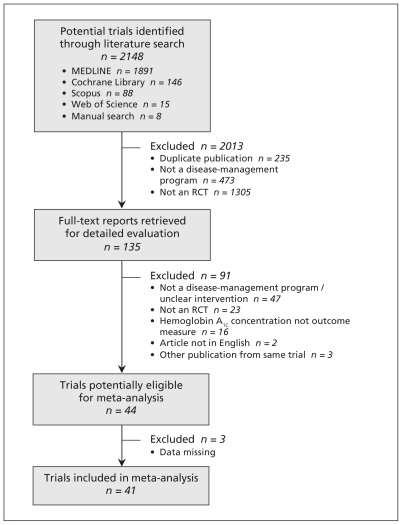
Methods: We searched several databases for studies published up to December 2009. We included randomized controlled trials involving adults with type 1 or 2 diabetes that evaluated the effect of disease-management programs on glycated hemoglobin (hemoglobin A₁(C)) concentrations. We performed a meta-regression analysis to determine the effective components of the programs.
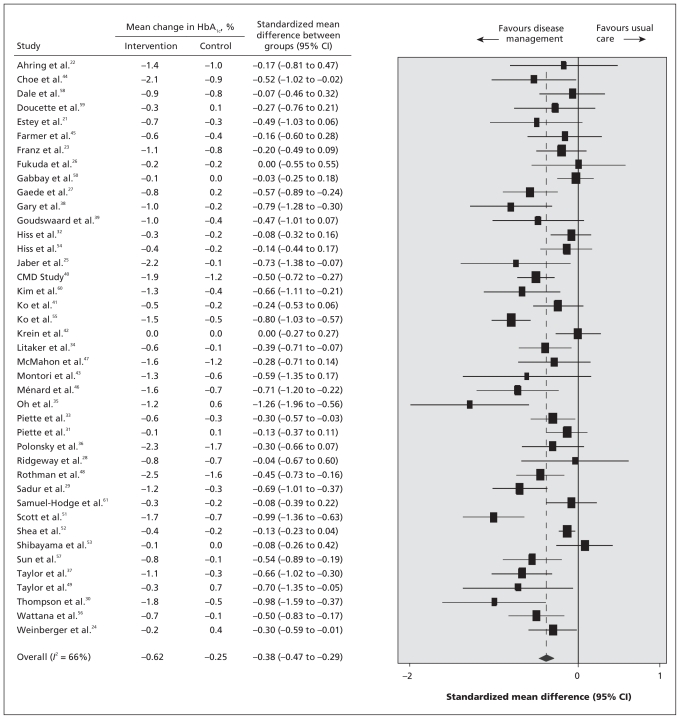
Results: We included 41 randomized controlled trials in our review. Across these trials, disease-management programs resulted in a significant reduction in hemoglobin A₁(C) levels (pooled standardized mean difference between intervention and control groups -0.38 [95% confidence interval -0.47 to -0.29], which corresponds to an absolute mean difference of 0.51%). The finding was robust in the sensitivity analyses based on quality assessment. Programs in which the disease manager was able to start or modify treatment with or without prior approval from the primary care physician resulted in a greater improvement in hemoglobin A₁(C) levels (standardized mean difference -0.60 v. -0.28 in trials with no approval to do so; p < 0.001). Programs with a moderate or high frequency of contact reported a significant reduction in hemoglobin A₁(C) levels compared with usual care; nevertheless, only programs with a high frequency of contact led to a significantly greater reduction compared with low-frequency contact programs (standardized mean difference -0.56 v. -0.30, p = 0.03).
Interpretation: Disease-management programs had a clinically moderate but significant impact on hemoglobin A₁(C) levels among adults with diabetes. Effective components of programs were a high frequency of patient contact and the ability for disease managers to adjust treatment with or without prior physician approval.
Figures
References
Publication types
MeSH terms
LinkOut - more resources
Full Text Sources
Medical