


Foam properties and detergent abilities of the saponins from Camellia oleifera
- PMID: 21151446
- PMCID: PMC3000090
- DOI: 10.3390/ijms11114417
Foam properties and detergent abilities of the saponins from Camellia oleifera
Abstract
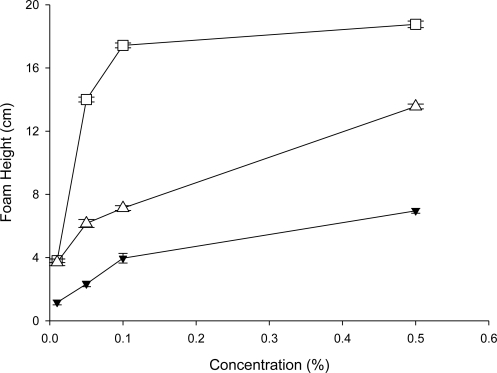
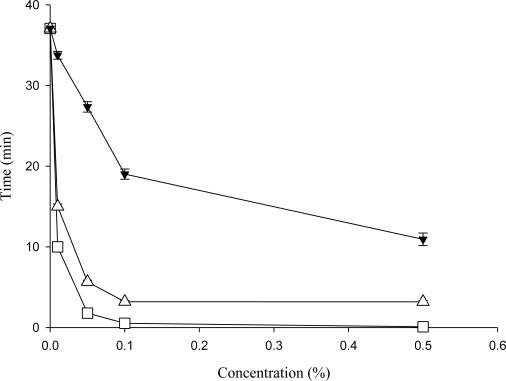
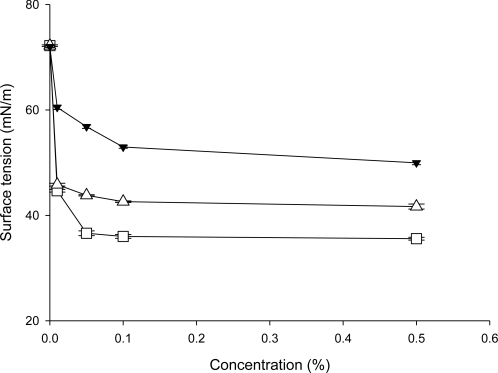
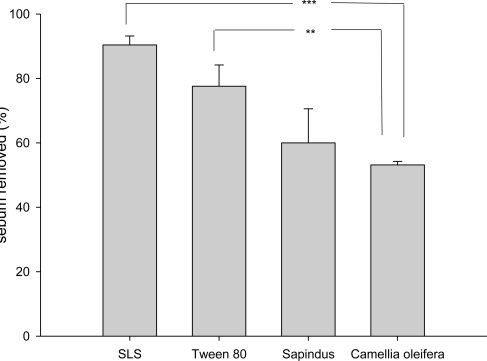
The defatted seed meal of Camellia oleifera has been used as a natural detergent and its extract is commercially utilized as a foam-stabilizing and emulsifying agent. The goal of this study was to investigate the foam properties and detergent ability of the saponins from the defatted seed meal of C. oleifera. The crude saponin content in the defatted seed meal of C. oleifera was 8.34 and the total saponins content in the crude saponins extract was 39.5% (w/w). The foaming power of the 0.5 crude saponins extract solution from defatted seed meal of C. oleifera was 37.1 of 0.5 SLS solution and 51.3% to that of 0.5% Tween 80 solution. The R5 value of 86.0% represents good foam stability of the crude saponins extracted from the defatted seed meal of the plant. With the reduction of water surface tension from 72 mN/m to 50.0 mN/m, the 0.5% crude saponins extract solution has wetting ability. The sebum-removal experiment indicated that the crude saponins extract has moderate detergency. The detergent abilities of the saponins from C. oleifera and Sapindus mukorossi were also compared.
Keywords: Camellia oleifera; detergency; foam; saponin; wetting.
Figures
References
-
- Makkar HPS, Siddhuraju P, Becker K. Methods in Molecular Biology: Plant Secondary Metabolites. Humana Press; Totowa, NJ, USA: 2007. pp. 93–100. - PubMed
-
- Price KR, Johnson IT, Fenwick GR. The chemistry and biological significance of saponins in foods and feeding stuffs. CRC Crit. Rev. Food Sci. Nutr. 1987;26:127–135. - PubMed
-
- Oakenfull D. Saponins in food-A review. Food Chem. 1981;7:19–40.
-
- Martin RS, Briones R. Industrial uses and sustainable supply of Quillaja saponaria (Rosaceae) saponins. Econ. Bot. 1999;53:302–311.
-
- Tanaka O, Tamura Y, Masuda H, Mizutani K. In: Saponins Used in Food and Agriculture. Waller GR, Yamasaki K, editors. Plenum Press; New York, NY, USA: 1996. pp. 1–11.
Publication types
MeSH terms
Substances
LinkOut - more resources
Full Text Sources
Other Literature Sources
