


The cardiorenal syndrome: making the connection
- PMID: 21151533
- PMCID: PMC2989717
- DOI: 10.4061/2011/283137
The cardiorenal syndrome: making the connection
Abstract
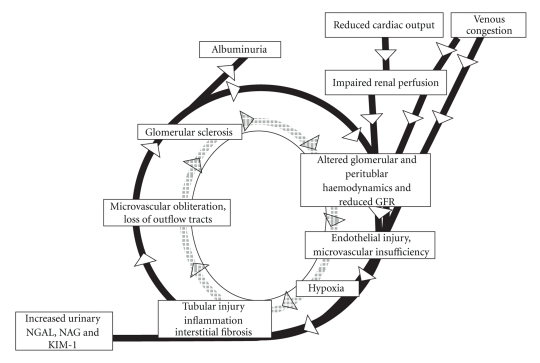
The heart and the kidneys share responsibility for maintaining hemodynamic stability and end-organ perfusion. Connections between these organs ensure that subtle physiologic changes in one system are tempered by compensation in the other through a variety of pathways and mediators. In the setting of underlying heart disease or chronic kidney disease, the capacity of each organ to respond to perturbation caused by the other may become compromised. This has recently led to the characterization of the cardiorenal syndrome (CRS). This review will primarily focus on CRS type 1 where acute decompensated heart failure (ADHF) results in activation of hemodynamic and neurohormonal factors leading to an acute drop in the glomerular filtration rate and the development of acute kidney injury. We will examine the scope and impact of this problem, the pathophysiology associated with this relationship, including underperfuson and venous congestion, diagnostic tools for earlier detection, and therapeutic interventions to prevent and treat this complication.
Figures

References
-
- Tang WHW, Mullens W. Cardiorenal syndrome in decompensated heart failure. Heart. 2010;96(4):255–260. - PubMed
-
- McMurray JJV, Pfeffer MA. Heart failure. Lancet. 2005;365(9474):1877–1889. - PubMed
-
- Haldeman GA, Croft JB, Giles WH, Rashidee A. Hospitalization of patients with heart failure: national hospital discharge survey, 1985 to 1995. American Heart Journal. 1999;137(2):352–360. - PubMed
-
- Rosamond W, Flegal K, Furie K, et al. Heart disease and stroke statistics—2008 update: a report from the American heart association statistics committee and stroke statistics subcommittee. Circulation. 2008;117(4):e25–e146. - PubMed
LinkOut - more resources
Full Text Sources
