Oxaliplatin-Related Ocular Toxicity
- PMID: 21151636
- PMCID: PMC2999736
- DOI: 10.1159/000322675
Oxaliplatin-Related Ocular Toxicity
Abstract
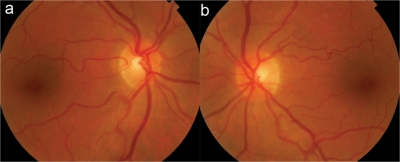
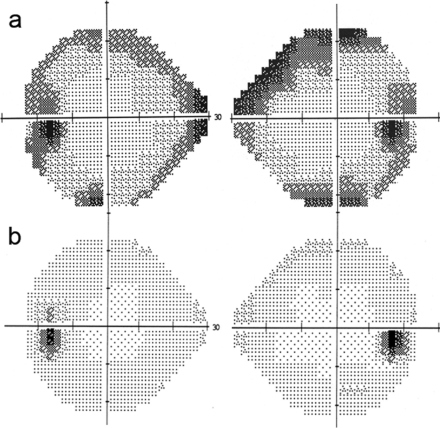
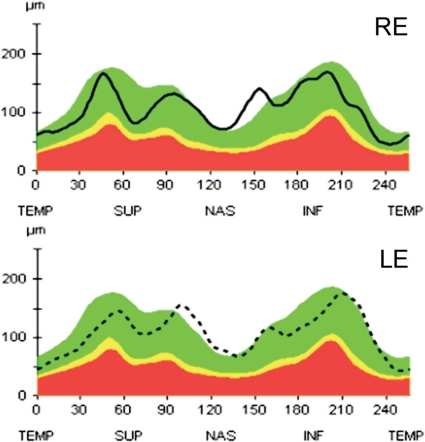
We report the case of a 52-year-old woman with advanced colorectal cancer who was treated with oxaliplatin on a FOLFOX schedule. After 3 cycles of chemotherapy, she started to complain of visual loss, altered color vision and neurological symptoms. Due to the suspicion of ocular and neurological toxicity, antineoplastic treatment was stopped. Her visual field showed a concentric bilateral scotoma and the electrooculogram test revealed severe impairment of the retinal pigment epithelium. Visual acuity, color vision and visual field recovered completely 8 months later, although electrooculogram remained abnormal. Ocular toxicity has been reported as an infrequent adverse event of oxaliplatin. Findings in this case indicate toxicity of this chemotherapeutic agent on the retinal pigment epithelium, which has not been reported before. This damage could be permanent, and it thus differs from previously described oxaliplatin-induced ocular toxicities, which are usually transient and reversible. With increasing use of oxaliplatin as first-line treatment in advanced colorectal cancer, we have to be aware of this possible toxicity.
Figures
References
-
- De Gramont A, Figer A, Seymour M, Homerin M, Hmissi A, Cassidy J, Boni C, Cortes-Funes H, Cervantes A, Freyer G, Papamichael D, Le Bail N, Louvet C, Hendler D, de Braud F, Wilson C, Morvan F, Bonetti A. Leucovorin and fluorouracil with or without oxaliplatin as first-line treatment in advanced colorectal cancer. J Clin Oncol. 2000;18:2938–2947. - PubMed
-
- Cassidy J, Misset JL. Oxaliplatin-related side effects: characteristics and management. Semin Oncol. 2002;29:11–20. - PubMed
-
- Park SB, Lin CS, Krishnan AV, Goldstein D, Friedlander ML, Kiernan MC. Oxaliplatin-induced neurotoxicity: changes in axonal excitability precede development of neuropathy. Brain. 2009;132:2712–2723. - PubMed
-
- O'Dea D, Handy C, Wexler A. Ocular changes with oxaliplatin. Clin J Oncol Nurs. 2006;10:227–229. - PubMed
Publication types
LinkOut - more resources
Full Text Sources