


Optimal management of chronic cyclical pelvic pain: an evidence-based and pragmatic approach
- PMID: 21151732
- PMCID: PMC2990894
- DOI: 10.2147/IJWH.S7991
Optimal management of chronic cyclical pelvic pain: an evidence-based and pragmatic approach
Abstract
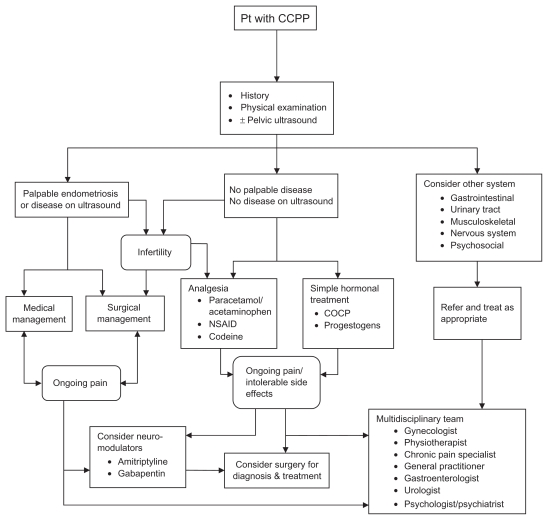
This article reviews the literature on management of chronic cyclical pelvic pain (CCPP). Electronic resources including Medline, PubMed, CINAHL, The Cochrane Library, Current Contents, and EMBASE were searched using MeSH terms including all subheadings and keywords: "cyclical pelvic pain", "chronic pain", "dysmenorrheal", "nonmenstrual pelvic pain", and "endometriosis". There is a dearth of high-quality evidence for this common problem. Chronic pelvic pain affects 4%-25% of women of reproductive age. Dysmenorrhea of varying degree affects 60% of women. Endometriosis is the commonest pathologic cause of CCPP. Other gynecological causes are adenomyosis, uterine fibroids, and pelvic floor myalgia, although other systems disease such as irritable bowel syndrome or interstitial cystitis may be responsible. Management options range from simple to invasive, where simple medical treatment such as the combined oral contraceptive pill may be used as a first-line treatment prior to invasive management. This review outlines an approach to patients with CCPP through history, physical examination, and investigation to identify the cause(s) of the pain and its optimal management.
Keywords: chronic pain; cyclical pelvic pain; dysmenorrhea; endometriosis; nonmenstrual pelvic pain.
Figures
References
-
- Muse KN. Cyclic pelvic pain. Obstet Gynecol Clin North Am. 1990;17(2):427–440. - PubMed
-
- Zondervan KT, Yudkin PL, Vessey MP, Dawes MG, Barlow DH, Kennedy SH. Prevalence and incidence of chronic pelvic pain in primary care: evidence from a national general practice database. Br J Obstet Gynecol. 1999;106(11):1149–1155. - PubMed
-
- Grace VM, Zondervan KT. Chronic pelvic pain in New Zealand: prevalence, pain severity, diagnoses and use of the health services. Aust N Z J Public Health. 2004;28(4):369–375. - PubMed
-
- Mathias SD, Kuppermann M, Liberman RF, Lipschutz RC, Steege JF. Chronic pelvic pain: prevalence, health-related quality of life, and economic correlates. Obstet Gynecol. 1996;87(3):321–327. - PubMed
-
- Barbieri R. Etiology and epidemiology of endometriosis. Am J Obstet Gynecol. 1990;162:565–567. - PubMed
LinkOut - more resources
Full Text Sources
