


Evidence for hyperacute rejection of human liver grafts: The case of the canary kidneys
- PMID: 21151799
- PMCID: PMC3000169
Evidence for hyperacute rejection of human liver grafts: The case of the canary kidneys
Abstract
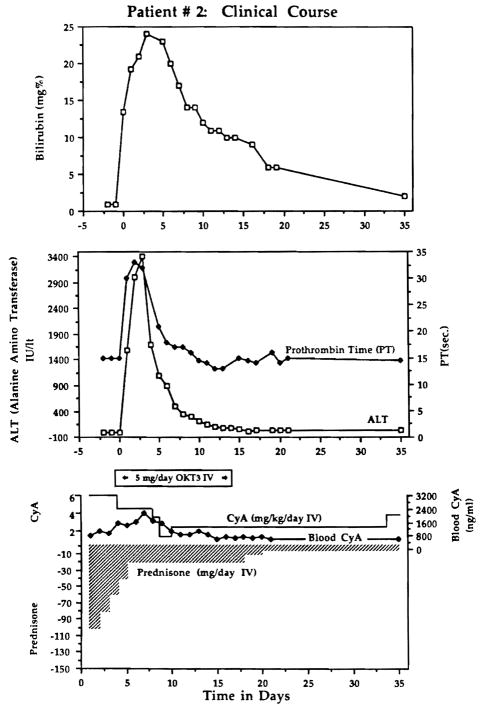
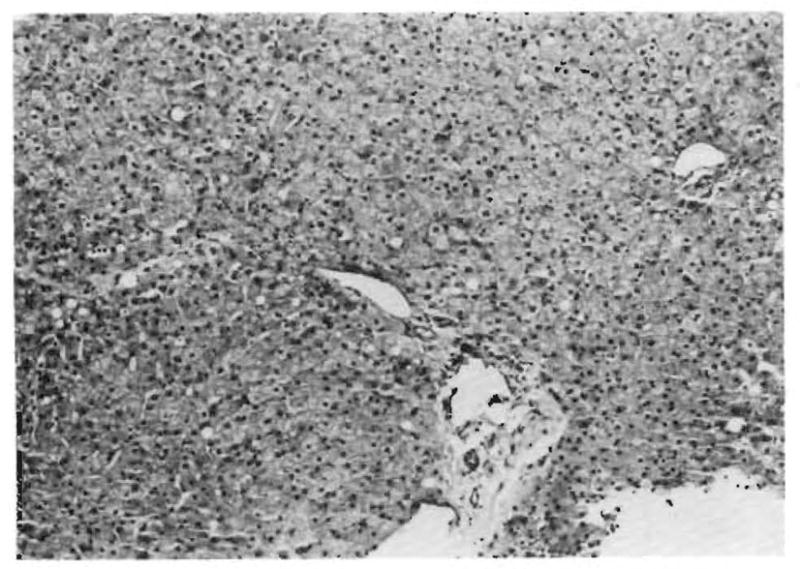
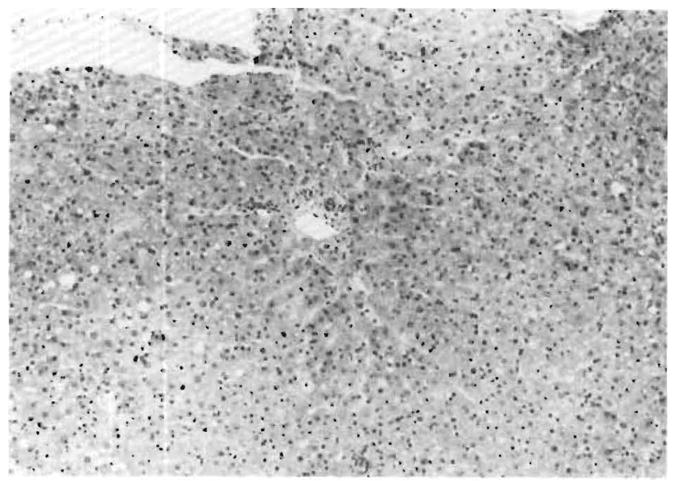
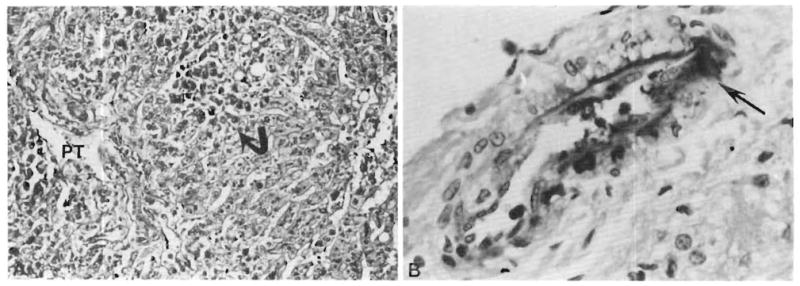
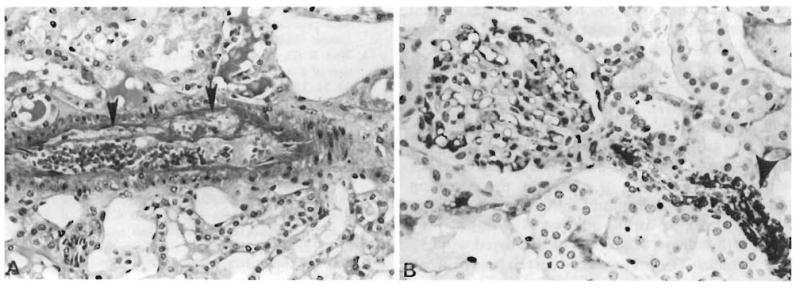
Sequential liver and kidney transplantation from the same donor was performed in 2 patients. The kidney in Patient 1, which was transplanted after the liver, was hyperacutely rejected and removed 6 hours later. The first liver as well as another liver transplanted 3 days later developed widespread hemorrhagic necrosis. Although the cytotoxic crossmatch of preoperative recipient serum with both donors was negative, patchy widespread IgM and C(1q) deposits were found in all 3 organs. In Patient 2, who had a strongly positive cytotoxic crossmatch with his donor, the liver suffered a massive but reversible injury, while the kidney never functioned. Both patients developed a coagulopathy a few minutes after liver revascularization. The kidneys in these cases had served like the canaries which miners once used to detect a hostile environment and their presence made more understandable how an indolent version of hyperacute rejection of the liver can take place.
Figures
References
-
- Starzl TE. Experience in renal transplantation. 37–47. WB Saunders Co; Philadelphia: 1964. pp. 249–252.pp. 317
-
- Terasaki PI, Marchioro TL, Starzl TE. Sero-typing of human lymphocyte antigens: Preliminary trials on long term kidney homograft survivors. Histocompatibility Testing National Acad Science National Research Council; Washington DC: 1965. pp. 83–96.
-
- Kissmeyer-Nielsen F, Olsen S, Peterson VP, Fjeldborg O. Hyperacute rejection of kidney allografts, associated with preexisting humoral antibodies against donor cells. Lancet. 1966;2:662–5. - PubMed
-
- Brasile L, Zerbe T, Rabin B, Clarke J, Abrams A, Cerilli J. Identification of the antibody to vascular endothelial cells in patients undergoing cardiac transplantation. Transplantation. 1985;6:672–5. - PubMed
Grants and funding
LinkOut - more resources
Full Text Sources