


Artificial hybrids of influenza A virus RNA polymerase reveal PA subunit modulates its thermal sensitivity
- PMID: 21151876
- PMCID: PMC2998429
- DOI: 10.1371/journal.pone.0015140
Artificial hybrids of influenza A virus RNA polymerase reveal PA subunit modulates its thermal sensitivity
Abstract
Background: Influenza A virus can infect a variety of different hosts and therefore has to adapt to different host temperatures for its efficient viral replication. Influenza virus codes for an RNA polymerase of 3 subunits: PB1, PB2 and PA. It is well known that the PB2 subunit is involved in temperature sensitivity, such as cold adaptation. On the other hand the role of the PA subunit in thermal sensitivity is still poorly understood.
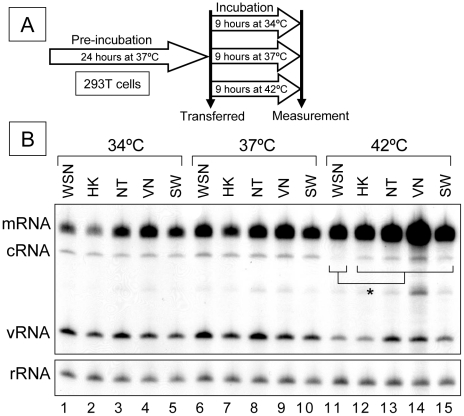
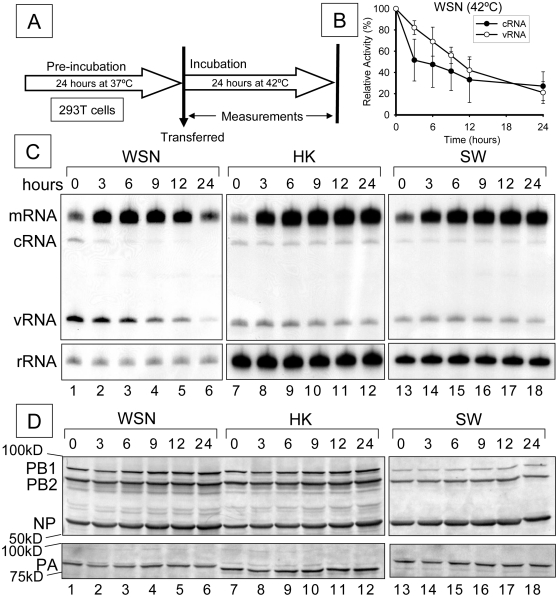
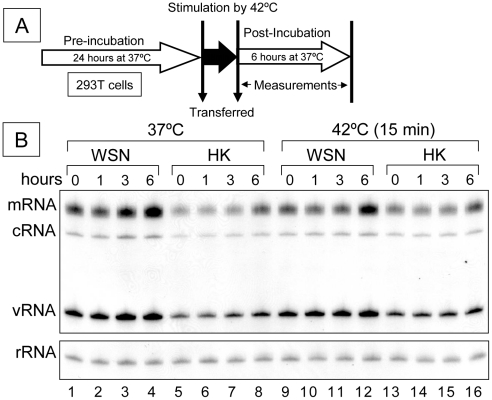
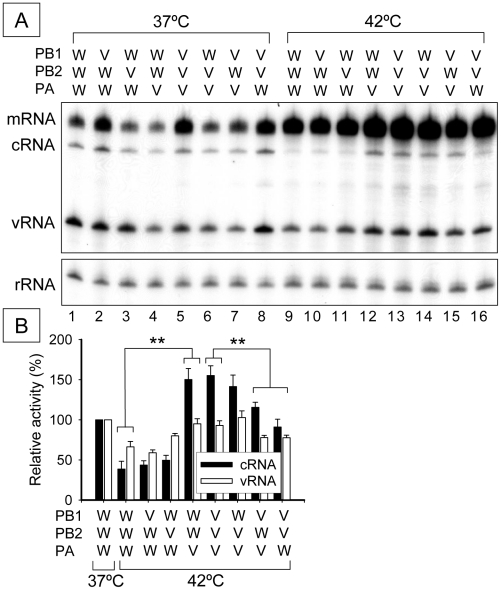
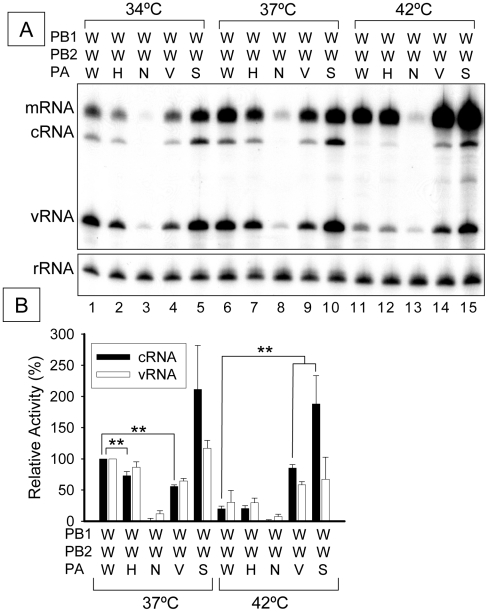
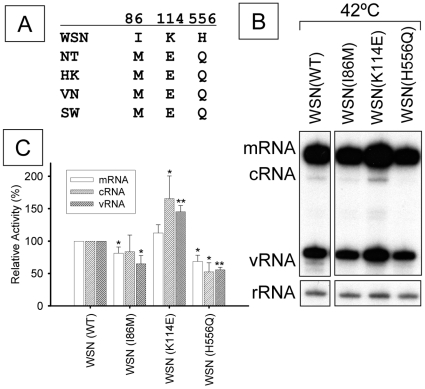
Methodology/principal findings: To test which polymerase subunit(s) were involved in thermal stress we reconstituted artificial hybrids of influenza RNA polymerase in ribonucleoprotein (RNP) complexes and measured steady-state levels of mRNA, cRNA and vRNA at different temperatures. The PA subunit was involved in modulating RNP activity under thermal stress. Residue 114 of the PA subunit was an important determinant of this activity.
Conclusions/significance: These findings suggested that influenza A virus may acquire an RNA polymerase adapted to different body temperatures of the host by reassortment of the RNA polymerase genes.
Conflict of interest statement
Figures
References
-
- Centers for Disease Control and Prevention (CDC) Update: novel influenza A (H1N1) virus infections - worldwide, May 6, 2009. MMWR Morb Mortal Wkly Rep. 2009;58:453–458. - PubMed
-
- World Health Organization (WHO) Pandemic (H1N1) 2009. 2010. http://wwwwhoint/csr/disease/swineflu/en/indexhtml.
-
- Dawood FS, Jain S, Finelli L, Shaw MW, Lindstrom S, et al. Emergence of a novel swine-origin influenza A (H1N1) virus in humans. N Engl J Med. 2009;360:2605–2615. - PubMed
Publication types
MeSH terms
Substances
LinkOut - more resources
Full Text Sources
Miscellaneous
