


A host defense mechanism involving CFTR-mediated bicarbonate secretion in bacterial prostatitis
- PMID: 21151921
- PMCID: PMC2998414
- DOI: 10.1371/journal.pone.0015255
A host defense mechanism involving CFTR-mediated bicarbonate secretion in bacterial prostatitis
Abstract
Background: Prostatitis is associated with a characteristic increase in prostatic fluid pH; however, the underlying mechanism and its physiological significance have not been elucidated.
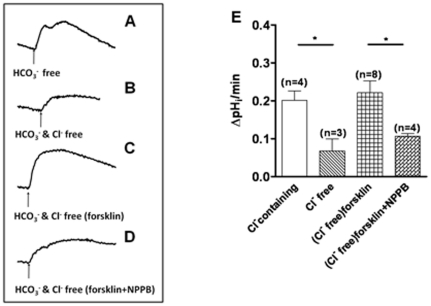
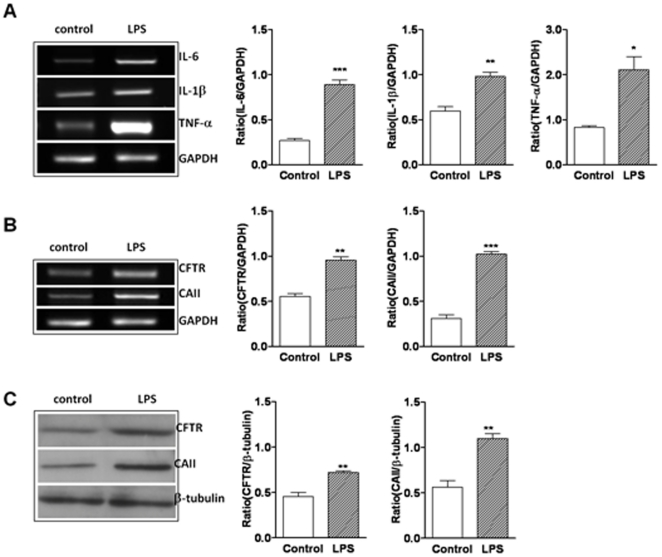
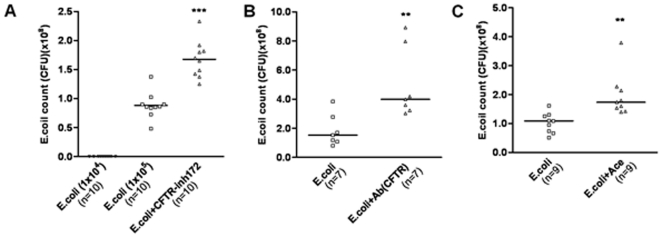
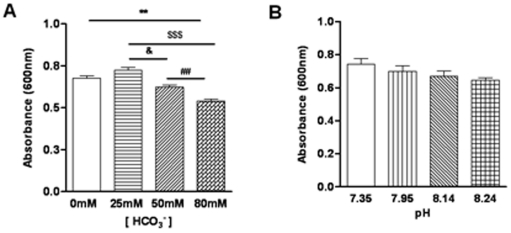
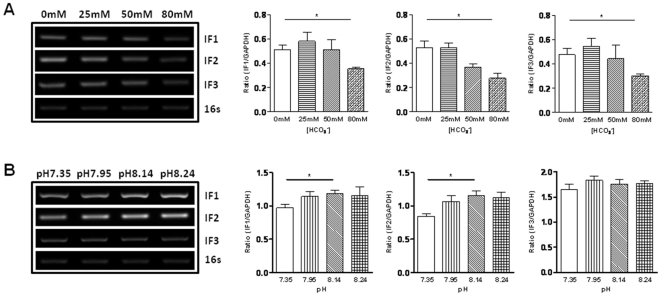
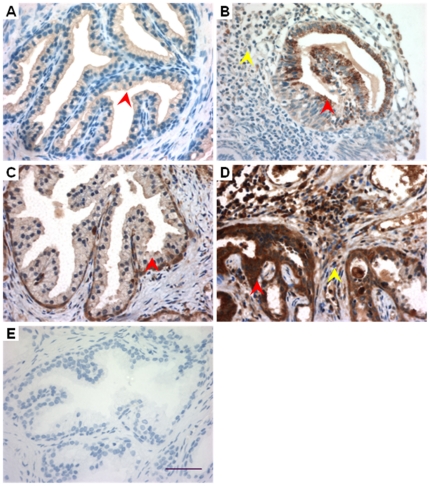
Methodology/principal findings: In this study a primary culture of rat prostatic epithelial cells and a rat prostatitis model were used. Here we reported the involvement of CFTR, a cAMP-activated anion channel conducting both Cl(-) and HCO(3)(-), in mediating prostate HCO(3)(-) secretion and its possible role in bacterial killing. Upon Escherichia coli (E. coli)-LPS challenge, the expression of CFTR and carbonic anhydrase II (CA II), along with several pro-inflammatory cytokines was up-regulated in the primary culture of rat prostate epithelial cells. Inhibiting CFTR function in vitro or in vivo resulted in reduced bacterial killing by prostate epithelial cells or the prostate. High HCO(3)(-) content (>50 mM), rather than alkaline pH, was found to be responsible for bacterial killing. The direct action of HCO(3)(-) on bacterial killing was confirmed by its ability to increase cAMP production and suppress bacterial initiation factors in E. coli. The relevance of the CFTR-mediated HCO(3)(-) secretion in humans was demonstrated by the upregulated expression of CFTR and CAII in human prostatitis tissues.
Conclusions/significance: The CFTR and its mediated HCO(3)(-) secretion may be up-regulated in prostatitis as a host defense mechanism.
Conflict of interest statement
Figures



References
-
- Snow DC, Shoskes DA. Pharmacotherapy of prostatitis. Expert Opin Pharmacother 2010 - PubMed
-
- Lipsky BA, Byren I, Hoey CT. Treatment of bacterial prostatitis. Clin Infect Dis. 2010;50:1641–1652. - PubMed
-
- Giamarellou H, Tympanidis K, Bitos NA, Leonidas E, Daikos GK. Infertility and chronic prostatitis. Andrologia. 1984;16:417–422. - PubMed
-
- Wolff H, Bezold G, Zebhauser M, Meurer M. Impact of clinically silent inflammation on male genital tract organs as reflected by biochemical markers in semen. J Androl. 1991;12:331–334. - PubMed
-
- Leib Z, Bartoov B, Eltes F, Servadio C. Reduced semen quality caused by chronic abacterial prostatitis: an enigma or reality? Fertil Steril. 1994;61:1109–1116. - PubMed
Publication types
MeSH terms
Substances
LinkOut - more resources
Full Text Sources
Other Literature Sources
