


Transformation of low grade glioma and correlation with outcome: an NCCTG database analysis
- PMID: 21153680
- PMCID: PMC5738240
- DOI: 10.1007/s11060-010-0476-2
Transformation of low grade glioma and correlation with outcome: an NCCTG database analysis
Abstract
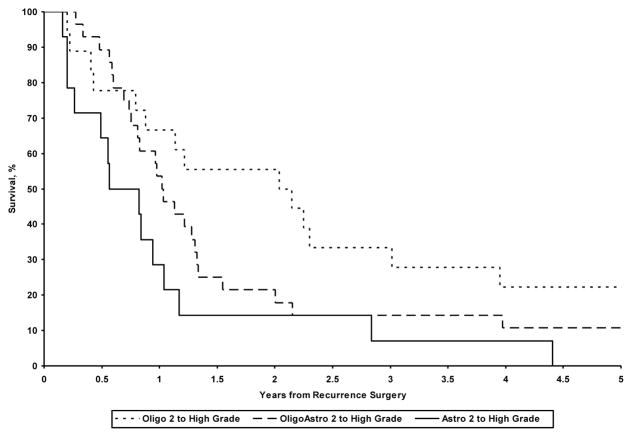
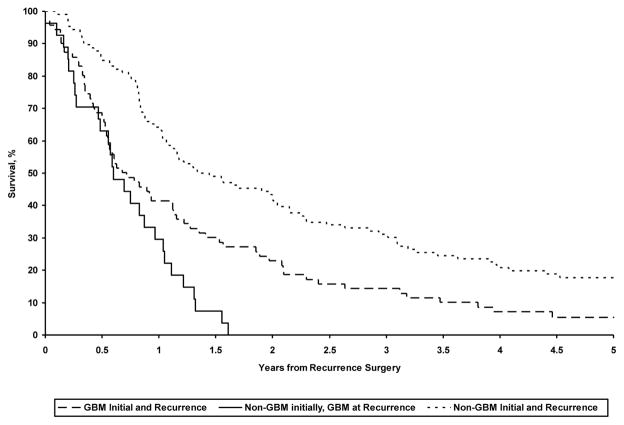
Glioblastomas (GBM) may originate de novo (primary), or following transformation from a lower grade glioma (secondary), and it has been postulated that these tumors may have different biological behaviors. We performed a correlative analysis involving 204 patients with glioma treated prospectively on NCCTG clinical trials. Central pathology review of tumor tissues taken at the time of initial diagnosis and at recurrence were performed in all patients. Tumors progressed from low (WHO grade 2) to high (grade 3-4) at recurrence in 45% low grade oligodendroglioma patients, in 70% with low grade oligoastrocytoma, and 74% with low grade astrocytoma (P = 0.031). Median overall survival (OS) from initial diagnosis varied by histology: oligodendroglioma, 8.8 years; (95% CI 5.7-10.2); oligoastrocytoma, 4.4 years (95% CI 3.5-5.6); astrocytoma grade 2 3.1 years (astrocytoma grade 2-4, 2.1 years) (95% CI 1.7-2.5, P < 0.001). Mean time to recurrence (TTR) also varied between patients with de novo GBM, those secondary GBM, and those that remained non-GBM at recurrence (1.1 ± 1.1 vs. 2.9 ± 1.8 vs. 4.0 ± 2.9 years, respectively, P < 0.001). Median OS from time of recurrence also varied between these three categories (0.7 years, 95% CI: 0.5-1.1 vs. 0.6 years, CI: 0.5-1.0 vs. 1.4 years, 95% CI: 1.1-2.0, respectively) (P < 0.001). At time of relapse, transformation to higher grade is frequent in low grade pure and mixed astrocytomas, but is observed in less than half of those with low grade oligodendroglioma. From time of recurrence, OS was not significantly different for those with primary versus secondary GBM, and it may thus be reasonable include patients with secondary GBM in clinical therapeutic trials for recurrent disease.
Conflict of interest statement
Figures
References
-
- Dropcho EJ, Soong SJ. The prognositic impact of prior low grade histology in patients with anaplastic gliomas: a case-control study. Neurology. 1996;47:684–90. - PubMed
-
- Ohgaki H, Dessen P, Jourde B, et al. Genetic pathways to glioblastoma: a population-based study. Cancer Res. 2004;64:6892–99. - PubMed
-
- Ohgaki H, Kleihues Population-based studies on incidence, survival rates, and genetic alterations in astrocytic and oligodendroglial gliomas. J Neuropathol Exp Neurol. 2005;64:479–89. - PubMed
MeSH terms
Grants and funding
LinkOut - more resources
Full Text Sources
Medical
Research Materials
Miscellaneous
