


An ecological risk model for early childhood anxiety: the importance of early child symptoms and temperament
- PMID: 21153696
- PMCID: PMC5179257
- DOI: 10.1007/s10802-010-9476-0
An ecological risk model for early childhood anxiety: the importance of early child symptoms and temperament
Abstract
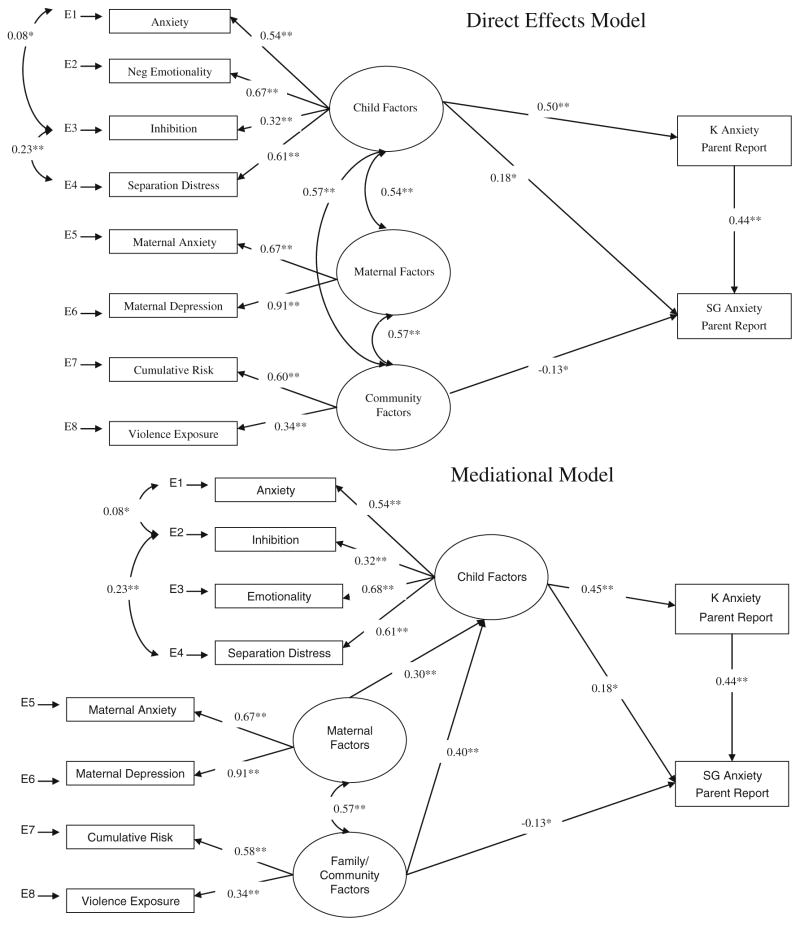
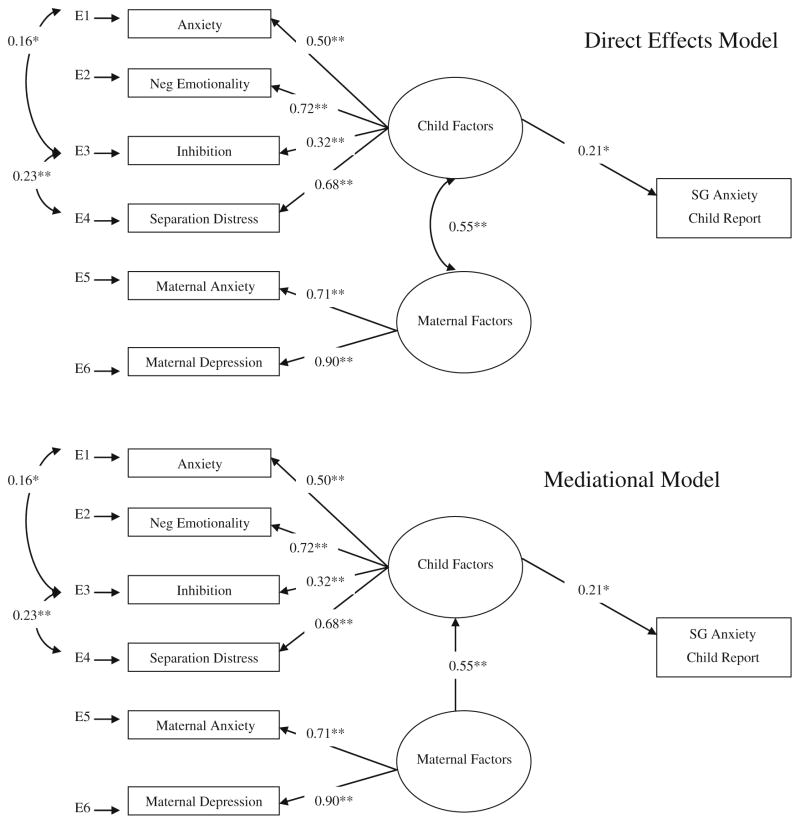
Childhood anxiety is impairing and associated with later emotional disorders. Studying risk factors for child anxiety may allow earlier identification of at-risk children for prevention efforts. This study applied an ecological risk model to address how early childhood anxiety symptoms, child temperament, maternal anxiety and depression symptoms, violence exposure, and sociodemographic risk factors predict school-aged anxiety symptoms. This longitudinal, prospective study was conducted in a representative birth cohort (n = 1109). Structural equation modeling was used to examine hypothesized associations between risk factors measured in toddlerhood/preschool (age = 3.0 years) and anxiety symptoms measured in kindergarten (age = 6.0 years) and second grade (age = 8.0 years). Early child risk factors (anxiety symptoms and temperament) emerged as the most robust predictor for both parent-and child-reported anxiety outcomes and mediated the effects of maternal and family risk factors. Implications for early intervention and prevention studies are discussed.
Figures
References
-
- Ablow JC, Measelle JR, Kraemer HC, Harrington R, Luby J, Smider N, et al. The MacArthur three-city outcome study: evaluating multi-informant measures of young children’s symptomatology. Journal of the American Academy of Child & Adolescent Psychiatry. 1999;38(12):1580–1590. - PubMed
-
- Achenbach TM. Manual for the child behaviour checklist/2–3 and 1992 profile. Burlington: University of Vermont Department of Psychiatry; 1992.
-
- Achenbach TM, Dumenci L, Rescorla LA. DSM-oriented and empirically based approaches to constructing scales from the same item pools. Journal of Clinical Child and Adolescent Psychology. 2003;32(3):328–340. - PubMed
-
- Bayer JK, Hiscock H, Ukoumunne OC, Wake M, Price A. Early childhood aetiology of mental health problems: a longitudinal population-based study. Journal of Child Psychology and Psychiatry. 2008;49(11):1166–1174. - PubMed
-
- Beck AT, Epstein N, Brown G, Steer RA. An inventory for measuring clinical anxiety: psychometric properties. Journal of Consulting and Clinical Psychology. 1988;56(6):893–897. - PubMed
