


Family intervention for schizophrenia
- PMID: 21154340
- PMCID: PMC4204509
- DOI: 10.1002/14651858.CD000088.pub2
Family intervention for schizophrenia
Abstract
Background: People with schizophrenia from families that express high levels of criticism, hostility, or over involvement, have more frequent relapses than people with similar problems from families that tend to be less expressive of emotions. Forms of psychosocial intervention, designed to reduce these levels of expressed emotions within families, are now widely used.
Objectives: To estimate the effects of family psychosocial interventions in community settings for people with schizophrenia or schizophrenia-like conditions compared with standard care.
Search strategy: We updated previous searches by searching the Cochrane Schizophrenia Group Trials Register (September 2008).
Selection criteria: We selected randomised or quasi-randomised studies focusing primarily on families of people with schizophrenia or schizoaffective disorder that compared community-orientated family-based psychosocial intervention with standard care.
Data collection and analysis: We independently extracted data and calculated fixed-effect relative risk (RR), the 95% confidence intervals (CI) for binary data, and, where appropriate, the number needed to treat (NNT) on an intention-to-treat basis. For continuous data, we calculated mean differences (MD).
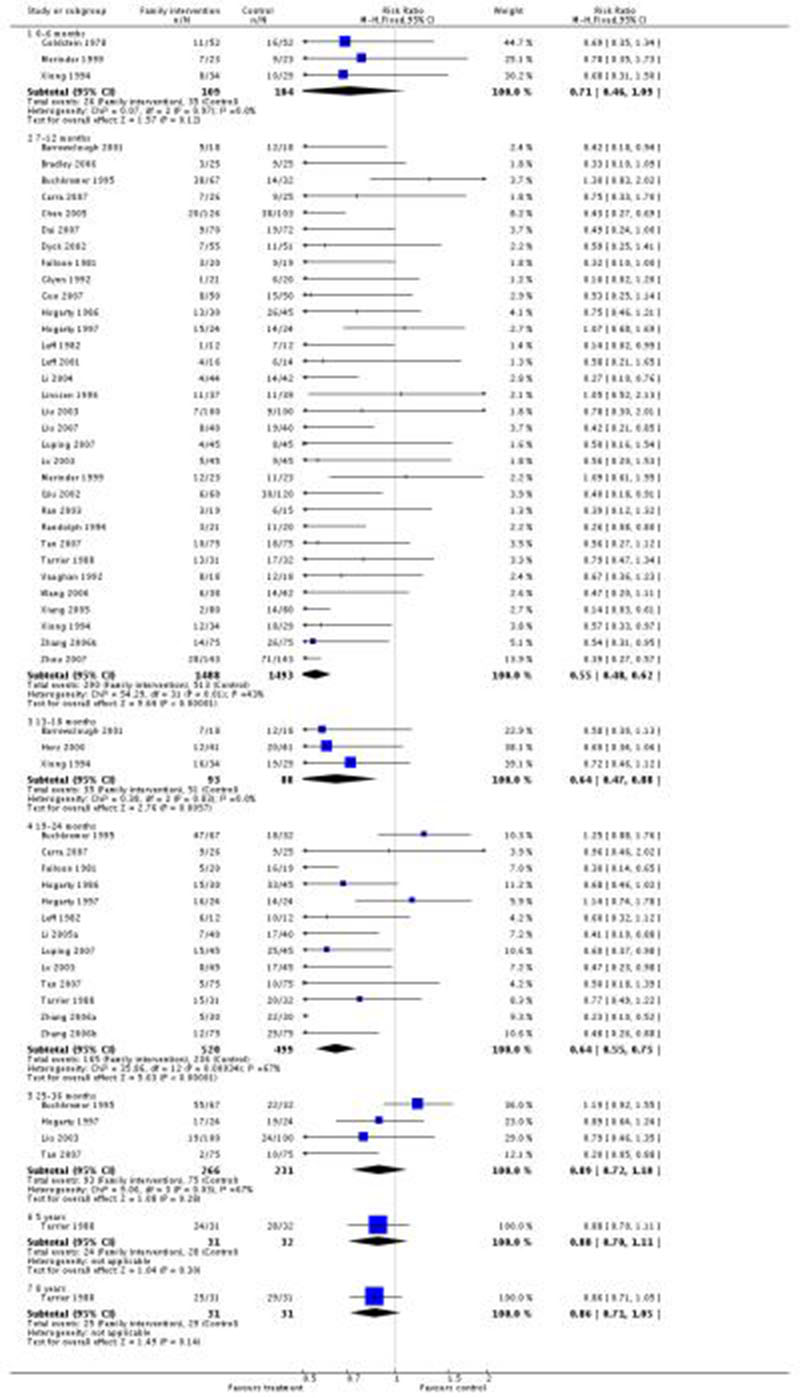
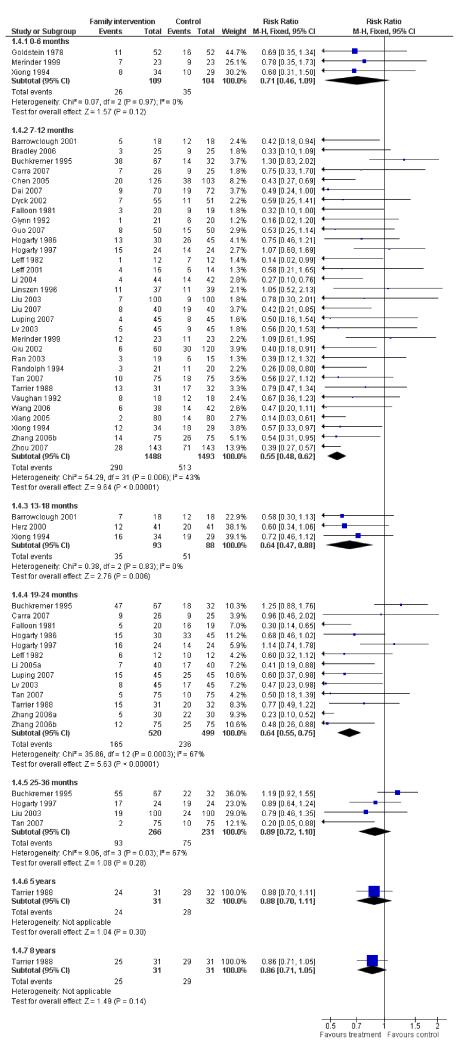
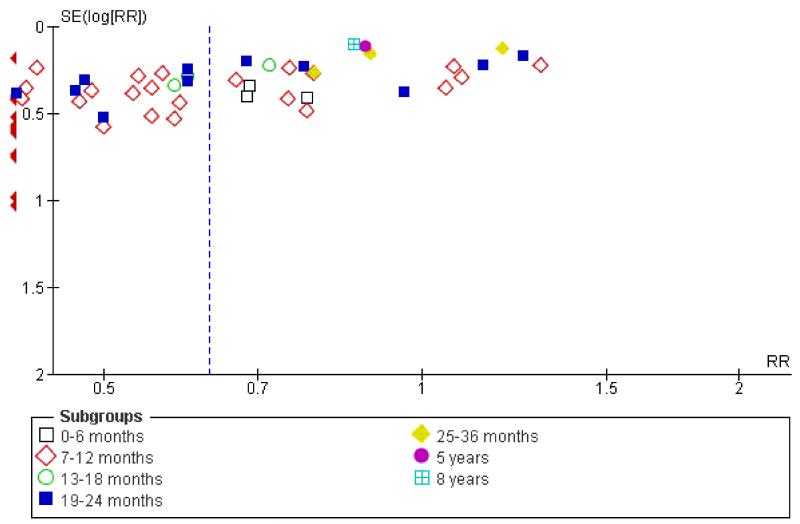
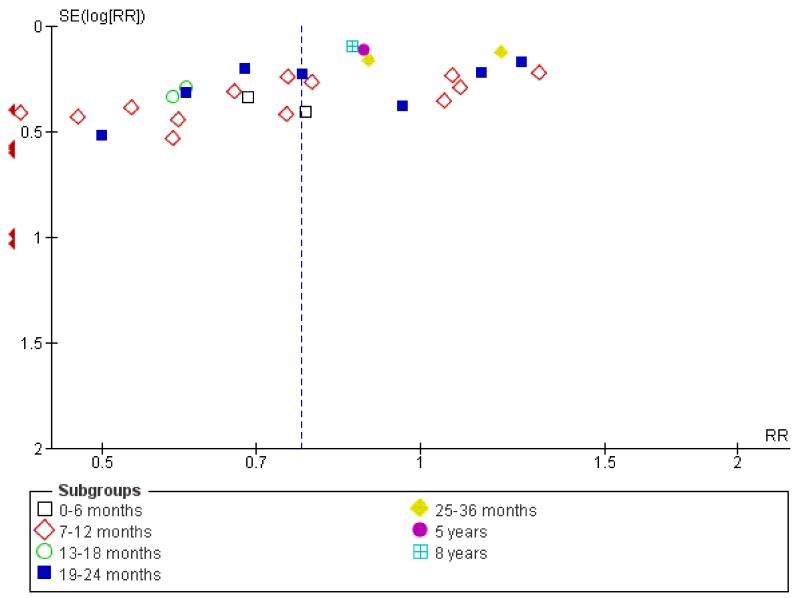
Main results: This 2009-10 update adds 21 additional studies, with a total of 53 randomised controlled trials included. Family intervention may decrease the frequency of relapse (n = 2981, 32 RCTs, RR 0.55 CI 0.5 to 0.6, NNT 7 CI 6 to 8), although some small but negative studies might not have been identified by the search. Family intervention may also reduce hospital admission (n = 481, 8 RCTs, RR 0.78 CI 0.6 to 1.0, NNT 8 CI 6 to 13) and encourage compliance with medication (n = 695, 10 RCTs, RR 0.60 CI 0.5 to 0.7, NNT 6 CI 5 to 9) but it does not obviously affect the tendency of individuals/families to leave care (n = 733, 10 RCTs, RR 0.74 CI 0.5 to 1.0). Family intervention also seems to improve general social impairment and the levels of expressed emotion within the family. We did not find data to suggest that family intervention either prevents or promotes suicide.
Authors' conclusions: Family intervention may reduce the number of relapse events and hospitalisations and would therefore be of interest to people with schizophrenia, clinicians and policy makers. However, the treatment effects of these trials may be overestimated due to the poor methodological quality. Further data from trials that describe the methods of randomisation, test the blindness of the study evaluators, and implement the CONSORT guidelines would enable greater confidence in these findings.
Figures

Update of
-
Family intervention for schizophrenia.Cochrane Database Syst Rev. 2006 Oct 18;(4):CD000088. doi: 10.1002/14651858.CD000088.pub2. Cochrane Database Syst Rev. 2006. Update in: Cochrane Database Syst Rev. 2010 Dec 08;(12):CD000088. doi: 10.1002/14651858.CD000088.pub2. PMID: 17054127 Updated.
Comment in
-
Review: family interventions reduce relapse or hospitalisation in people with schizophrenia.Evid Based Ment Health. 2011 Nov;14(4):115. doi: 10.1136/ebmh1156. Epub 2011 Mar 13. Evid Based Ment Health. 2011. PMID: 21402571 No abstract available.
References
References to studies included in this review
-
- Barrowclough C, Haddock G, Tarrier N, Lewis SW, Moring J, O’Brien R. Randomized controlled trial of motivational interviewing, cognitive behavior therapy, and family intervention for patients with comorbid schizophrenia and substance use disorders. American Journal of Psychiatry. 2001;158(10):1706–13. - PubMed
-
- Haddock G, Barrowclough C, Tarrier N, Moring J, O’Brien R, Schofield N, Quinn J, Palmer S, Davies L, Lowens I, McGovern J, Lewis S. Cognitive-behavioural therapy and motivational intervention for schizophrenia and substance misuse. 18-month outcomes of a randomised controlled trial. British Journal of Psychiatry. 2003;183:418–26. - PubMed
-
- Bloch S, Szmukler GI, Herrman H, Benson A, Colussa S. Counselling caregivers of relatives with schizophrenia: themes, interventions, and caveats. Family Process. 1995;34:413–25. - PubMed
-
- Szmukler GI, Herrman H, Colusa S, Benson A, Bloch S. A controlled trial of a counselling intervention for caregivers of relatives with schizophrenia. Social Psychiatry and Psychiatric Epidemiology. 1996;31:149–55. - PubMed
-
- Bradley GM, Couchman GM, Perlesz A, Nguyen AT, Singh B, Riess C. Multiple-family group treatment for English- and Vietnamese-speaking families living with schizophrenia. Psychiatric Services. 2006;57(4):521–30. - PubMed
References to studies excluded from this review
-
- Abramowitz IA, Coursey RD. Impact of an educational support group on family participants who take care of their schizophrenic relatives. Journal of Consulting and Clinical Psychology. 1989;57(2):232–6. - PubMed
-
- Barber M. The Effect of a Schizophrenic Family Workshop on Levels of Acceptance and Stress in Primary Family Caregivers of Schizophrenic Relatives; Univ. Texan Women’s; Houston, USA. 1988.
-
- Barrowclough C, Tarrier N, Lewis S, Sellwood W, Mainwaring J, Quinn J, Hamlin C. Randomised controlled effectiveness trial of a needs-based psychosocial intervention service for carers of people with schizophrenia. British Journal of Psychiatry. 1999;174:505–11. - PubMed
-
- Sellwood W, Tarrier N, Quinn J, Barrowclough C. The family and compliance in schizophrenia: The influence of clinical variables, relatives’ knowledge and expressed emotion. Psychological Medicine. 2003;33(1):91–6. - PubMed
-
- Barrowclough C, Haddock G, Tarrier N, Lewis SW. A randomised, controlled trial of a psychosocial intervention in dual diagnosis. Schizophrenia Research. 2002;53(3 Suppl 1):227.
Additional references
-
- Amin S, Singh SP, Croudace T, Medley I, Harrison G. Evaluating the health of the nation outcome scales. Reliability and validity in a three-year follow-up of first-onset psychosis. British Journal of Psychiatry. 1999 May;:399–403. - PubMed
-
- Andreasen NC. Negative symptoms in schizophrenia. Definition and reliability. Archives of General Psychiatry. 1982;39(7):784–8. - PubMed
-
- Andrews B, Brown GW. Self Evaluation and Social Support (SESS) Manual. Royal Holloway College; London: Mimeo: 1991.
-
- American Psychiatric Association . American Psychiatric Association. American Psychiatric Association; Washington D.C.: 1987. Diagnostic and Statistical Manual of Mental Disorders (DSM III-R)
References to other published versions of this review
-
- Mari J, Streiner D. An overview of family interventions and relapse on schizophrenia: meta-analysis of research findings. Psychological Medicine. 1994;23:565–78. - PubMed
-
- Mari JJ, Streiner D. Family intervention for people with schizophrenia. Cochrane Database of Systematic Reviews. 1996;(1) DOI: 10.1002/14651858.CD000088. - PubMed
-
- Pharoah FM, Mari JJ, Streiner D. Family intervention for schizophrenia. Cochrane Database of Systematic Reviews. 2000;(2) DOI: 10.1002/14651858.CD000088. - PubMed
-
- Pharoah FM, Rathbone J, Mari JJ, Streiner D. Family intervention for schizophrenia. Cochrane Databaseof Systematic Reviews. 2003;(4) DOI: 10.1002/14651858.CD000088. - PubMed
-
-
* Indicates the major publication for the study
-
Publication types
MeSH terms
LinkOut - more resources
Full Text Sources
Medical
