


Early development of non-hodgkin lymphoma following initiation of newer class antiretroviral therapy among HIV-infected patients - implications for immune reconstitution
- PMID: 21156072
- PMCID: PMC3022662
- DOI: 10.1186/1742-6405-7-44
Early development of non-hodgkin lymphoma following initiation of newer class antiretroviral therapy among HIV-infected patients - implications for immune reconstitution
Abstract
Background: In the HAART era, the incidence of HIV-associated non-Hodgkin lymphoma (NHL) is decreasing. We describe cases of NHL among patients with multi-class antiretroviral resistance diagnosed rapidly after initiating newer-class antiretrovirals, and examine the immunologic and virologic factors associated with potential IRIS-mediated NHL.
Methods: During December 2006 to January 2008, eligible HIV-infected patients from two affiliated clinics accessed Expanded Access Program antiretrovirals of raltegravir, etravirine, and/or maraviroc with optimized background. A NHL case was defined as a pathologically-confirmed tissue diagnosis in a patient without prior NHL developing symptoms after starting newer-class antiretrovirals. Mean change in CD4 and log10 VL in NHL cases compared to controls was analyzed at week 12, a time point at which values were collected among all cases.
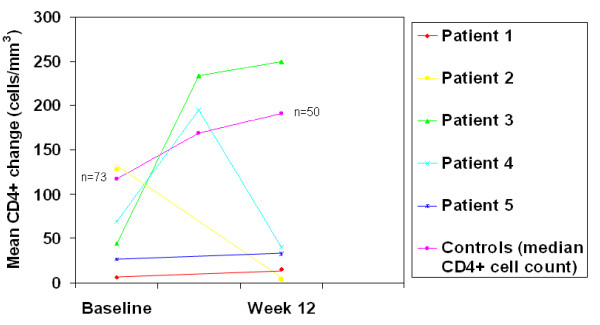
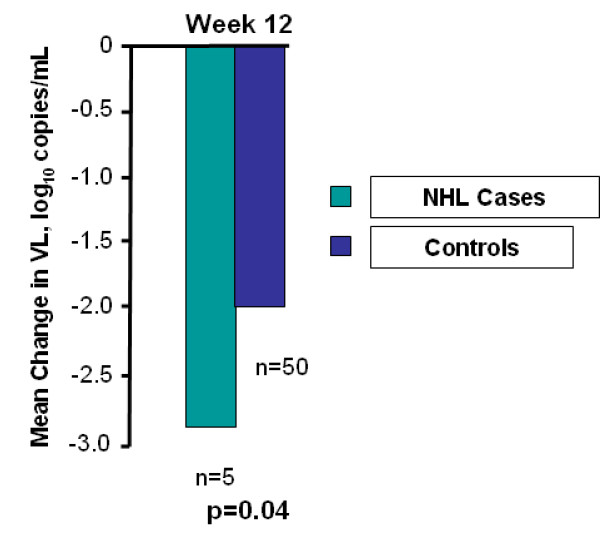
Results: Five cases occurred among 78 patients (mean incidence = 64.1/1000 patient-years). All cases received raltegravir and one received etravirine. Median symptom onset from newer-class antiretroviral initiation was 5 weeks. At baseline, the median CD4 and VL for NHL cases (n = 5) versus controls (n = 73) were 44 vs.117 cells/mm3 (p = 0.09) and 5.2 vs. 4.2 log10 (p = 0.06), respectively. The mean increase in CD4 at week 12 in NHL cases compared to controls was 13 (n = 5) vs. 74 (n = 50)(p = 0.284). Mean VL log10 reduction in NHL cases versus controls at week 12 was 2.79 (n = 5) vs. 1.94 (n = 50)(p = 0.045).
Conclusions: An unexpectedly high rate of NHL was detected among treatment-experienced patients achieving a high level of virologic response with newer-class antiretrovirals. We observed trends toward lower baseline CD4 and higher baseline VL in NHL cases, with a significantly greater decline in VL among cases by 12 weeks. HIV-related NHL can occur in the setting of immune reconstitution. Potential immunologic, virologic, and newer-class antiretroviral-specific factors associated with rapid development of NHL warrants further investigation.
Figures
References
-
- Patel P, Hanson DL, Sullivan PS, Novak RM, Moorman AC, Tong TC, Holmberg SD, Brooks JT. Incidence of types of cancer among HIV-infected persons compared with the general population in the United States, 1992-2003. Ann Intern Med. 2008;148:728–736. - PubMed
-
- Matthews GV, Bower M, Mandalia S, Powles T, Nelson MR, Gazzard BG. Changes in acquired immunodeficiency syndrome-related lymphoma since the introduction of highly active antiretroviral therapy. Blood. 2000;96:2730–2734. - PubMed
-
- Crum-Cianflone N, Hullsiek KH, Marconi V, Weintrob A, Ganesan A, Barthel RV, Fraser S, Agan BK, Wegner S. Trends in the incidence of cancers among HIV-infected persons and the impact of antiretroviral therapy: a 20-year cohort study. AIDS. 2009;23:41–50. doi: 10.1097/QAD.0b013e328317cc2d. - DOI - PMC - PubMed
LinkOut - more resources
Full Text Sources
Research Materials
