


Beyond reversal: a critical role for human orbitofrontal cortex in flexible learning from probabilistic feedback
- PMID: 21159958
- PMCID: PMC6634931
- DOI: 10.1523/JNEUROSCI.1958-10.2010
Beyond reversal: a critical role for human orbitofrontal cortex in flexible learning from probabilistic feedback
Abstract
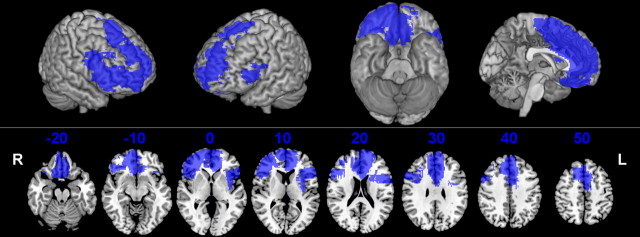
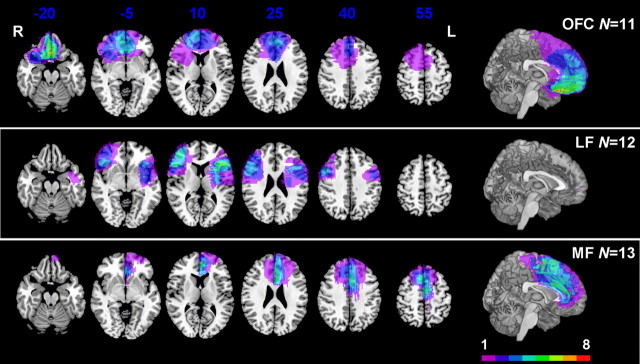
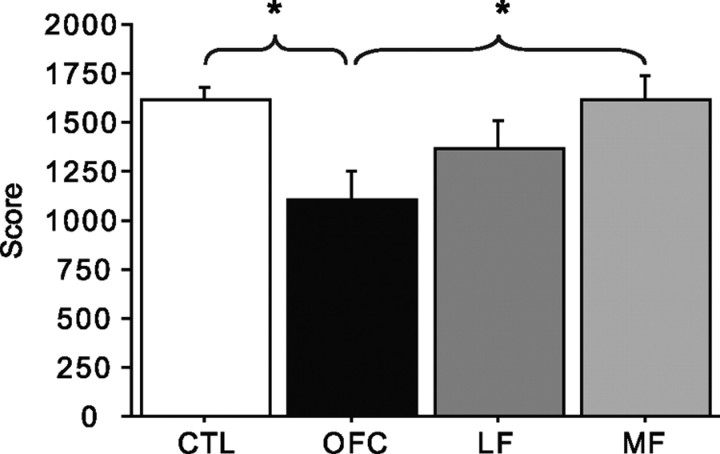
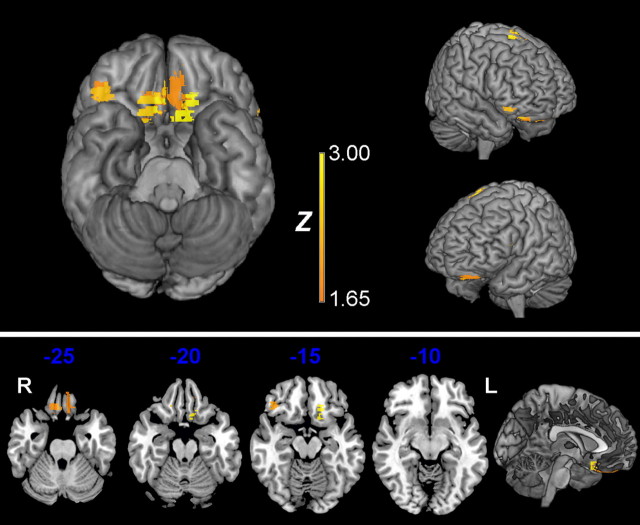
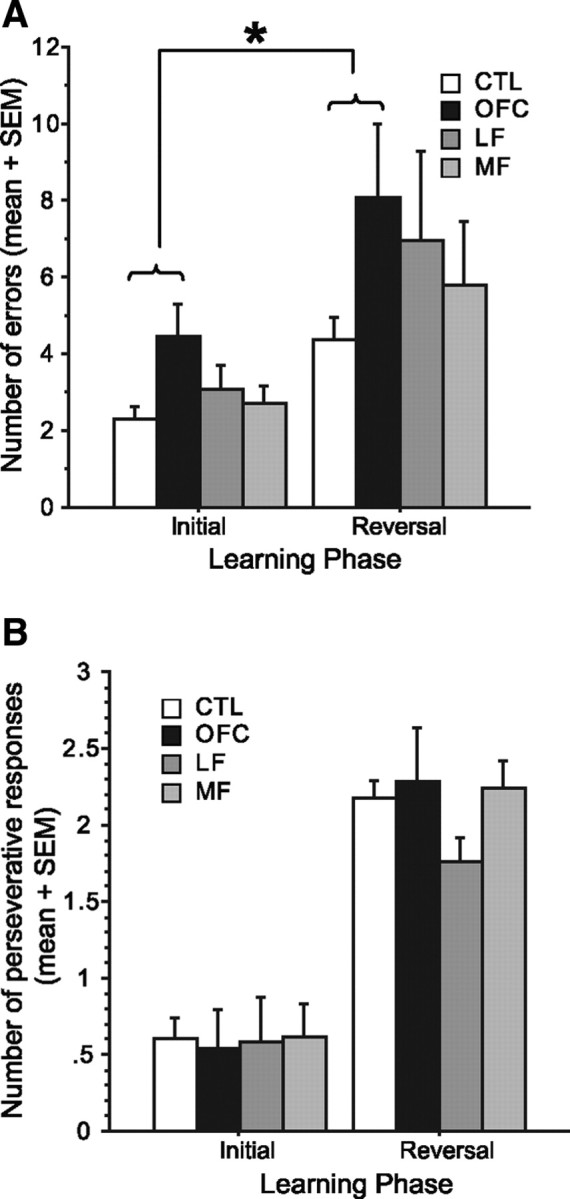
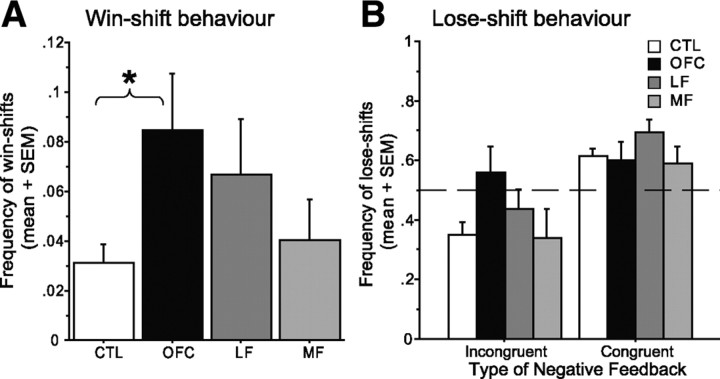
Damage to the orbitofrontal cortex (OFC) has been linked to impaired reinforcement processing and maladaptive behavior in changing environments across species. Flexible stimulus-outcome learning, canonically captured by reversal learning tasks, has been shown to rely critically on OFC in rats, monkeys, and humans. However, the precise role of OFC in this learning remains unclear. Furthermore, whether other frontal regions also contribute has not been definitively established, particularly in humans. In the present study, a reversal learning task with probabilistic feedback was administered to 39 patients with focal lesions affecting various sectors of the frontal lobes and to 51 healthy, demographically matched control subjects. Standard groupwise comparisons were supplemented with voxel-based lesion-symptom mapping to identify regions within the frontal lobes critical for task performance. Learning in this dynamic stimulus-reinforcement environment was considered both in terms of overall performance and at the trial-by-trial level. In this challenging, probabilistic context, OFC damage disrupted both initial and reversal learning. Trial-by-trial performance patterns suggest that OFC plays a critical role in interpreting feedback from a particular trial within the broader context of the outcome history across trials rather than in simply suppressing preexisting stimulus-outcome associations. The findings show that OFC, and not other prefrontal regions, plays a necessary role in flexible stimulus-reinforcement learning in humans.
Figures
References
-
- Behrens TE, Woolrich MW, Walton ME, Rushworth MF. Learning the value of information in an uncertain world. Nat Neurosci. 2007;10:1214–1221. - PubMed
-
- Berlin HA, Rolls ET, Kischka U. Impulsivity, time perception, emotion and reinforcement sensitivity in patients with orbitofrontal cortex lesions. Brain. 2004;127:1108–1126. - PubMed
-
- Brunner E, Munzel U. The nonparametric Behrens-Fisher problem: asymptotic theory and a small-sample approximation. Biom J. 2000;42:17–25.
-
- Budhani S, Marsh AA, Pine DS, Blair RJ. Neural correlates of response reversal: considering acquisition. Neuroimage. 2007;34:1754–1765. - PubMed
Publication types
MeSH terms
Grants and funding
LinkOut - more resources
Full Text Sources
