


Oxidative stress signaling underlying liver disease and hepatoprotective mechanisms
- PMID: 21160968
- PMCID: PMC2999253
- DOI: 10.4254/wjh.v1.i1.72
Oxidative stress signaling underlying liver disease and hepatoprotective mechanisms
Abstract
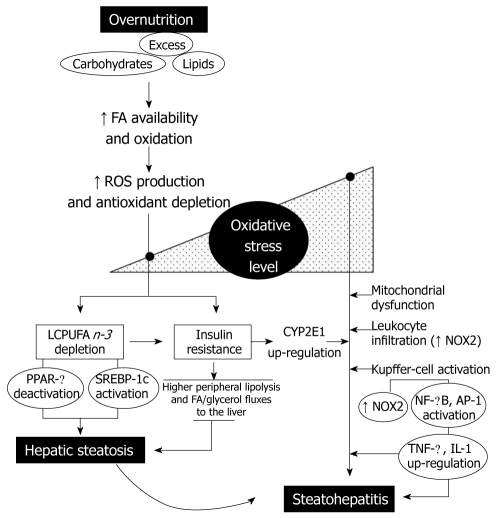
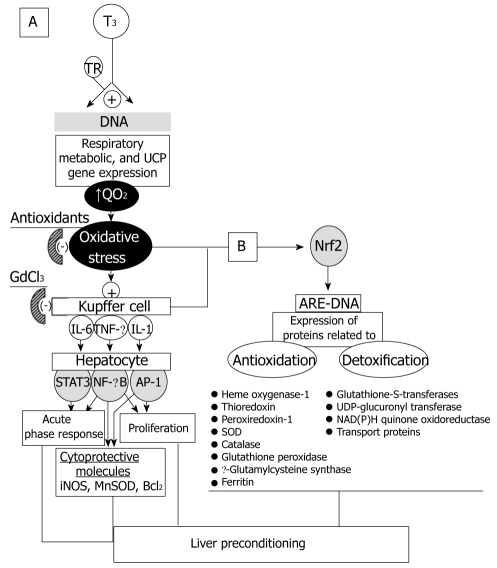
Oxidative stress is a redox imbalance between pro-oxidants and antioxidants in favour of the former ones, leading to different responses depending on the level of pro-oxidants and the duration of the exposure. In this article, we discuss the damaging or cytoprotective signaling mechanisms associated with oxidative stress by addressing (1) the role of prolonged and severe oxidative stress and insulin resistance as determinant factors in the pathogenesis of non-alcoholic fatty liver disease associated with obesity, which, with the concurrence of nutritional factors, may determine the onset of fatty liver and its progression to steatohepatitis; and (2) the development of an acute and mild pro-oxidant state by thyroid hormone administration, which elicits the redox up-regulation of the expression of proteins affording cell protection, as a preconditioning strategy against ischemia-reperfusion liver injury.
Keywords: Insulin resistance; Liver preconditioning; Non-alcoholic fatty liver disease; Obesity; Oxidative stress; Thyroid hormone.
Figures
References
-
- Sies H. Biochemistry of oxidative stress. Angew Chem Int Ed Engl. 1986;25:1058–1071.
-
- Videla LA, Fernandez V. Biochemical aspects of cellular oxidative stress. Arch Biol Med Exp (Santiago) 1988;21:85–92. - PubMed
-
- Fernandez V, Videla LA. Biochemical aspects of cellular antioxidant systems. Biol Res. 1996;29:177–182. - PubMed
-
- Droge W. Free radicals in the physiological control of cell function. Physiol Rev. 2002;82:47–95. - PubMed
-
- Martindale JL, Holbrook NJ. Cellular response to oxidative stress: signaling for suicide and survival. J Cell Physiol. 2002;192:1–15. - PubMed
LinkOut - more resources
Full Text Sources
Other Literature Sources
