


Gender-related variations in iron metabolism and liver diseases
- PMID: 21161013
- PMCID: PMC2999297
- DOI: 10.4254/wjh.v2.i8.302
Gender-related variations in iron metabolism and liver diseases
Abstract
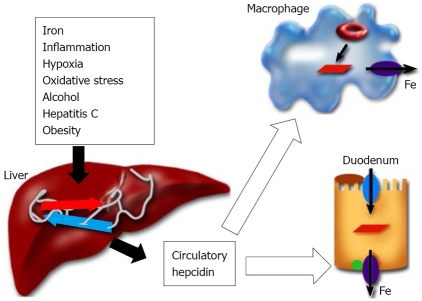
The regulation of iron metabolism involves multiple organs including the duodenum, liver and bone marrow. The recent discoveries of novel iron-regulatory proteins have brought the liver to the forefront of iron homeostasis. The iron overload disorder, genetic hemochromatosis, is one of the most prevalent genetic diseases in individuals of Caucasian origin. Furthermore, patients with non-hemochromatotic liver diseases, such as alcoholic liver disease, chronic hepatitis C or nonalcoholic steatohepatitis, often exhibit elevated serum iron indices (ferritin, transferrin saturation) and mild to moderate hepatic iron overload. Clinical data indicate significant differences between men and women regarding liver injury in patients with alcoholic liver disease, chronic hepatitis C or nonalcoholic steatohepatitis. The penetrance of genetic hemochromatosis also varies between men and women. Hepcidin has been suggested to act as a modifier gene in genetic hemochromatosis. Hepcidin is a circulatory antimicrobial peptide synthesized by the liver. It plays a pivotal role in the regulation of iron homeostasis. Hepcidin has been shown to be regulated by iron, inflammation, oxidative stress, hypoxia, alcohol, hepatitis C and obesity. Sex and genetic background have also been shown to modulate hepcidin expression in mice. The role of gender in the regulation of human hepcidin gene expression in the liver is unknown. However, hepcidin may play a role in gender-based differences in iron metabolism and liver diseases. Better understanding of the mechanisms associated with gender-related differences in iron metabolism and chronic liver diseases may enable the development of new treatment strategies.
Keywords: Alcohol; Hemochromatosis; Hepatitis C; Hepcidin; Non-alcoholic steatohepatitis.
Figures
References
-
- Nemeth E, Ganz T. Regulation of iron metabolism by hepcidin. Annu Rev Nutr. 2006;26:323–342. - PubMed
-
- Aisen P, Enns C, Wessling-Resnick M. Chemistry and biology of eukaryotic iron metabolism. Int J Biochem Cell Biol. 2001;33:940–959. - PubMed
-
- Wood R, Ronnenberg A. Minerals. In: Shils ME, Shike M, Ross AC, Caballero B, Cousins RJ, et al., editors. Modern nutrition in health and disease. 10 ed: Lippincott Williams & Wilkins; 2006. pp. 248–271.
-
- Knutson M, Wessling-Resnick M. Iron metabolism in the reticuloendothelial system. Crit Rev Biochem Mol Biol. 2003;38:61–88. - PubMed
Grants and funding
LinkOut - more resources
Full Text Sources
Other Literature Sources
