


Triple negative breast cancer: unmet medical needs
- PMID: 21161370
- PMCID: PMC3244802
- DOI: 10.1007/s10549-010-1293-1
Triple negative breast cancer: unmet medical needs
Abstract
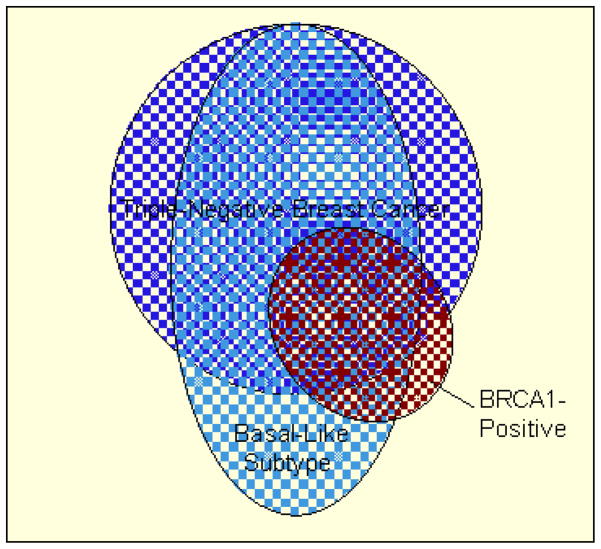
Triple negative breast cancer (TNBC) is an aggressive clinical phenotype characterized by lack of expression (or minimal expression) of estrogen receptor (ER) and progesterone receptor (PR) as well as an absence of human epidermal growth factor receptor-2 (HER2) overexpression. It shows substantial overlap with basal-type and BRCA1-related breast cancers, both of which also have aggressive clinical courses. However, this overlap is not complete, and the expression of ER, PR, and HER2 has been noted in basal-like tumors. TNBC also includes the normal-like subtype, and not all patients with TNBC harbor BRCA1 mutations. Because of its expression profile, TNBC is not amenable to treatment with hormone therapy or the anti-HER2 monoclonal antibody trastuzumab, and systemic treatment options are currently limited to cytotoxic chemotherapy. Overall survival, whether in early-stage or advanced disease, is poor compared with that in patients who have other phenotypes. A number of targeted approaches to TNBC are undergoing clinical evaluation, including the use of agents with poly(ADP-ribose) polymerase inhibitory properties such as iniparib (the United States Adopted Name for the investigational agent BSI-201), olaparib (AZD2281), and veliparib (ABT-888), antiangiogenic agents such as bevacizumab and sunitinib, and epidermal growth factor receptor blockers such as cetuximab and erlotinib. Encouraging results with some of these agents have been reported, thereby offering the promise for improved outcomes in patients with TNBC. The clinical characteristics of TNBC and clinical experience to date with novel targeted agents under development for this aggressive phenotype is reviewed.
Figures
References
-
- Jemal A, Siegel R, Ward E, Hao Y, Xu J, Thun MJ. Cancer statistics, 2009. CA Cancer J Clin. 2009;59:225–249. - PubMed
-
- Perou CM, Sørlie T, Eisen MB, van de Rijn M, Jeffrey SS, Rees CA, Pollack JR, Ross DT, Johnsen H, Akslen LA, Fluge O, Pergamenschikov A, Williams C, Zhu SX, Lonning PE, Borresen-Dale AL, Brown PO, Botstein D. Molecular portraits of human breast tumours. Nature. 2000;406:747–752. - PubMed
-
- Sørlie T, Perou CM, Tibshirani R, Aas T, Geisler S, Johnsen H, Hastie T, Eisen MB, van de Rijn M, Jeffrey SS, Thorsen T, Quist H, Matese JC, Brown PO, Botstein D, Eystein LP, Borresen-Dale AL. Gene expression patterns of breast carcinomas distinguish tumor subclasses with clinical implications. Proc Natl Acad Sci USA. 2001;98:10869–10874. - PMC - PubMed
-
- Sørlie T, Tibshirani R, Parker J, Hastie T, Marron JS, Nobel A, Deng S, Johnsen H, Pesich R, Geisler S, Demeter J, Perou CM, Lonning PE, Brown PO, Borresen-Dale AL, Botstein D. Repeated observation of breast tumor subtypes in independent gene expression data sets. Proc Natl Acad Sci USA. 2003;100:8418–8423. - PMC - PubMed
-
- Hennessy BT, Gonzalez-Angulo AM, Stemke-Hale K, Gilcrease MZ, Krishnamurthy S, Lee JS, Fridlyand J, Sahin A, Agarwal R, Joy C, Liu W, Stivers D, Baggerly K, Carey M, Lluch A, Monteagudo C, He X, Weigman V, Fan C, Palazzo J, Hortobagyi GN, Nolden LK, Wang NJ, Valero V, Gray JW, Perou CM, Mills GB. Characterization of a naturally occurring breast cancer subset enriched in epithelial-to-mesenchymal transition and stem cell characteristics. Cancer Res. 2009;69:4116–4124. - PMC - PubMed
Publication types
MeSH terms
Substances
Grants and funding
LinkOut - more resources
Full Text Sources
Other Literature Sources
Medical
Research Materials
Miscellaneous
