


Keeping them in "STYLE": finding, linking, and retaining young HIV-positive black and Latino men who have sex with men in care
- PMID: 21162690
- PMCID: PMC3030910
- DOI: 10.1089/apc.2010.0192
Keeping them in "STYLE": finding, linking, and retaining young HIV-positive black and Latino men who have sex with men in care
Abstract
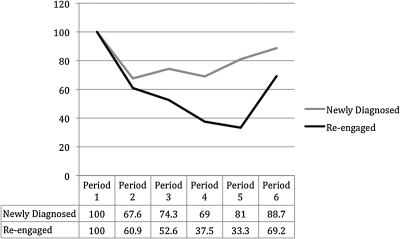
Young men who have sex with men (YMSM) of color are at particularly increased risk for HIV infection compared to white MSM. National data highlight the need to link YMSM of color to care to improve their overall health and stem further infections, yet, there is limited data on interventions and clinical outcomes focused on engaging and retaining youth, specifically HIV-infected YMSM of color in care. To address the medical care needs of this underserved population, in 2005, the Health Research and Services Administration (HRSA) created the YMSM of Color Initiative. Utilizing a social marketing campaign targeting youth and members of their sexual and social networks, testing and outreach on college campuses and within the broader community, and a tightly linked medical-social support network, we created STYLE (Strength Through Youth Livin' Empowered), a novel intervention that sought to diagnose, engage, and retain HIV-positive black and Latino YMSM in HIV primary care services. Over a 3-year period, 81 men were either newly diagnosed or reengaged in care. Overall, 63% of the cohort was retained in clinical care; defined as attending at least one medical visit every 4 months. Compared to the 3 years prior to STYLE, the odds ratio for whether or not someone attended a clinic visit was 2.58 (95% confidence interval [CI] 1.34-4.98) if enrolled in STYLE. We conclude that compared to a pre-STYLE cohort, STYLE was an effective intervention that increased HIV diagnoses, provided efficient and timely engagement in care for both those newly diagnosed and those who had fallen out of care and improved overall retention.
Figures
References
-
- CDC. Trends in HIV/AIDS diagnoses among men who have sex with men—33 states, 2001–2006. MMWR. 2008;57:681–686. - PubMed
-
- Valleroy LA. MacKellar DA. Karon JM, et al. HIV prevalence and associated risks in young men who have sex with men. Young Men's Survey Study Group. JAMA. 2000;284:198–204. - PubMed
-
- Cherry DK. Woodwell DA. Rechtsteiner EA. Advance data from vital and health statistics. Hyattsville, Maryland: National Center for Health Statistics; 2007. National Ambulatory Medical Care Survey: 2005 Summary. - PubMed
-
- Fortuna RJ. Robbins BW. Halterman JS. Ambulatory care among young adults in the United States. Ann Intern Med. 2009;151:379–385. - PubMed
-
- Harris SK. Samples CL. Keenan PM. Fox DJ. Melchiono MW. Woods ER. Outreach, mental health, and case management services: Can they help to retain HIV-positive and at-risk youth and young adults in care? Matern Child Health J. 2003;7:205–218. - PubMed
Publication types
MeSH terms
Substances
Grants and funding
LinkOut - more resources
Full Text Sources
Medical
