


Group motivational interviewing to promote adherence to antiretroviral medications and risk reduction behaviors in HIV infected women
- PMID: 21165692
- PMCID: PMC3112287
- DOI: 10.1007/s10461-010-9865-y
Group motivational interviewing to promote adherence to antiretroviral medications and risk reduction behaviors in HIV infected women
Abstract
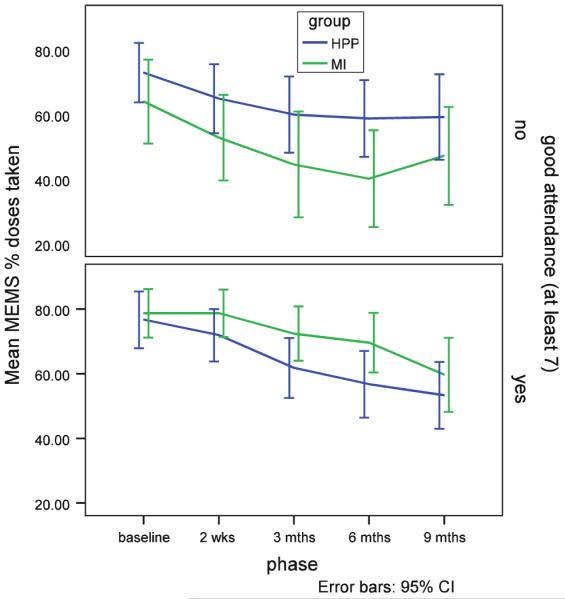
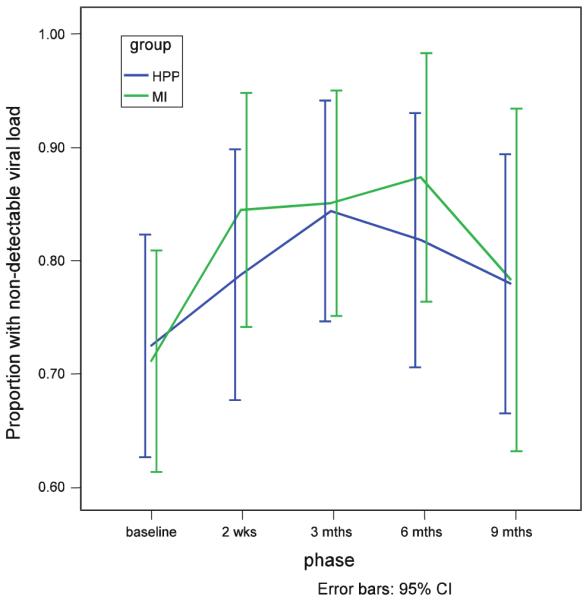
We present the results of a clinical trial that tested the efficacy of using motivational interviewing (MI) in a group format to promote adherence to antiretroviral medications and risk reduction behaviors (RRB) in 203 predominately African American HIV infected women. It was compared to a group health promotion program. Participants were followed for 9 months. Adherence was measured by MEMS(®); and RRB by self-report. Controlling for recruitment site and years on ART, no significant group by time effects were observed. Attendance (≥7/8 sessions) modified the effects. Higher MI attendees had better adherence at all follow-ups, a borderline significant group by time effect (p = 0.1) for % Doses Taken on Schedule, a significantly larger proportion who reported abstinence at 2 weeks, 6, and 9 months, and always used protection during sex at 6 and 9 months. Though not conclusive, the findings offer some support for using MI in a group format to promote adherence and some risk reduction behaviors when adequate attendance is maintained.
Figures



References
-
- CDC Effect of antiretroviral therapy on risk of sexual transmission of HIV infection and superinfection: centers for disease control and prevention. 2009 September;
-
- CDC Recommendations for use of antiretroviral drugs in pregnant HIV-infected women for maternal health and interventions to reduce perinatal HIV transmission in the United States. 2009 cited 2009 October 18. - PubMed
-
- Remien RH, Exner T, Kertzner RM, Ehrhardt AA, Rotheram-Borus MJ, Johnson MO, et al. Depressive symptomatology among HIV-positive women in the era of HAART: a stress and coping model. Am J Community Psychol. 2006;38(3–4):275–85. - PubMed
-
- Wilson TE, Barron Y, Cohen M, Richardson J, Greenblatt R, Sacks HS, et al. Adherence to antiretroviral therapy and its association with sexual behavior in a national sample of women with human immunodeficiency virus. Clin Infect Dis. 2002;34(4):529–34. - PubMed
Publication types
MeSH terms
Substances
Grants and funding
LinkOut - more resources
Full Text Sources
Medical
