


Postpartum anxiety, depression and social health: findings from a population-based survey of Australian women
- PMID: 21167078
- PMCID: PMC3022850
- DOI: 10.1186/1471-2458-10-771
Postpartum anxiety, depression and social health: findings from a population-based survey of Australian women
Abstract
Background: Whilst the prevalence and correlates of postpartum depression are well established, far less is known about postpartum anxiety. Studies have described the association between socio-demographic factors and postpartum depression, yet few have explored the association between stressors in women's lives around the time of having a baby and maternal psychological morbidity. This study aimed to describe the population prevalence of postpartum depression, anxiety, co-morbid anxiety and depression and social health issues; and to examine the association between postpartum psychological and social health issues experienced in the six months following birth.
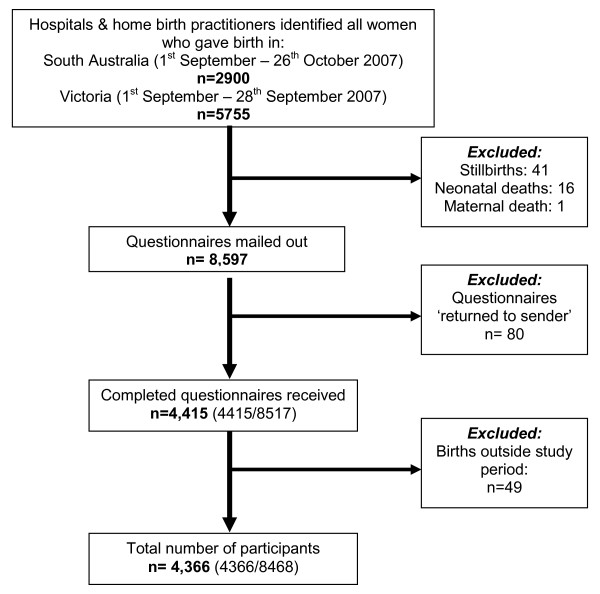
Methods: Population-based survey of all women who gave birth in Victoria and South Australia in September/October 2007. Women were mailed the survey questionnaire six months following birth. Anxiety and depression were measured using the Depression Anxiety Stress Scales (DASS-21).
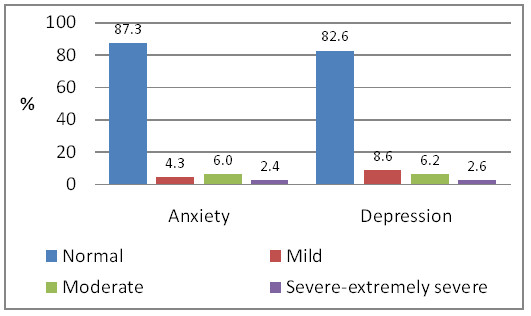
Results: Questionnaires were completed by 4,366 women. At six months postpartum the proportion of women scoring above the 'normal' range on the DASS-21 was 12.7% for anxiety,17.4% for depression, and 8.1% for co-morbid depression and anxiety. Nearly half the sample reported experiencing stressful life events or social health issues in the six months following birth, with 38.3% reporting one to two and 8.8% reporting three or more social health issues. Women reporting three or more social health issues were significantly more likely to experience postnatal anxiety (Adj OR = 4.12, 95% CI 3.0-5.5) or depression (Adj OR = 5.11, 95% CI = 3.9-6.7) and co-morbid anxiety and depression (Adj OR = 5.41, 95% CI 3.8-7.6) than women who did not report social health issues.
Conclusions: Health care providers including midwives, nurses, medical practitioners and community health workers need to be alert to women's social circumstances and life events experienced in the perinatal period and the interplay between social and emotional health. Usual management for postpartum mental health issues including Cognitive Behavioural Therapy and pharmacological approaches may not be effective if social health issues are not addressed. Coordinated and integrated perinatal care that is responsive to women's social health may lead to improvements in women's emotional wellbeing following birth.
Figures
References
-
- O'Hara M, Swain A. Rates and risk of postpartum depression - a meta-analysis. Int Rev Psychiatry. 1996;8:37–54.
-
- Herrick H. The effect of stressful life events on postpartum depression: Results from the 1997-1998 North Carolina Pregnancy Risk Assessment Monitoring System (PRAMS) SCHS Stud. 2000;121:1–9.
