


doi: 10.1038/nn.2719.
Epub 2010 Dec 19.
Characterization of the proteome, diseases and evolution of the human postsynaptic density
Affiliations
- PMID: 21170055
- PMCID: PMC3040565
- DOI: 10.1038/nn.2719
Item in Clipboard
Characterization of the proteome, diseases and evolution of the human postsynaptic density
Nat Neurosci.
2011 Jan.
Abstract
We isolated the postsynaptic density from human neocortex (hPSD) and identified 1,461 proteins. hPSD mutations cause 133 neurological and psychiatric diseases and were enriched in cognitive, affective and motor phenotypes underpinned by sets of genes. Strong protein sequence conservation in mammalian lineages, particularly in hub proteins, indicates conserved function and organization in primate and rodent models. The hPSD is an important structure for nervous system disease and behavior.
Figures
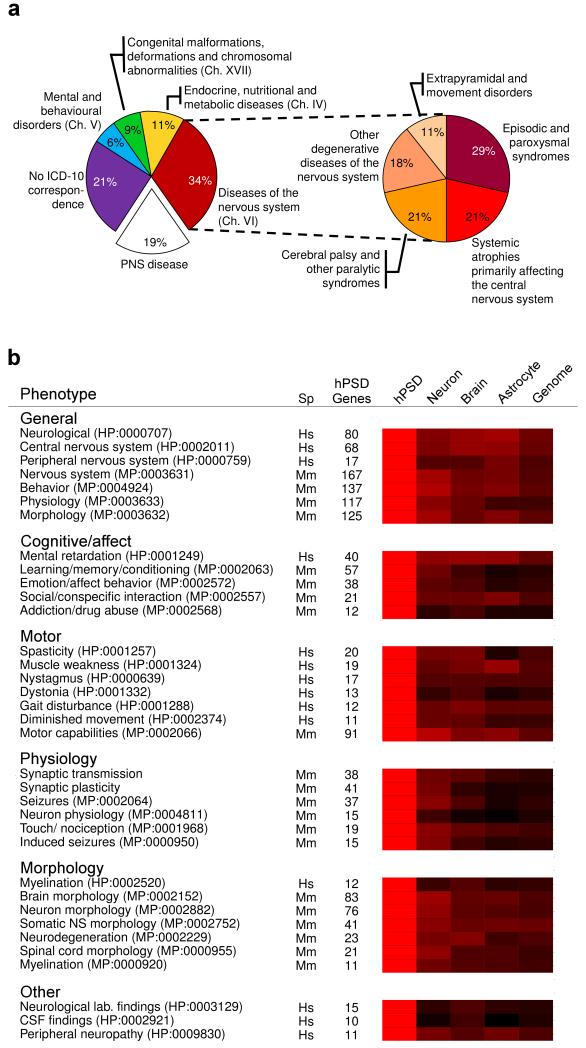
a. Distribution of hPSD nervous system diseases in 4 ICD–10 chapters (left chart) with Chapter VI expanded (right chart) to show further subclassifications. b. Representative human and mouse phenotypes enriched in the hPSD. Categories (bold) of human and mouse phenotypes with number of genes (hPSD genes). Heatmap compares enrichment of these phenotypes in 4 gene sets relative to the enrichment of the hPSD (shown in red). All other gene sets showed lower enrichment (darker colors with black representing no enrichment). Neuron. human cortical neuron transcriptome; brain, whole mouse brain proteome; astrocyte, human astrocyte transcriptome; and human genome. Hs, human; Mm, mouse. HPO and MPO phenotype IDs in brackets after each named phenotype.
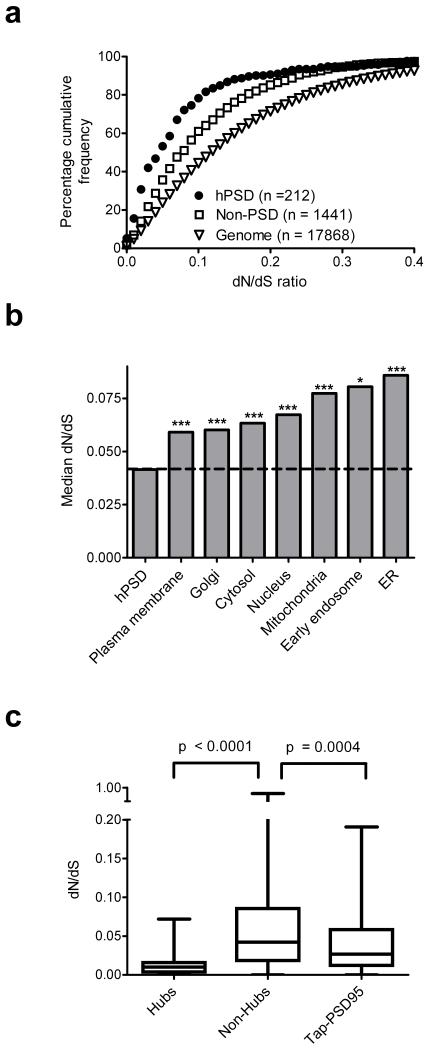
a. Cumulative frequency plot of dN/dS values for hPSD and non–PSD genes expressed in cortical neurons, and human genome. hPSD neuronal genes are more constrained than non–PSD neuronal genes (p < 10−11). b. Median mouse–human dN/dS shown for hPSD and subcellular structures expressed in cortical neurons. Significance: p < 0.05 (*), p< 0.001 (***). c, Boxplots of dN/dS distribution in hPSD hub proteins (>15 interactions, n = 23), non–hubs (≤15 interactions, n = 725) and the tandem affinity purification of PSD–95 complex.
References
Publication types
MeSH terms
Substances
Grants and funding
LinkOut - more resources
Full Text Sources
Other Literature Sources
Molecular Biology Databases
