


Declining sleep quality among nurses: a population-based four-year longitudinal study on the transition from nursing education to working life
- PMID: 21170381
- PMCID: PMC2999529
- DOI: 10.1371/journal.pone.0014265
Declining sleep quality among nurses: a population-based four-year longitudinal study on the transition from nursing education to working life
Abstract
Background: Several studies have established impaired sleep is a common problem among nurses. Overworked, fatigued and stressed nurses are at a higher risk of making mistakes that threaten patient safety as well as their own health. The aim of the present study was to longitudinally monitor the development of sleep quality in nurses, starting from the last semester at the university, with three subsequent annual follow-ups once the nurses had entered working life.
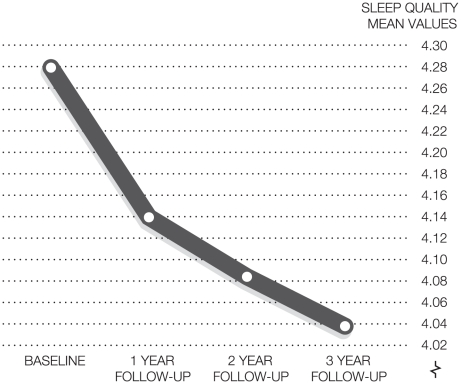
Methodology/principal findings: Nationwide, longitudinal questionnaire study of nursing students and newly qualified nurses in Sweden. The results imply a continuous decline in sleep quality among nurses during the three years of follow-up, starting from their last semester of nursing education and continuing for three years into their working life. The most pronounced short-term decline in sleep quality seems to occur in the transition between student life and working life.
Conclusion/significance: This finding is important since it may affect the quality of care and the health of nurses negatively.
Conflict of interest statement
Figures
References
-
- Demerouti E, Bakker AB, Nachreiner F, Schaufeli WB. A model of burnout and life satisfaction amongst nurses. J Adv Nurs. 2000;32:454–464. - PubMed
-
- McGrath A, Reid N, Boore J. Occupational stress in nursing. International Journal of Nursing Studies (1989), 26, 359-368. Int J Nurs Stud. 2003;40:555–565; discussion 567–559. - PubMed
-
- Healy CM, McKay MF. Nursing stress: the effects of coping strategies and job satisfaction in a sample of Australian nurses. J Adv Nurs. 2000;31:681–688. - PubMed
-
- Hughes RG, Rogers AE. Are you tired? Am J Nurs. 2004;104:36–38. - PubMed
-
- Johnson CJ, Croghan E, Crawford J. The problem and management of sickness absence in the NHS: considerations for nurse managers. J Nurs Manag. 2003;11:336–342. - PubMed
Publication types
MeSH terms
LinkOut - more resources
Full Text Sources
