IL-27 promotes T cell-dependent colitis through multiple mechanisms
- PMID: 21173106
- PMCID: PMC3023127
- DOI: 10.1084/jem.20100410
IL-27 promotes T cell-dependent colitis through multiple mechanisms
Abstract
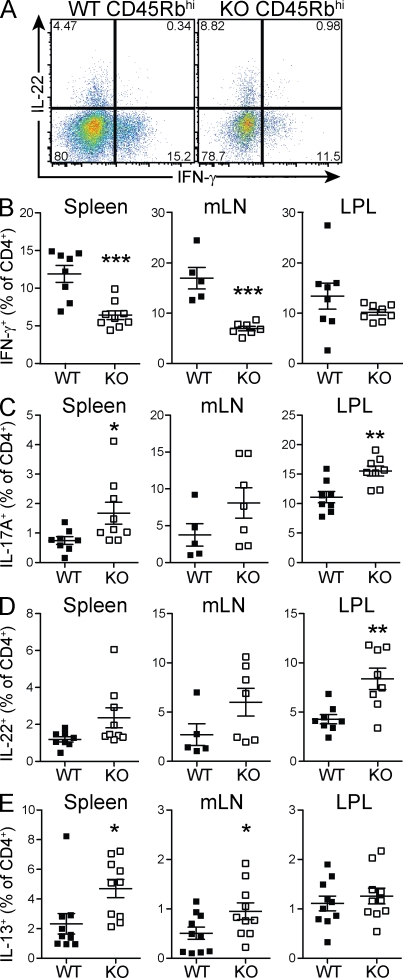
Interleukin-27 (IL-27) is a cytokine known to have both proinflammatory and immunoregulatory functions. The latter appear to dominate in vivo, where IL-27 suppresses TH17 responses and promotes the differentiation of Tr1 cells expressing interferon-γ and IL-10 and lacking forkhead box P3 (Foxp3). Accordingly, IL-27 receptor α (Il27ra)-deficient mice suffer from exacerbated immune pathology when infected with various parasites or challenged with autoantigens. Because the role of IL-27 in human and experimental mouse colitis is controversial, we studied the consequences of Il27ra deletion in the mouse T cell transfer model of colitis and unexpectedly discovered a proinflammatory role of IL-27. Absence of Il27ra on transferred T cells resulted in diminished weight loss and reduced colonic inflammation. A greater fraction of transferred T cells assumed a Foxp3(+) phenotype in the absence of Il27ra, suggesting that IL-27 functions to restrain regulatory T cell (T(reg)) development. Indeed, IL-27 suppressed Foxp3 induction in vitro and in an ovalbumin-dependent tolerization model in vivo. Furthermore, effector cell proliferation and IFN-γ production were reduced in the absence of Il27ra. Collectively, we describe a proinflammatory role of IL-27 in T cell-dependent intestinal inflammation and provide a rationale for targeting this cytokine in pathological situations that result from a breakdown in peripheral immune tolerance.
Figures



References
-
- Artis D., Villarino A., Silverman M., He W., Thornton E.M., Mu S., Summer S., Covey T.M., Huang E., Yoshida H., et al. 2004. The IL-27 receptor (WSX-1) is an inhibitor of innate and adaptive elements of type 2 immunity. J. Immunol. 173:5626–5634 - PubMed
Publication types
MeSH terms
Substances
LinkOut - more resources
Full Text Sources
Other Literature Sources