


Women's knowledge about intrauterine contraception
- PMID: 21173643
- PMCID: PMC3244817
- DOI: 10.1097/AOG.0b013e318202b4c9
Women's knowledge about intrauterine contraception
Abstract
Objectives: To survey knowledge and attitudes about intrauterine contraception among reproductive-aged women in the area of Saint Louis, Missouri.
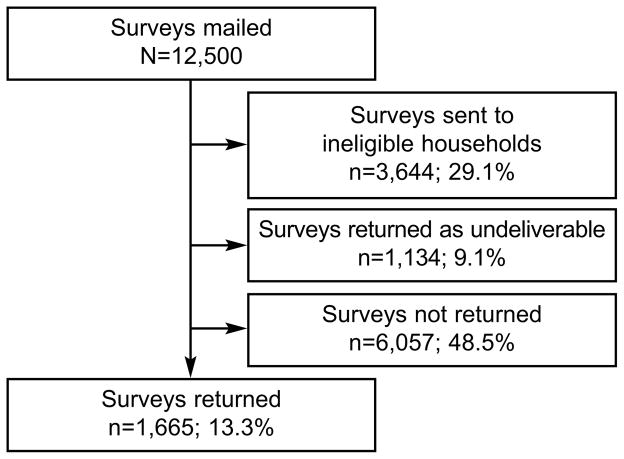
Methods: We mailed an eight-page written survey to 12,500 randomly selected households in the St. Louis area that asked English-literate, reproductive-aged, adult women to respond. The survey asked about obstetric and contraceptive history and effectiveness of contraceptive methods, as well as appropriate candidates for, side effects of, and perceived risks of intrauterine contraception. The results from 1,665 (13.3%) returned surveys were weighted for the analysis, which included descriptive statistics and polynomial logistic regression.
Results: Almost 8% of respondents were currently using or had previously used intrauterine contraception, and use was higher in women who reported discussing the method with their health care provider (adjusted odds ratio [OR] 13.4, 95% confidence interval [CI] 6.5-27.8). Sixty-one percent of respondents underestimated the effectiveness of intrauterine contraception, and up to one half of survey respondents were unable to correctly answer knowledge questions about intrauterine contraception use and safety. An additional 11%-36% of respondents indicated concern that intrauterine contraception is associated with complications such as infection, infertility, and cancer. Current and past intrauterine contraception users were more likely to be knowledgeable about intrauterine contraception. Women who were currently using intrauterine contraception were more likely to correctly estimate the effectiveness of intrauterine contraception (adjusted OR 7.6, 95% CI 3.2-18.0).
Conclusion: Reproductive-aged women's specific knowledge of the benefits and risks of intrauterine contraception is limited. More educational interventions are needed to increase women's knowledge about the effectiveness and benefits of intrauterine contraception.
Level of evidence: II.
Figures
References
-
- Finer LB, Henshaw SK. Disparities in rates of unintended pregnancy in the United States, 1994 and 2001. Perspect Sex Reprod Health. 2006;38:90–6. - PubMed
-
- Mosher WD, Jones J. Use of contraception in the United States: 1982–2008: data from the National Survey of Family Growth. Vital Health Stat. 2010;29:1–77. - PubMed
-
- Stanwood NL, Bradley KA. Young pregnant women’s knowledge of modern intrauterine devices. Obstet Gynecol. 2006;108:1417–22. - PubMed
-
- Forrest JD. U.S. women’s perceptions of and attitudes about the IUD. Obstet Gynecol Surv. 1996;51:S30–4. - PubMed
Publication types
MeSH terms
Grants and funding
LinkOut - more resources
Full Text Sources
Medical
Research Materials
Miscellaneous
