


Anti-tumour activity of bisphosphonates in preclinical models of breast cancer
- PMID: 21176176
- PMCID: PMC3046431
- DOI: 10.1186/bcr2769
Anti-tumour activity of bisphosphonates in preclinical models of breast cancer
Abstract
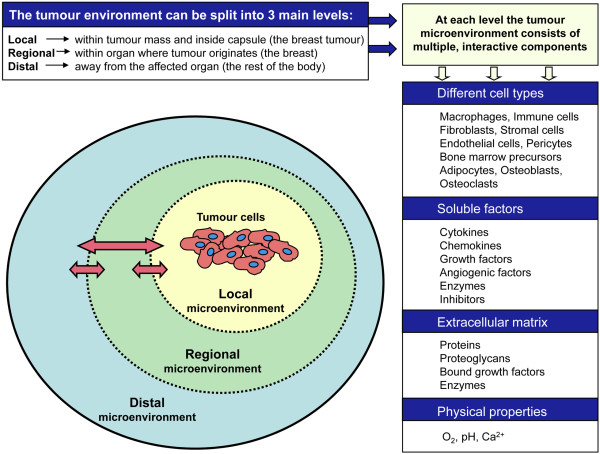
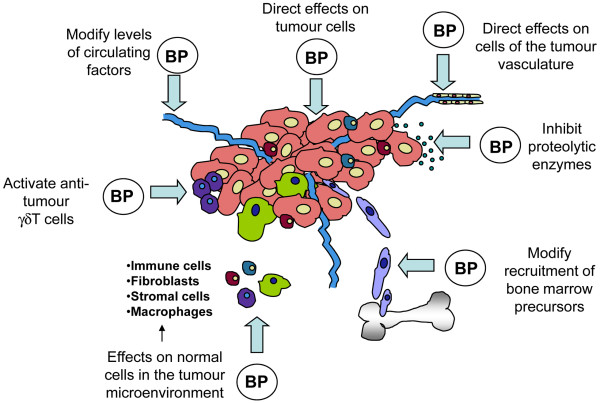
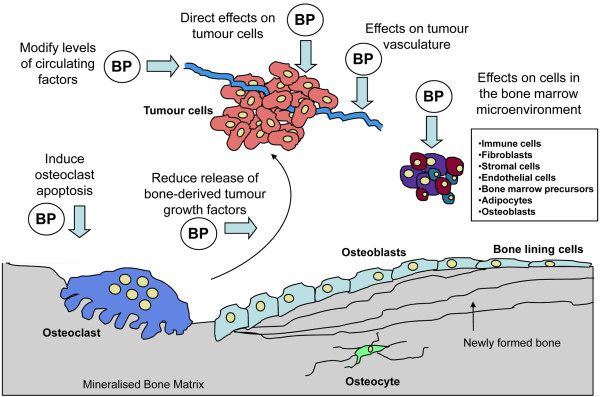
There is increasing evidence of anti-tumour effects of bisphosphonates from pre-clinical studies, supporting a role for these drugs beyond their traditional use in treatment of cancer-induced bone disease. A range of model systems have been used to investigate the effects of different bisphosphonates on tumour growth, both in bone and at peripheral sites. Most of these studies conclude that bisphosphonates cause a reduction in tumour burden, but that early intervention and the use of high and/or repeated dosing is required. Successful eradication of cancer may only be achievable by targeting the tumour cells directly whilst also modifying the tumour microenvironment. In line with this, bisphosphonates are demonstrated to be particularly effective at reducing breast tumour growth when used in combination with agents that directly target cancer cells. Recent studies have shown that the effects of bisphosphonates on breast tumours are not limited to bone, and that prolonged anti-tumour effects may be achieved following their inclusion in combination therapy. This has opened the field to a new strand of bisphosphonate research, focussed on elucidating their effects on cells and components of the local, regional and distal tumour microenvironment. This review highlights the recent developments in relation to proposed anti-tumour effects of bisphosphonates reported from in vitro and in vivo models, and summarises the data from key breast cancer studies. Evidence for effects on different processes and cell types involved in cancer development and progression is discussed, and the main outstanding issues identified.
Figures
References
-
- Clézardin P, Ebetino FH, Fournier PG. Bisphosphonates and cancer-induced bone disease: beyond their antiresorptive activity. Cancer Res. 2005;65:4971–4974. - PubMed
-
- AZURE, does Adjuvant Zoledronic acid redUce REcurrence in patients with high-risk, localized breast cancer? Trial Protocol. 2005. pp. 3–57. (ISRCTN79831382)
Publication types
MeSH terms
Substances
LinkOut - more resources
Full Text Sources
Medical
