


Dry cereals fortified with electrolytic iron or ferrous fumarate are equally effective in breast-fed infants
- PMID: 21178077
- PMCID: PMC3021442
- DOI: 10.3945/jn.110.127266
Dry cereals fortified with electrolytic iron or ferrous fumarate are equally effective in breast-fed infants
Abstract
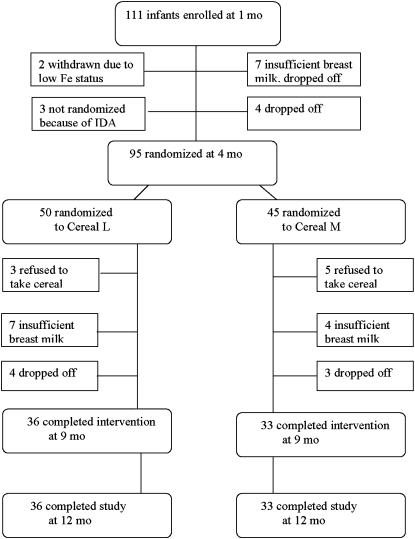
Precooked, instant (dry) infant cereals in the US are fortified with electrolytic iron, a source of low reactivity and suspected low bioavailability. Iron from ferrous fumarate is presumed to be more available. In this study, we compared a dry infant rice cereal (Cereal L) fortified with electrolytic iron (54.5 mg iron/100 g cereal) to a similar cereal (Cereal M) fortified with ferrous fumarate (52.2 mg Fe/100 g) for efficacy in maintaining iron status and preventing iron deficiency (ID) in breast-fed infants. Ascorbic acid was included in both cereals. In this prospective, randomized double-blind trial, exclusively breast-fed infants were enrolled at 1 mo and iron status was determined periodically. At 4 mo, 3 infants had ID anemia and were excluded. Ninety-five infants were randomized at 4 mo, and 69 (36 Cereal L, 33 Cereal M) completed the intervention at 9 mo. From 4 to 9 mo, they consumed daily one of the study cereals. With each cereal, 2 infants had mild ID, a prevalence of 4.2%, but no infant developed ID anemia. There were no differences in iron status between study groups. Iron intake from the study cereals was (mean ± SD) 1.21 ± 0.31 mg⋅kg(-1)⋅d(-1) from Cereal L and 1.07 ± 0.40 mg⋅kg(-1)⋅d(-1) from Cereal M. Eleven infants had low birth iron endowment (plasma ferritin < 55 μg/L at 2 mo) and 54% of these infants had ID with or without anemia by 4 mo. We conclude that electrolytic iron and ferrous fumarate were equally efficacious as fortificants of this infant cereal.
Trial registration: ClinicalTrials.gov NCT00841061.
Conflict of interest statement
Author disclosures: E. Ziegler, S. Fomon, S. Nelson, and J. Jeter, no conflicts of interest. R. Theuer was a consultant to Beech-Nut at the time this study was conceived and carried out.
References
-
- Saarinen UM, Siimes MA, Dallman PR. Iron absorption in infants: high bioavailability of breast milk iron as indicated by the extrinsic tag method of iron absorption and by the concentration of serum ferritin. J Pediatr. 1977;91:36–9 - PubMed
-
- Hicks PD, Zavaleta N, Chen Z, Abrams SA, Lönnerdal B. Iron deficiency, but not anemia, upregulates iron absorption in breast-fed Peruvian infants. J Nutr. 2006;136:2435–8 - PubMed
-
- Coulson KM, Cohen RL, Coulson WF. Hematocrit levels in breast-fed American babies-a preliminary study suggesting that nutritional anemia may not develop. Clin Pediatr (Phila). 1977;16:649–51 - PubMed
-
- Woodruff CW, Latham C, McDavid S. Iron nutrition in the breast-fed infant. J Pediatr. 1977;90:36–8 - PubMed
-
- Saarinen UM. Need for supplementation in infants on prolonged breast feeding. J Pediatr. 1978;93:177–80 - PubMed
