. 2010 Dec 13;5(12):e15235.
doi: 10.1371/journal.pone.0015235.

Safety and T cell modulating effects of high dose vitamin D3 supplementation in multiple sclerosis

Affiliations

Safety and T cell modulating effects of high dose vitamin D3 supplementation in multiple sclerosis

Joost Smolders et al. PLoS One. .

Abstract

Background: A poor vitamin D status has been associated with a high disease activity of multiple sclerosis (MS). Recently, we described associations between vitamin D status and peripheral T cell characteristics in relapsing remitting MS (RRMS) patients. In the present study, we studied the effects of high dose vitamin D3 supplementation on safety and T cell related outcome measures.

Methodology/principal findings: Fifteen RRMS patients were supplemented with 20,000 IU/d vitamin D3 for 12 weeks. Vitamin D and calcium metabolism were carefully monitored, and T cell characteristics were studied by flowcytometry. All patients finished the protocol without side-effects, hypercalcaemia, or hypercalciuria. The median vitamin D status increased from 50 nmol/L (31-175) at week 0 to 380 nmol/L (151-535) at week 12 (P<0.001). During the study, 1 patient experienced an exacerbation of MS and was censored from the T cell analysis. The proportions of (naïve and memory) CD4+ Tregs remained unaffected. Although Treg suppressive function improved in several subjects, this effect was not significant in the total cohort (P=0.143). An increased proportion of IL-10+ CD4+ T cells was found after supplementation (P=0.021). Additionally, a decrease of the ratio between IFN-γ+ and IL-4+ CD4+ T cells was observed (P=0.035).

Conclusion/significance: Twelve week supplementation of high dose vitamin D3 in RRMS patients was well tolerated and did not induce decompensation of calcium metabolism. The skewing towards an anti-inflammatory cytokine profile supports the evidence on vitamin D as an immune-modulator, and may be used as outcome measure for upcoming randomized placebo-controlled trials.

Trial registration: Clinicaltrials.gov NCT00940719.


Conflict of interest statement

Competing Interests: Joost Smolders received consultancy fee from Merck Serono, and received funding for travelling from Biogen Idec; Raymond Hupperts receives on a regular basis consultancy fees from Bayer Schering, Merck Serono, Biogen Idec and TEVA Aventis. This does not alter the authors' adherence to all the PLoS One policies on sharing data and materials.

Figures

Figure 1
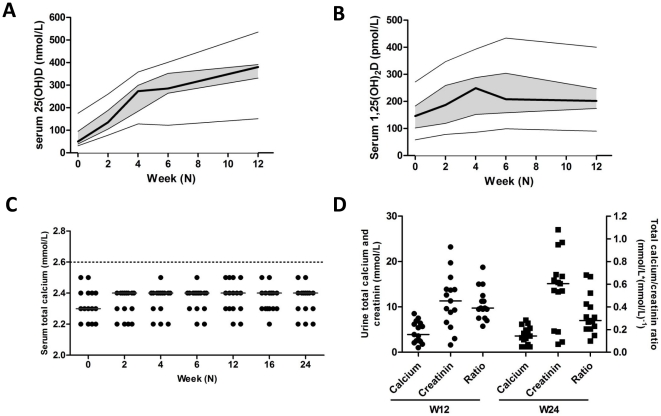
Figure 1. Vitamin D and calcium metabolism during supplementation.
A–B) The serum levels of 25(OH)D (A) and 1,25(OH)2D (B) are shown for the study visits at week 0, 2, 4, 6, and 12. The thick line indicates the median level, the grey zone the interquartile range. The thin lines show the minimum and maximum values. C) Total serum calcium levels at all study visits (week 0, 2, 4, 6, 12, 16, and 24). Hypercalcaemia is designated as a serum total calcium level ≥2.6 mmol/L. The grey lines indicate the median values. D) Urine levels of total calcium and creatinine levels and their ratio at week 12 and 24. Hypercalciuria is designated as a urine total calcium/creatinine ratio >1.0 mmol/L*(mmol/L)−1. The lines indicate the median values.
Figure 2
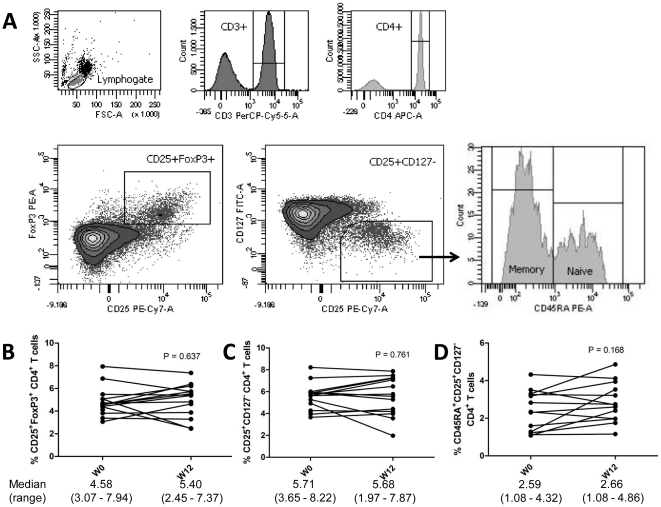
Figure 2. Phenotypic analysis of circulating regulatory T cells (Treg).
A) Isolated PBMC were analyzed directly ex-vivo by flow cytometry. In the lymphogate, CD3+CD4+ cells were assessed for the proportions of CD25+FoxP3+ and CD25+CD127 Treg cells. Expression of CD45RA was analyzed to phenotype naïve (CD45RA+) and memory (CD45RA) Treg. B–D) The proportions of circulating CD25+FoxP3+ (B) and CD25+CD127 (C)Treg, and of naïve Treg (D) before and after vitamin D3 supplementation (week 0 and 12). Significance was assessed with the Wilcoxon signed ranks comparison test.
Figure 3
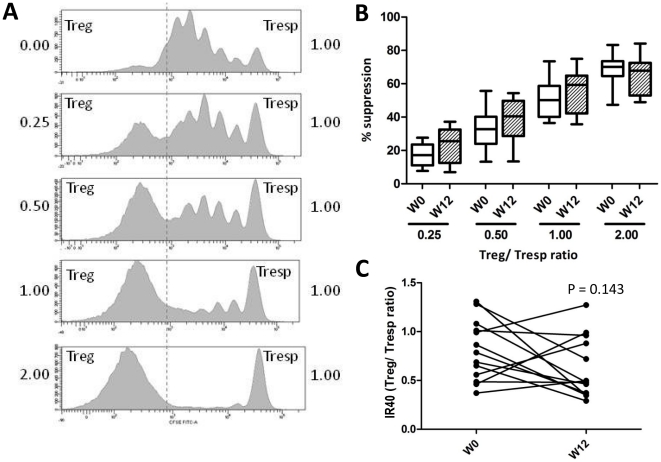
Figure 3. Regulatory T cell suppressive function.
A) A representative example of the CFSE signal in the CD4+7AAD lymphogate. The upper panel (0.00) shows proliferation of Tresp cells without Treg. Co-culture with an increasing proportion of Treg results in an inhibition of Tresp cell proliferation (downward panels, ratio 0.25∶1, 0.5∶1, 1∶1 and 2∶1, respectively). An increasing proportion of CFSE Treg can be observed, and a subsequent decrease of proliferating CFSE+ Tresp cells. Between the Treg/Tresp ratio 0.25 and 2.0, all patients achieved at both time points (week 0 and 12) 40% suppression of proliferation (IR40). B) The box and whisker plots show the suppression at each Treg/Tresp ratio before (week 0, open boxes) and after supplementation (week 12, dashed boxes). The boxes show the interquartile range, the whiskers the minimum and maximum value. C) IR40 before and after vitamin D3 supplementation (week 0 and 12).
Figure 4
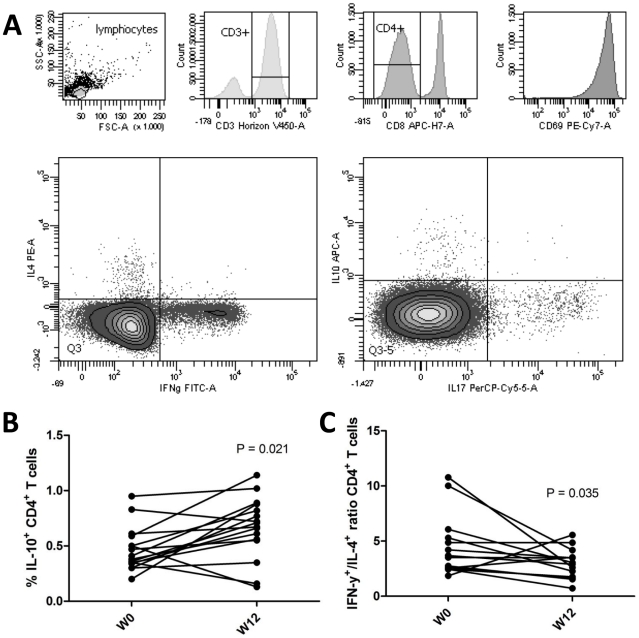
Figure 4. T helper cell cytokine profiles.
A) One million PBMC were stimulated for 5 hours with PMA and calcium ionomycin in the presence of monensin, and subsequently stained for flow cytometric analysis. In the lymphogate, CD3+CD8 cells were assessed for the proportions of IFN-γ+, IL-4+, IL-17+ and IL-10+ cells. CD69 was included to evaluate activation. B) The proportions of IL-10+ CD4+ T cells before and after supplementation. C) The ratio between Th1 (IFN-γ+) and Th2 (IL-4+) cells before and after supplementation. Significance was assessed with the Wilcoxon signed ranks comparison test.

References

    1. pston A, Coles A. Multiple Sclerosis. Lancet. 2008;372:1502–1517. - PubMed
    1. Ascherio A, Munger KL, Simon C. Vitamin D and multiple sclerosis. Lancet Neurol. 2010;9:599–612. - PubMed
    1. Hayes CE, Cantorna MT, DeLuca HF. Vitamin D and multiple sclerosis. Proc Soc Exp Biol Med. 1997;216:21–27. - PubMed
    1. Smolders J, Damoiseaux J, Menheere P, Hupperts R. Vitamin D as an immune modulator in multiple sclerosis, a review. J Neuroimmunol. 2008;194:7–17. - PubMed
    1. Correale J, Ysrraelit MC, Gaitán MI. Immunomodulatory effects of vitamin D in multiple sclerosis. Brain. 2009;132:1146–1160. - PubMed

Associated data