. 2010 Dec 15;5(12):e15424.
doi: 10.1371/journal.pone.0015424.

Engineering the chloroplast targeted malarial vaccine antigens in Chlamydomonas starch granules

Affiliations

Engineering the chloroplast targeted malarial vaccine antigens in Chlamydomonas starch granules

David Dauvillée et al. PLoS One. .

Abstract

Background: Malaria, an Anopheles-borne parasitic disease, remains a major global health problem causing illness and death that disproportionately affects developing countries. Despite the incidence of malaria, which remains one of the most severe infections of human populations, there is no licensed vaccine against this life-threatening disease. In this context, we decided to explore the expression of Plasmodium vaccine antigens fused to the granule bound starch synthase (GBSS), the major protein associated to the starch matrix in all starch-accumulating plants and algae such as Chlamydomonas reinhardtii.

Methods and findings: We describe the development of genetically engineered starch granules containing plasmodial vaccine candidate antigens produced in the unicellular green algae Chlamydomonas reinhardtii. We show that the C-terminal domains of proteins from the rodent Plasmodium species, Plasmodium berghei Apical Major Antigen AMA1, or Major Surface Protein MSP1 fused to the algal granule bound starch synthase (GBSS) are efficiently expressed and bound to the polysaccharide matrix. Mice were either immunized intraperitoneally with the engineered starch particles and Freund adjuvant, or fed with the engineered particles co-delivered with the mucosal adjuvant, and challenged intraperitoneally with a lethal inoculum of P. Berghei. Both experimental strategies led to a significantly reduced parasitemia with an extension of life span including complete cure for intraperitoneal delivery as assessed by negative blood thin smears. In the case of the starch bound P. falciparum GBSS-MSP1 fusion protein, the immune sera or purified immunoglobulin G of mice immunized with the corresponding starch strongly inhibited in vitro the intra-erythrocytic asexual development of the most human deadly plasmodial species.

Conclusion: This novel system paves the way for the production of clinically relevant plasmodial antigens as algal starch-based particles designated herein as amylosomes, demonstrating that efficient production of edible vaccines can be genetically produced in Chlamydomonas.


Conflict of interest statement

Competing Interests: The authors declare no competing financial interests. The CNRS and University of Science and Technology of Lille have filed and registered European and US patents on behalf of inventors D.D., C.D., S.B.G. and S.T. on the use of amylosome to produce parasite vaccine antigens. This does not alter our adherence to all the PLoS ONE policies on sharing data and materials, as detailed online in our guide for authors.

Figures

Figure 1
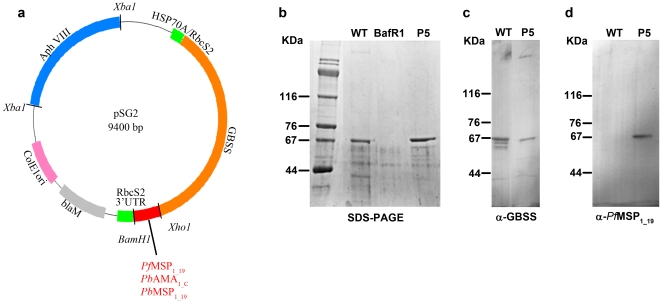
Figure 1. Anti-malaria vaccine strategy and antigen expression in C. reinhardtii.
(a) Map of the vector used for C. reinhardtii transformation and expression. The plasmid of 9.4 kb, designated pSG2, carries the genomic region of 3 kb containing all introns and exons necessary for coding the C. reinhardtii granule bound starch synthase (GBSS). The XhoI and BamHI restriction sites at the end of the truncated GBSS gene have been utilized for cloning in-frame cDNAs encoding the C-terminal domain of P. berghei major surface protein 1 (MSP1-19); P. berghei apical major antigen (AMA1-C) and P. falciparum MSP1-19. Expression of Chlamydomonas GBSS-Plasmodium fusion protein is driven by a strong chimeric Rubisco RBCS2 and HSP70A promoter. (b) High-level of GBSS-P. falciparum MSP1-19 protein expression in one representative Chlamydomonas transformant (P5) was obtained by co-transformation of the BafR1 mutant strain lacking the GBSS gene. Samples representing 1 mg of purified starch after French press disruption and Percoll-gradient centrifugation were resuspended in SDS-βmercaptoethanol loading buffer, separated by SDS-PAGE and stained by Coomassie blue. Note that minor protein bands accidently trapped in the polysaccharide matrix are common to wild type WT, P5 and mutant BafR1 algae lacking the GBSS gene. The starch protein extracts from WT and P5 algae were also blotted to nitrocellulose and incubated with rabbit polyclonal antibodies specific to C. reinhardtii GBBS (c), or rabbit anti-P. falciparum MSP1-19 (d).The molecular weights of protein markers are given in kDa.
Figure 2
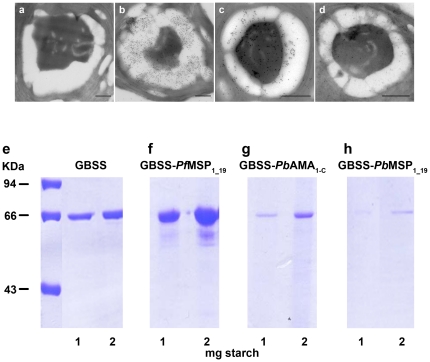
Figure 2. Malarial antigen accumulation in starch of transgenic C. reinhardtii.
Pre-immune rabbit serum used as control shows no gold particles either on starch grains or over the pyrenoid matrix (a). Transverse sections of transgenic algae visualized by electron microscopy and immunogold labelling with rabbit polyclonal antibodies specific to P. falciparum MSP1-19 (b), P. berghei AMA1-C (c) and P. berghei MSP1-19 (d). Note the presence of positive gold particles (black dots) on the starch grains (white) surrounding the pyrenoid matrix in the middle, which also contained a significant amount of GBSS-parasite fusion protein. The bar represents 500 nm. The total starch-bound protein content of purified granules containing wild type GBSS (e) was compared to those of GBSS-PfMSP1-19 (f), GBSS-PbAMA1-C (g) and GBSS-Pf MSP1-16 (h). One and two milligrams of starch purified from transformants and wild type algae were analyzed by SDS-PAGE and stained by Coomassie blue. The molecular weights of three protein markers are given in kDa.
Figure 3
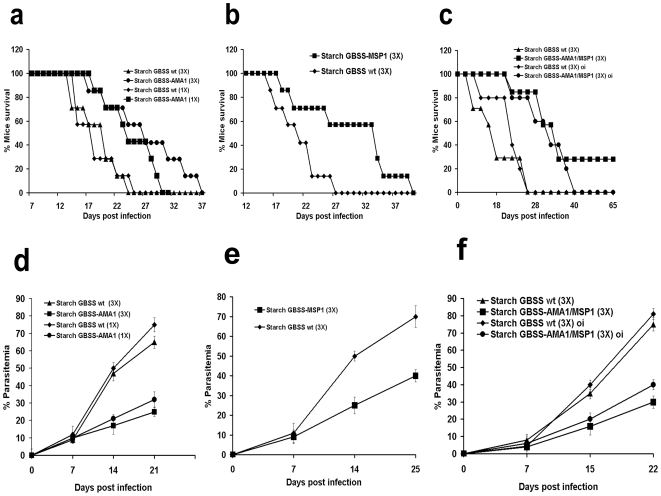
Figure 3. Starch-bound antigens elicit protection against P. berghei challenge.
All mice survival experiments were performed using a group of 10 Balb/c mice. (a) Life expectancy of a group of mice vaccinated after a single, or three doses of starch containing GBSS-PbAMA1-C. Each dose contains 10 mg of purified starch derived GBSS-PbAMA1-C and Freund's adjuvant. As a negative control, a group of mice was vaccinated with a single, or three doses of wild type (WT) starch containing GBSS alone. After immunization, mice were challenged with 104 (lethal dose) of P. berghei ANKA strain. Four independent experiments have been performed (n = 4) and P<0.001. (b) Life expectancy of a group of mice immunized by three doses of starch containing GBSS-PbMSP1-19. Each dose contains 10 mg of purified starch derived GBSS-PbMSP1-19 and Freund's adjuvant. As a negative control, a group of mice was vaccinated with three doses of wild type (WT) starch containing GBSS alone. After immunization, the vaccinated mice were challenged with P. berghei and analyzed as above. Three independent experiments have been performed (n = 3) and P<0.05. (c) Life expectancy of a group of mice vaccinated by three doses of starch containing a mixture of 5 mg of GBSS-PbAMA1-C and 5 mg of GBSS-PbMSP1-19 with Freund's adjuvant. As a negative control, a group of mice was also vaccinated with three doses of wild type (WT) starch containing GBSS alone. After vaccination, mice were challenged with P. berghei and analyzed as above. Three independent experiments have been performed (n = 3) and P<0.001. A group of mice were also fed three times with both starches GBSS-PbAMA1-C and GBSS-PbMSP1-19 mixed with the B-subunit enterotoxin mucosal adjuvant. As a negative control, a group of mice was fed with wild type (WT) starch containing GBSS alone. After oral immunization, mice were challenged with 104 (lethal dose) of P. berghei and analyzed as above. n = 3 and P<0.001. For all experiments, life expectancy and parasitemia were monitored daily. The panels d, e and f represent parasitemia profiles corresponding to mice vaccinated and challenged in experiments shown in panels a, b and c, respectively. Data represent mean values +/− s.d. and are derived from at least three or four independent experiments with similar results (P<0.001).
Figure 4
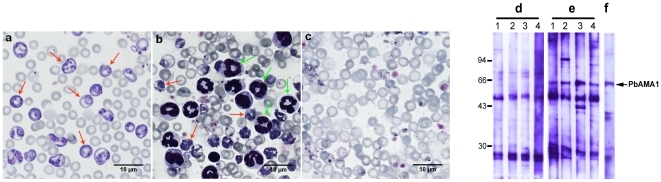
Figure 4. Starch-bound antigens elicit immune responses and reduce parasitemia after P. berghei challenge.
The Giemsa stained thin smears of red blood cells isolated from mice vaccinated with starch containing wild type GBSS (negative controls), challenged with P. berghei ANKA and analyzed after 3 weeks post infection. The red arrows indicate that the mice were highly infected with P. berghei (a). The Giemsa stained thin smears of red blood cells isolated from mice vaccinated with starch containing both GBSS-PbAMA1-C and GBSS-PbMSP1-19, challenged with P. berghei ANKA and analyzed after 3 weeks post infection (b). The Giemsa stained thin smear of red blood cells isolated from mice vaccinated with starch containing both GBSS-PbAMA1-C and GBSS-PbMSP1-19, challenged with P. berghei ANKA and analyzed after 6 weeks post-infection (c). Note the presence of numerous leukocytes (probably neutrophils, green arrows) and fewer infected red blood cells (red arrows) in the vaccinated mice after 3 weeks post-infection (b). Both leukocytes and P. berghei infected red blood cells were not detected in mice, which survived after 6 weeks post-infection (c). Western blots of total extracts of antigens prepared from red blood cells infected by P. berghei. The immunoblots were incubated with the immune sera isolated from 4 mice immunized with starch containing wild type GBSS (panel d, lanes 1-4). Blots probed with immune sera of 4 mice immunized with starch containing GBSS-PbAMA1-C (panel e, lanes 1–4). Lane f corresponds to the blots incubated with the positive rabbit polyclonal antibodies specific to P. berghei AMA1 produced in E. coli.
Figure 5
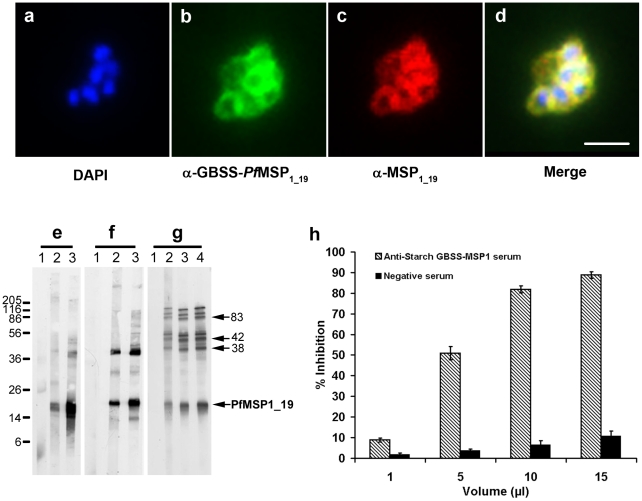
Figure 5. Inhibition of red blood cell entry by P. falciparum.
Immunofluorescence assay (IFA) of erythrocyte-containing P. falciparum schizont with merozoites incubated with a pool of immune sera generated against purified starch GBSS-PfMSP1-19 (b). The nuclei of merozoites were stained by DAPI (a). The same schizont was also stained with rabbit polyclonal antibodies specific to native MSP1-19 (c). Note the perfect overlap of fluorescence signals (d, yellow signal), which corresponds to merged pictures in panels a, b and c) of anti-starch GBSS-PfMSP1-19 (b, green signal) and that of the positive control sera (red, c). The bar represents 5 µm. Western blots of total extract antigens from ring (e), trophozoite (f) and schizont (g) obtained after synchronization of P. falciparum culture with sorbitol and separated by polyacrylamide gel, transferred to nitrocellulose and probed with antibodies. Lane 1, a pool of non immune serum used as negative control. Lanes 2 and 3, a pool of immune sera from two independent experiments in which a group of mice were immunized with starch GBSS-PfMSP1-19. Lane 4 in panel g is from a third independent experiment. The proteolytically-processed fragments of 83, 42, 38 and 19 kDa derived from the 185–205 kDa PfMSP1 were shown by arrows. (h) Comparison of in vitro inhibitory effect of immune sera obtained after immunization with starch containing GBSS-PfMSP1-19 with that of immune sera generated against starch containing wild type GBSS only using the deadly human P. falciparum HB3 strain. Histograms represent mean values +/− s.d. of separate experiments (n = 3). Results were confirmed in two additional independent experiments (P<0.001).

References

    1. WHO, World malaria report, 2008. Available: http://apps.who.int/malaria/wnr2008/malaria2008.pdf.
    1. Snow RW, Guerra CA, Noor AM, Myint HY, Hay SI. The global distribution of clinical episodes of Plasmodium falciparum malaria. Nature. 434:214–217. - PMC - PubMed
    1. Guerra CA, Gikandi PW, Tatem AJ, Noor AM, Smith DL, et al. The limits and intensity of Plasmodium falciparum transmission: implications for malaria control and elimination worldwide. PLos Med. 2008;5:38. - PMC - PubMed
    1. Hay SI, Guerra CA, Gething PW, Patil AP, Tatem AJ, et al. A world malaria map: Plasmodium falciparum endemicity in 2007. PLoS Med. 2009;6:e1000048. - PMC - PubMed
    1. World Health Organization. Severe falciparum malaria. Trans R Soc Trop Med Hyg. 2000;94:S1–S90. - PubMed

Publication types