


Corneal Crosslinking for Keratoconus in Iranian Patients: Outcomes at 1 year following treatment
- PMID: 21180440
- PMCID: PMC2991457
- DOI: 10.4103/0974-9233.71600
Corneal Crosslinking for Keratoconus in Iranian Patients: Outcomes at 1 year following treatment
Abstract
Aim and design: A retrospective, nonrandomized, single-center clinical study was designed to evaluate the outcomes of corneal collagen crosslinking (CXL) for progressive keratoconus in Iranian patients 12 months after CXL.
Settings: This study was carried out at Navid Didegan Eye Center, a private clinic, Mashhad, Iran.
Materials and methods: Ninety-two eyes of 53 subjects with progressive keratoconus were evaluated in this study. All eyes completed 1-year follow-up. The outcome measures were uncorrected visual acuity (UCVA), best spectacle-corrected visual acuity (BSCVA), sphere and cylinder refraction, keratometry, and corneal thickness. Comparison of baseline and 1-year postoperative data is reported in this study. The Wilcoxon signed-ranked and Student's t-tests were used for statistical analyses. P < 0.05 was statistically significant.
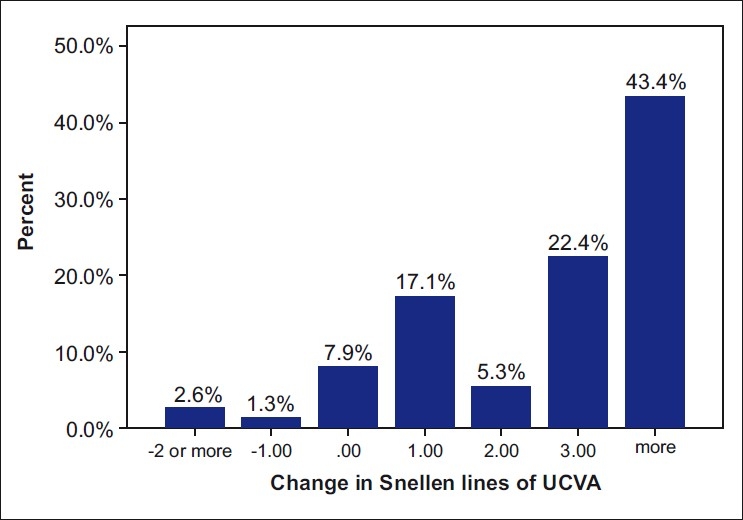
Results: The mean age was 21.5 ± 3.4 years (range, 16 -30 years). Thirty-one (58.5%) of the subjects were men and 22 (41.5%) were women. Mean baseline UCVA and BSCVA were 0.61 ± 0.31 and 0.06 ± 0.12 logarithm of minimal angle of resolution (logMAR), respectively. One year postoperatively UCVA was 0.31 ± 0.25 logMAR and BSCVA was 0.0 ± 0.01 logMAR. UCVA and BSCVA were statistically higher postoperatively (P < 0.001, both parameters). The mean astigmatism decreased by 0.78 ± 1.49 diopter (D) with significant variation during the follow-up period (P < 0.001). Mean baseline simulated keratometry (SIM K) was 46.94 ± 2.37 D and decreased to 46.0 ± 2.33 D on year postoperatively (P < 0.001).
Conclusion: Corneal CXL seems to be efficient in stabilization of progressive keratoconus progression in Iranian patients at 1 year of followup.
Keywords: Cornea; Crosslinking; Progressive Keratoconus; Riboflavin; Ultraviolet A.
Conflict of interest statement
Figures
References
-
- Rabinowitz YS. Keratoconus. Surv Ophthalmol. 1998;42:297–319. - PubMed
-
- Kennedy RH, Bourne WM, Dyer JA. A 48-year clinical and epidemiologic study of keratoconus. Am J Ophthalmol. 1998;101:267–73. - PubMed
-
- Tuft SJ, Moodaley LC, Gregory WM, Davison CR, Buckley RJ. Prognostic factors for progression of keratoconus. Ophthalmology. 1994;101:439–47. - PubMed
-
- Wollensak G, Spoerl E, Seiler T. Riboflavin/ultraviolet-A-induced collagen cross-linking for the treatment of keratoconus. Am J Ophthalmol. 2003;135:620–7. - PubMed
-
- Rocha KM, Ramos-Esteban JC, Qian Y, Herekar S, Krueger RR. Comparative study of riboflavin-UVA cross-linking and “flash-linking” using surface wave elastometry. J Refract Surg. 2008;24:S748–51. - PubMed
LinkOut - more resources
Full Text Sources
