


doi: 10.1177/1756285609337975.
Pathophysiology and treatment of bacterial meningitis
Affiliations
- PMID: 21180625
- PMCID: PMC3002609
- DOI: 10.1177/1756285609337975
Item in Clipboard
Pathophysiology and treatment of bacterial meningitis
Ther Adv Neurol Disord.
2009 Nov.
Abstract
Bacterial meningitis is a medical emergency requiring immediate diagnosis and immediate treatment. Streptococcus pneumoniae and Neisseria meningitidis are the most common and most aggressive pathogens of meningitis. Emerging antibiotic resistance is an upcoming challenge. Clinical and experimental studies have established a more detailed understanding of the mechanisms resulting in brain damage, sequelae and neuropsychological deficits. We summarize the current pathophysiological concept of acute bacterial meningitis and present current treatment strategies.
Keywords: bacterial meningitis; dexamethasone; meningococci; meningoencephalitis; pneumococci.
Figures

Two major routes involving bacterial toxins and cytotoxic products of the
inflammatory response lead to intracranial complications and brain
damage. Peptidoglycan (PG), bacterial lipopeptide (LP),
lipopolysaccharide (LPS), apoptosis inducing factor (AIF), intracranial
pressure (ICP).
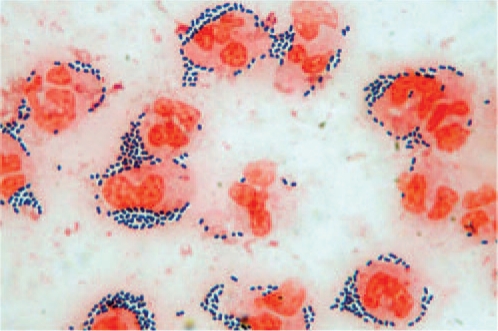
Diagnostic Gram stain of CSF from a patient with pneumococcal meningitis.
Neutrophils (stained red) are surrounded by Gram-positive dipolcocci
(stained blue).
References
-
- Angstwurm K., Borges A.C., Halle E., Schielke E., Weber J.R. (2004) Neurological complications of infective endocarditis. Nervenarzt 75:734–741 - PubMed
LinkOut - more resources
Full Text Sources
