


Effects of exogenous glucocorticoid on combat-related PTSD symptoms
- PMID: 21180658
- PMCID: PMC3917156
Effects of exogenous glucocorticoid on combat-related PTSD symptoms
Abstract
Background: Very few systematic human studies focus on changing the underlying traumatic memory after posttraumatic stress disorder (PTSD) has been established. Evidence from animal and human studies indicates that cortisol can be used to address traumatic memories. This translational pilot study is based on our previous rodent research in which extinction of fear memories was enhanced by glucocorticoids. The current study aims to assess the effectiveness of glucocorticoids in augmenting memory extinction and reducing clinical symptoms in veterans with combat-related PTSD.
Methods: In a double-blind, placebo-controlled study, veterans with combat-related PTSD were exposed to a memory reactivation task using well established imagery and psychophysiology assessment technique followed by administration of either glucocorticoid or placebo.
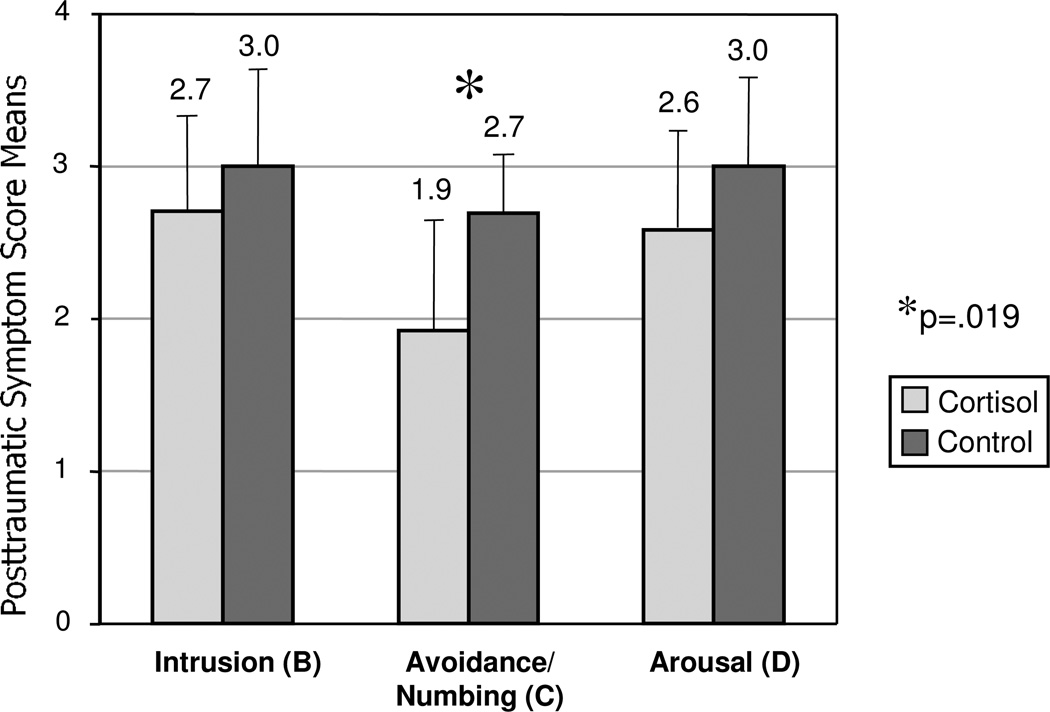
Results: One week after glucocorticoid or placebo administration, participants who received the study medication showed significant PTSD-related symptom (cluster C) improvement compared with control participants who received placebo only. However, reduction of symptoms degraded at a 1-month postadministration assessment.
Conclusions: These findings are consistent with a glucocorticoid-mediated enhancement of extinction to ameliorate PTSD symptoms. The use of traumatic memory reactivation temporally paired with glucocorticoid administration holds potential for developing a viable therapeutic option.
Figures
References
-
- Kessler RC, Sonnega A, Bromet E, Hughes M, Nelson CB. Posttraumatic stress disorder in the National Comorbidity Survey. Arch Gen Psychiatry. 1995;52:1048–1060. - PubMed
-
- National Academy of Sciences Institute of Medicine: Treatment of Posttraumatic Stress Disorder: An Assessment of the Evidence. Washington, DC: National Academy Press; 2008.
-
- Schnurr PP, Friedman MJ, Engel CC, Foa EB, Shea MT, Chow BK, Resick PA, Thurston V, Orsillo SM, Haug R, Turner C, Bernardy N. Cognitive behavioral therapy for posttraumatic stress disorder in women: A randomized controlled trail. JAMA. 2007;297(8):820–830. - PubMed
-
- Foa EB, Hembree EA, Cahill SP, Rauch SA, Riggs DS, Feeny NC, Yadin E. Randomized trial of prolonged exposure for posttraumatic stress disorder with and without cognitive restructuring: Outcome at academic community clinics. J Clin Psychol. 2005;79(2):953–964. - PubMed
-
- Bryant A, Moulds MI, Guthrie RM, Dang ST, Nixon RD. Imaginal exposure alone and imaginal exposure with cognitive restructuring in treatment of posttraumatic stress disorder. J Clin Psychol. 1999;71(4):706–712. - PubMed
