


Pathogenesis, diagnosis and management of hyperkalemia
- PMID: 21181208
- PMCID: PMC3061004
- DOI: 10.1007/s00467-010-1699-3
Pathogenesis, diagnosis and management of hyperkalemia
Abstract
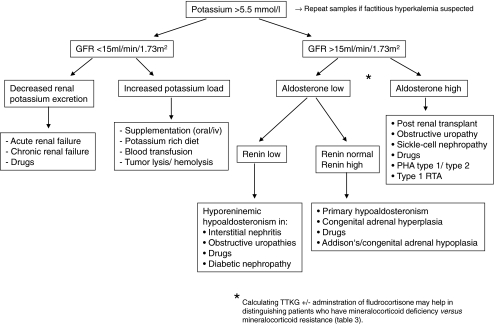
Hyperkalemia is a potentially life-threatening condition in which serum potassium exceeds 5.5 mmol/l. It can be caused by reduced renal excretion, excessive intake or leakage of potassium from the intracellular space. In addition to acute and chronic renal failure, hypoaldosteronism, and massive tissue breakdown as in rhabdomyolysis, are typical conditions leading to hyperkalemia. Symptoms are non-specific and predominantly related to muscular or cardiac dysfunction. Treatment has to be initiated immediately using different therapeutic strategies to increase potassium shift into the intracellular space or to increase elimination, together with reduction of intake. Knowledge of the physiological mechanisms of potassium handling is essential in understanding the causes of hyperkalemia as well as its treatment. This article reviews the pathomechanisms leading to hyperkalemic states, its symptoms, and different treatment options.
Figures
References
-
- Klevay LM, Bogden JD, Aladjem M, Sandstead HH, Kemp FW, Li W, Skurnick J, Aviv A. Renal and gastrointestinal potassium excretion in humans: new insight based on new data and review and analysis of published studies. J Am Coll Nutr. 2007;26:103–110. - PubMed
-
- Kemper MJ (2009) Potassium and magnesium physiology. In: Ronco C, Bellomo R, Kellum JA (eds) Critical Care Nephrology, pp 478–482
Publication types
MeSH terms
Substances
LinkOut - more resources
Full Text Sources
Other Literature Sources
Medical
