


The PLP cofactor: lessons from studies on model reactions
- PMID: 21182991
- PMCID: PMC3392957
- DOI: 10.1016/j.bbapap.2010.12.007
The PLP cofactor: lessons from studies on model reactions
Abstract
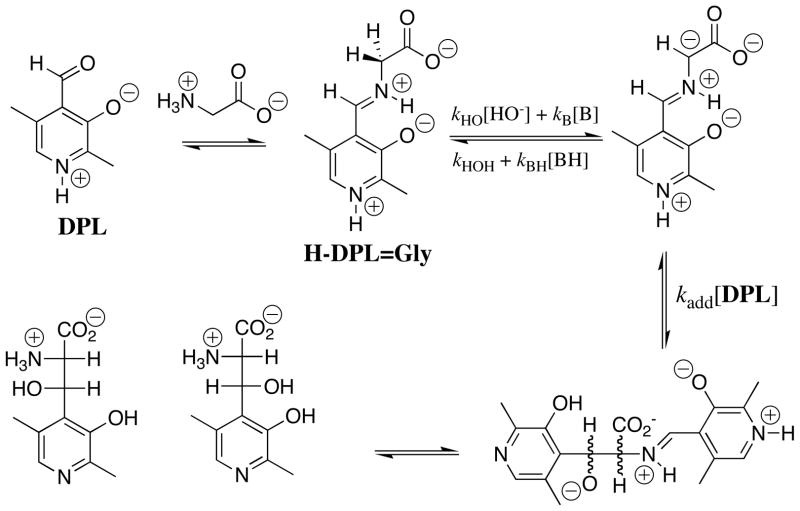
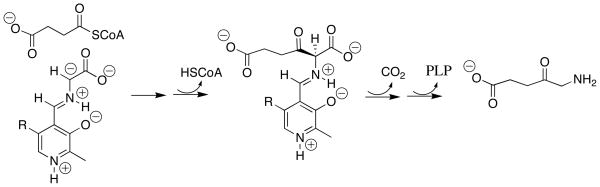
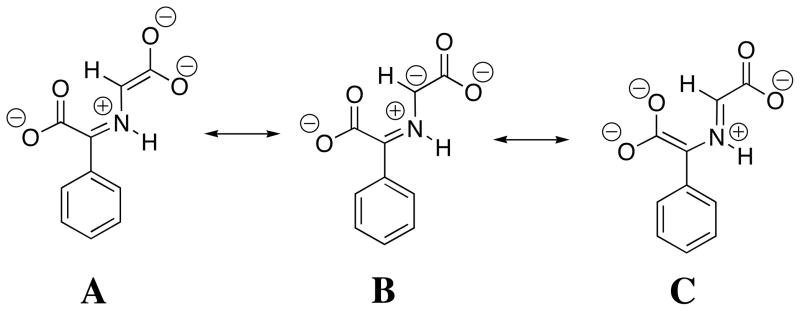
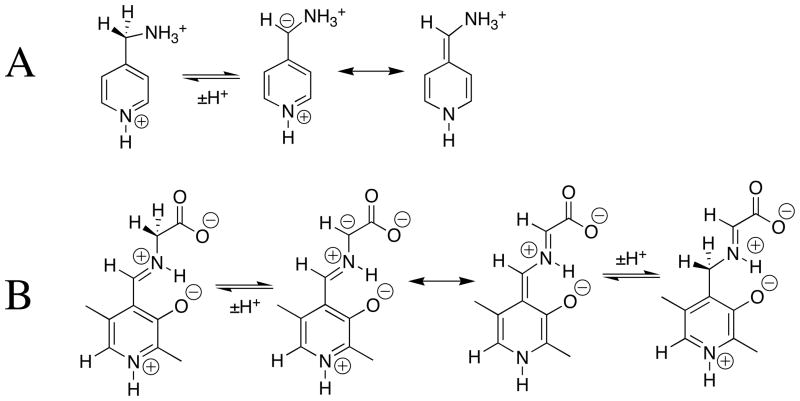
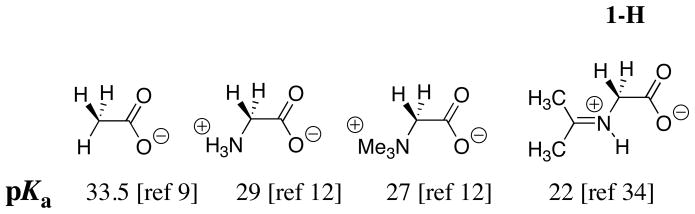
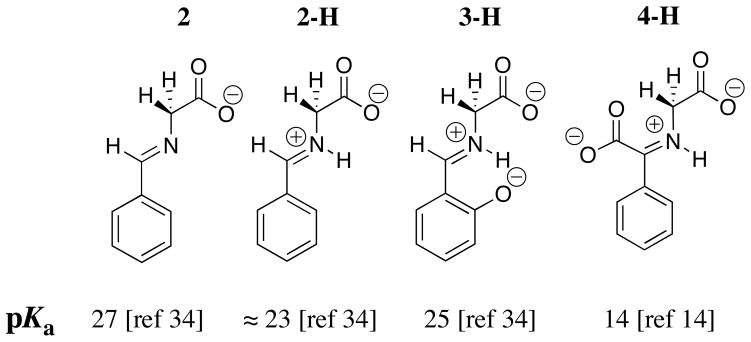
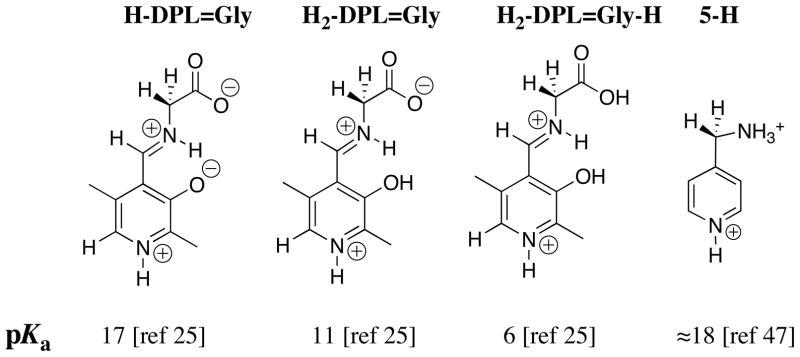
Experimental probes of the acidity of weak carbon acids have been developed and used to determine the carbon acid pK(a)s of glycine, glycine derivatives and iminium ion adducts of glycine to the carbonyl group, including 5'-deoxypyridoxal (DPL). The high reactivity of the DPL-stabilized glycyl carbanion towards nucleophilic addition to both DPL and the glycine-DPL iminium ion favors the formation of Claisen condensation products at enzyme active sites. The formation of the iminium ion between glycine and DPL is accompanied by a 12-unit decrease in the pK(a) of 29 for glycine. The complicated effects of formation of glycine iminium ions to DPL and other aromatic and aliphatic aldehydes and ketones on carbon acid pK(a) are discussed. These data provide insight into the contribution of the individual pyridine ring substituents to the catalytic efficiency of DPL. It is suggested that the 5'-phosphodianion group of PLP may play an important role in enzymatic catalysis of carbon deprotonation by providing up to 12 kcal/mol of binding energy that is utilized to stabilize the transition state for the enzymatic reaction. This article is part of a Special Issue entitled: Pyridoxal Phospate Enzymology.
Copyright © 2010 Elsevier B.V. All rights reserved.
Figures
References
-
- Toney MD. The chemistry of PLP-dependent enzymes. Wiley Encyclopedia of Chemical Biology. 2009;3:731–735.
-
- Toney MD. Reaction specificity in pyridoxal phosphate enzymes. Arch Biochem Biophys. 2005;433:279–287. - PubMed
-
- Richard JP, Amyes TL. On the importance of being zwitterionic: enzymic catalysis of decarboxylation and deprotonation of cationic carbon. Bioorg Chem. 2004;32:354–366. - PubMed
Publication types
MeSH terms
Substances
Grants and funding
LinkOut - more resources
Full Text Sources
Research Materials
