


Baseline physical performance, health, and functioning of participants in the Frequent Hemodialysis Network (FHN) trial
- PMID: 21184919
- PMCID: PMC3073398
- DOI: 10.1053/j.ajkd.2010.08.021
Baseline physical performance, health, and functioning of participants in the Frequent Hemodialysis Network (FHN) trial
Abstract
Background: Self-reported physical health and functioning and direct measures of physical performance are decreased in hemodialysis patients and are associated with mortality and hospitalization.
Study design: We determined baseline cross-sectional associations of physical performance, health, and functioning with demographics, clinical characteristics, nutritional indexes, laboratory benchmarks, and measures of body composition in participants in the Frequent Hemodialysis Network (FHN) trial.
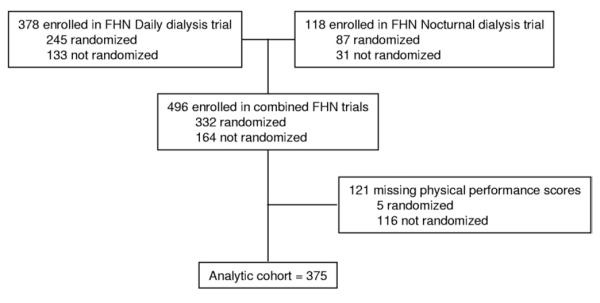
Setting & participants: 375 persons enrolled in the FHN with data for physical performance, health, and functioning.
Predictors: Explanatory variables were categorized into fixed factors of age, race, comorbid conditions (diabetes mellitus, heart failure, and peripheral arterial disease) and potentially modifiable factors of dialysis dose, phosphorus level, hemoglobin level, equilibrated normalized protein catabolic rate (enPCR), body composition, body mass index, phase angle, and ratio of intracellular water volume to body weight (calculated from bioelectrical impedance).
Outcomes: Scores on tests of physical performance, health, and functioning.
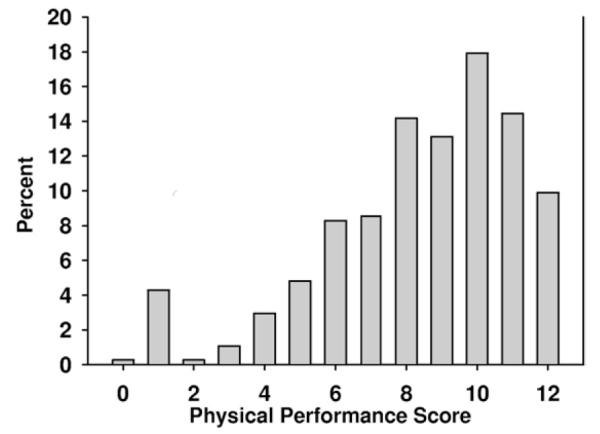
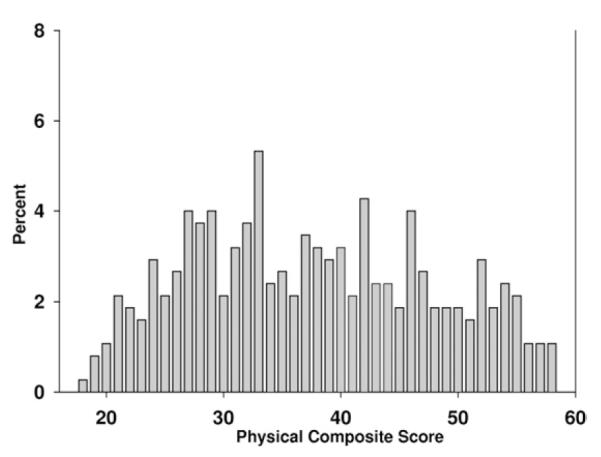
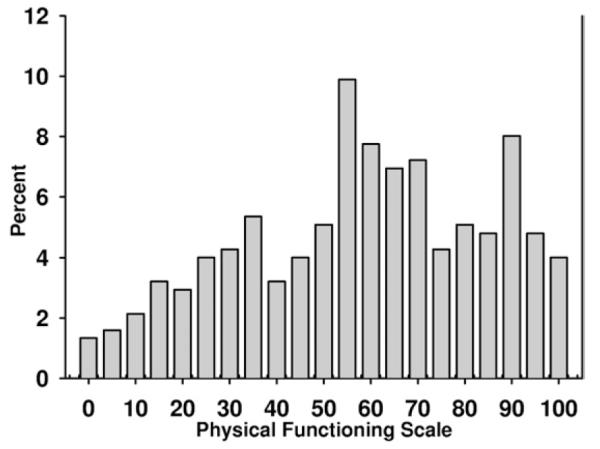
Measurements: Physical performance measured using the Short Physical Performance Battery, self-reported physical health and functioning using the 36-Item Short Form Health Survey (SF-36). Body composition (body mass index and bioimpedance analysis) and laboratory data were obtained from affiliated dialysis providers.
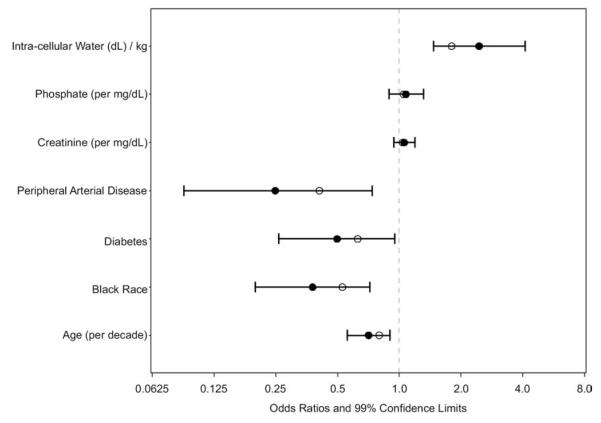
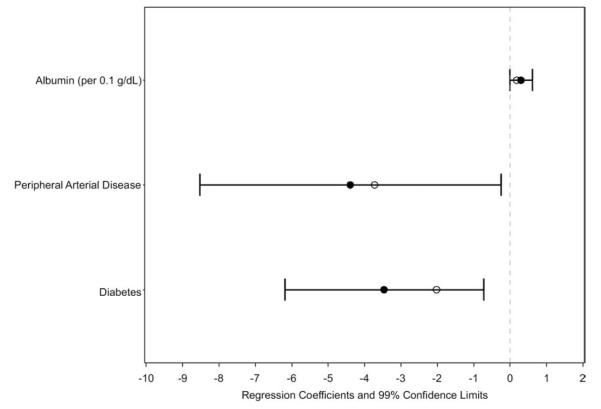
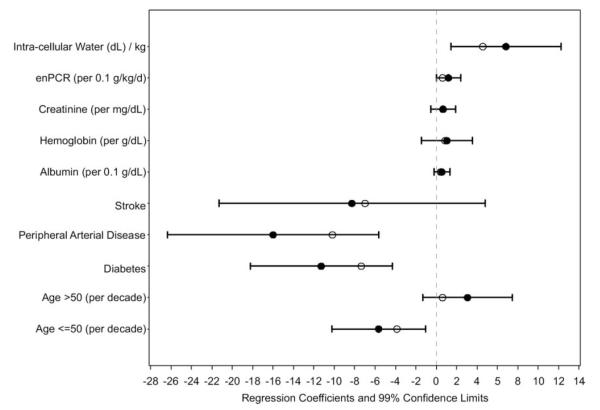
Results: Relative to population norms, scores for all 3 physicality metrics were low. Poorer scores on all 3 metrics were associated with diabetes mellitus and peripheral arterial disease. Poorer scores on the SF-36 Physical Functioning subscale and Short Physical Performance Battery also were associated with age, lower ratio of intracellular water volume to body weight, and lower enPCR. Black race was associated with poorer scores on the Short Physical Performance Battery.
Limitations: This was a cross-sectional study of individuals agreeing to participate in the FHN study and may not be generalizable to the general dialysis population.
Conclusions: Hemodialysis patients show markedly impaired physical performance, health, and functioning relative to population norms. Although some factors associated with these impairments are not modifiable, others may change with improvement in nutritional status or body composition.
Published by Elsevier Inc.
Figures
References
-
- Suri RS, Garg AX, Chertow GM, et al. Frequent Hemodialysis Network Trial Group Frequent Hemodialysis Network (FHN) randomized trials: study design. Kidney Int. 2007;71:349–359. - PubMed
-
- Johansen KL, Kaysen GA, Young BS, Hung AM, da Silva M, Chertow GM. Longitudinal study of nutritional status, body composition, and physical function in hemodialysis patients. Am J Clin Nutr. 2003;77:842–846. - PubMed
-
- Johansen K, Chertow G, da Silva MD, Carey S, Painter P. Determinants of physical performance in ambulatory patients on hemodialysis. Kidney Int. 2001;60:1586–1591. - PubMed
-
- DeOreo P. Hemodialysis patient-assessed functional health status predicts continued survival, hospitalization, and dialysis-attendance compliance. Am J Kidney Dis. 1997;30:204–212. - PubMed
