


NF-κB and STAT3 - key players in liver inflammation and cancer
- PMID: 21187858
- PMCID: PMC3193410
- DOI: 10.1038/cr.2010.183
NF-κB and STAT3 - key players in liver inflammation and cancer
Abstract
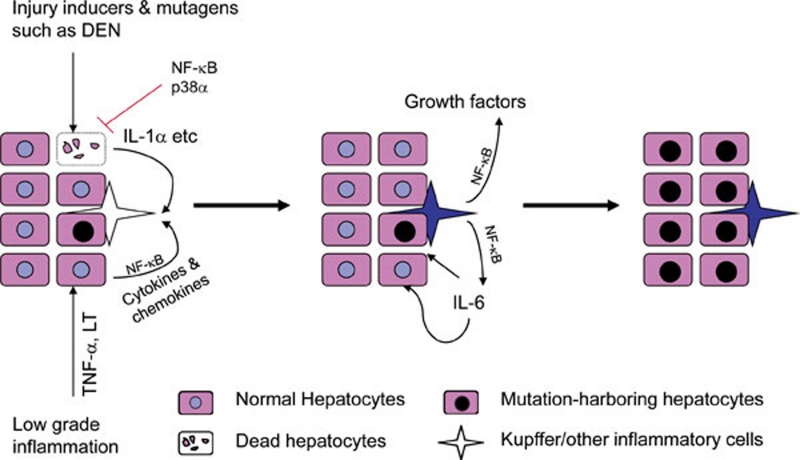
Hepatocellular carcinoma (HCC), the major form of primary liver cancer, is one of the most deadly human cancers. The pathogenesis of HCC is frequently linked with continuous hepatocyte death, inflammatory cell infiltration and compensatory liver regeneration. Understanding the molecular signaling pathways driving or mediating these processes during liver tumorigenesis is important for the identification of novel therapeutic targets for this dreadful disease. The classical IKKβ-dependent NF-κB signaling pathway has been shown to promote hepatocyte survival in both developing and adult livers. In addition, it also plays a crucial role in liver inflammatory responses by controlling the expression of an array of growth factors and cytokines. One of these cytokines is IL-6, which is best known for its role in the liver acute phase response. IL-6 exerts many of its functions via activation of STAT3, a transcription factor found to be important for HCC development. This review will focus on recent studies on the roles of NF-κB and STAT3 in liver cancer. Interactions between the two pathways and their potential as therapeutic targets will also be discussed.
Figures
References
-
- Dvorak HF. Tumors: wounds that do not heal. Similarities between tumor stroma generation and wound healing. N Engl J Med. 1986;315:1650–1659. - PubMed
-
- Schafer M, Werner S. Cancer as an overhealing wound: an old hypothesis revisited. Nat Rev Mol Cell Biol. 2008;9:628–638. - PubMed
-
- Ernst PB, Gold BD. The disease spectrum of Helicobacter pylori: the immunopathogenesis of gastroduodenal ulcer and gastric cancer. Annu Rev Microbiol. 2000;54:615–640. - PubMed
-
- Seeff LB. Introduction: The burden of hepatocellular carcinoma. Gastroenterology. 2004;127:S1–S4. - PubMed
Publication types
MeSH terms
Substances
LinkOut - more resources
Full Text Sources
Other Literature Sources
Medical
Miscellaneous
