


Identification and interpretation of longitudinal gene expression changes in trauma
- PMID: 21187951
- PMCID: PMC3004855
- DOI: 10.1371/journal.pone.0014380
Identification and interpretation of longitudinal gene expression changes in trauma
Abstract
Rationale: The relationship between leukocyte gene expression and recovery of respiratory function after injury may provide information on the etiology of multiple organ dysfunction.
Objectives: To find a list of genes for which expression after injury predicts respiratory recovery, and to identify which networks and pathways characterize these genes.
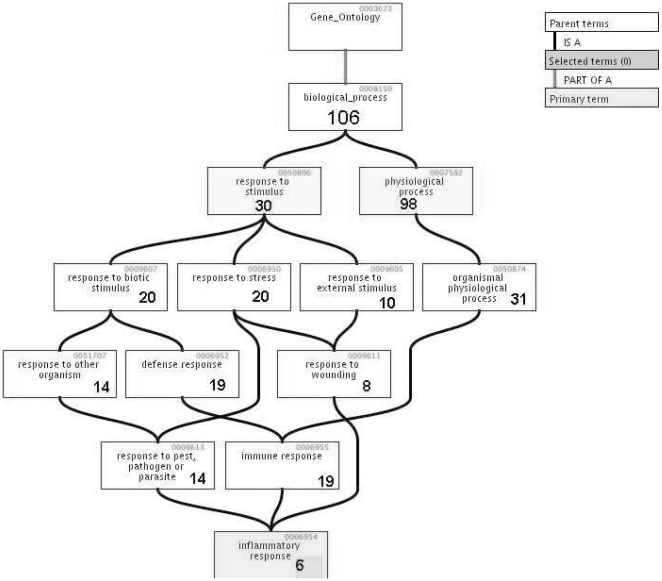
Methods: Blood was sampled at 12 hours and at 1, 4, 7, 21 and 28 days from 147 patients who had been admitted to the hospital after blunt trauma. Leukocyte gene expression was measured using Affymetrix oligonucleotide arrays. A linear model, fit to each probe-set expression value, was used to impute the gene expression trajectory over the entire follow-up period. The proportional hazards model score test was used to calculate the statistical significance of each probe-set trajectory in predicting respiratory recovery. A list of genes was determined such that the expected proportion of false positive results was less than 10%. These genes were compared to the Gene Ontology for 'response to stimulus' and, using Ingenuity software, were mapped into networks and pathways.
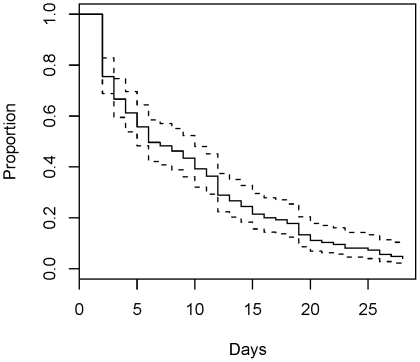
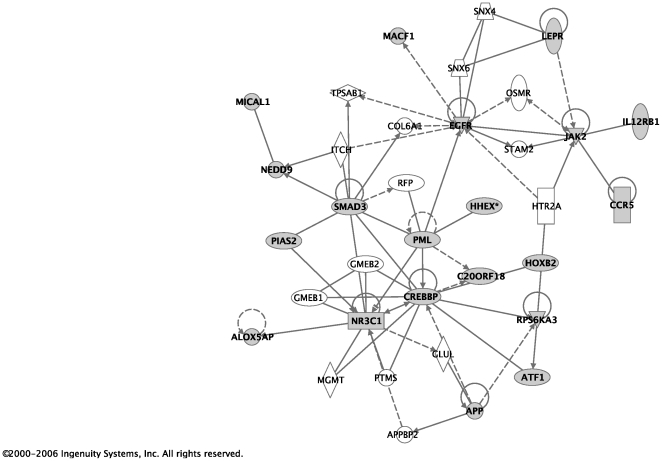
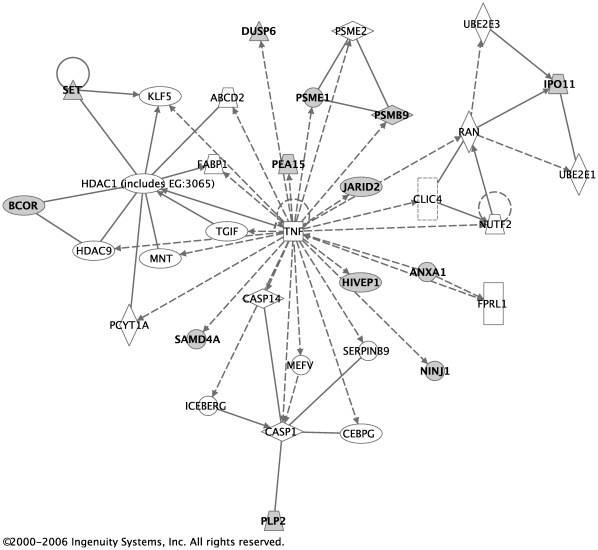
Measurements and main results: The median time to respiratory recovery was 6 days. There were 170 probe-sets representing 135 genes that were found to be related to respiratory recovery. These genes could be mapped to nine networks. Two known pathways that were activated were antigen processing and presentation and JAK-signaling.
Conclusions: The examination of the relationship of gene expression over time with a patient's clinical course can provide information which may be useful in determining the mechanism of recovery or lack of recovery after severe injury.
Conflict of interest statement
Figures
References
-
- Ciesla DJ, Moore EE, Johnson JL, Burch JM, Cothren CC, et al. A 12-year prospective study of postinjury multiple organ failure: has anything changed? Arch Surg. 2005;140(5):432–438; discussion 438–440. - PubMed
-
- Inflammation and the Host Response to Injury Large Scale Collarborative Research Program. [cited 2009; Available from: http://www.gluegrant.org.]
Publication types
MeSH terms
Grants and funding
LinkOut - more resources
Full Text Sources
Other Literature Sources
Medical
