


The Salmonella genomic island 1 is specifically mobilized in trans by the IncA/C multidrug resistance plasmid family
- PMID: 21187963
- PMCID: PMC3004903
- DOI: 10.1371/journal.pone.0015302
The Salmonella genomic island 1 is specifically mobilized in trans by the IncA/C multidrug resistance plasmid family
Abstract
Background: The Salmonella genomic island 1 (SGI1) is a Salmonella enterica-derived integrative mobilizable element (IME) containing various complex multiple resistance integrons identified in several S. enterica serovars and in Proteus mirabilis. Previous studies have shown that SGI1 transfers horizontally by in trans mobilization in the presence of the IncA/C conjugative helper plasmid pR55.
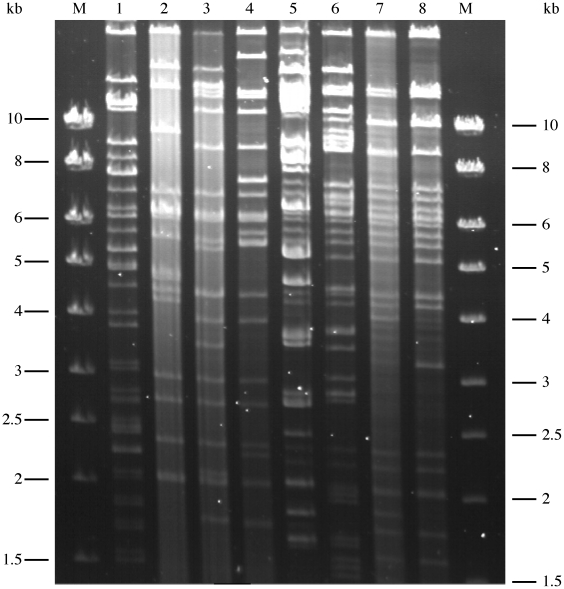
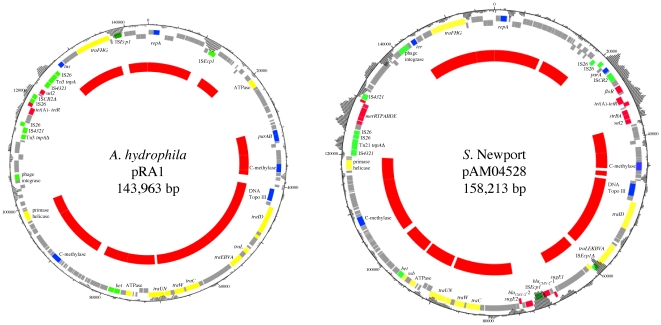
Methodology/principal findings: Here, we report the ability of different prevalent multidrug resistance (MDR) plasmids including extended-spectrum β-lactamase (ESBL) gene-carrying plasmids to mobilize the multidrug resistance genomic island SGI1. Through conjugation experiments, none of the 24 conjugative plasmids tested of the IncFI, FII, HI2, I1, L/M, N, P incompatibility groups were able to mobilize SGI1 at a detectable level (transfer frequency <10(-9)). In our collection, ESBL gene-carrying plasmids were mainly from the IncHI2 and I1 groups and thus were unable to mobilize SGI1. However, the horizontal transfer of SGI1 was shown to be specifically mediated by conjugative helper plasmids of the broad-host-range IncA/C incompatibility group. Several conjugative IncA/C MDR plasmids as well as the sequenced IncA/C reference plasmid pRA1 of 143,963 bp were shown to mobilize in trans SGI1 from a S. enterica donor to the Escherichia coli recipient strain. Depending on the IncA/C plasmid used, the conjugative transfer of SGI1 occurred at frequencies ranging from 10(-3) to 10(-6) transconjugants per donor. Of particular concern, some large IncA/C MDR plasmids carrying the extended-spectrum cephalosporinase bla(CMY-2) gene were shown to mobilize in trans SGI1.
Conclusions/significance: The ability of the IncA/C MDR plasmid family to mobilize SGI1 could contribute to its spread by horizontal transfer among enteric pathogens. Moreover, the increasing prevalence of IncA/C plasmids in MDR S. enterica isolates worldwide has potential implications for the epidemic success of the antibiotic resistance genomic island SGI1 and its close derivatives.
Conflict of interest statement
Figures
References
-
- Amábile-Cuevas CF, Chicurel ME. Bacterial Plasmids and gene flux. Cell. 1992;70:189–199. - PubMed
-
- De la Cruz F, Frost LS, Meyer RJ, Zechner EL. Conjugative DNA metabolism in Gram-negative bacteria. FEMS Microbiol Rev. 2010;34:18–40. - PubMed
-
- Carattoli A, Bertini A, Vila L, Falbo V, Hopkins KL, et al. Identification of plasmids by PCR-based replicon typing. J Microbiol Methods. 2005;63:219–228. - PubMed
-
- Poole TL, Edrington TS, Brichta-Harhay DM, Carattoli A, Anderson RC, et al. Conjugative transferability of the A/C plasmids from Salmonella enterica isolates that posses or lack bla CMY in the A/C plasmid backbone. Foodborne Path Dis. 2009;6:1185–1194. - PubMed
Publication types
MeSH terms
Substances
LinkOut - more resources
Full Text Sources
