


Spatio-temporal data comparisons for global highly pathogenic avian influenza (HPAI) H5N1 outbreaks
- PMID: 21187964
- PMCID: PMC3004913
- DOI: 10.1371/journal.pone.0015314
Spatio-temporal data comparisons for global highly pathogenic avian influenza (HPAI) H5N1 outbreaks
Abstract
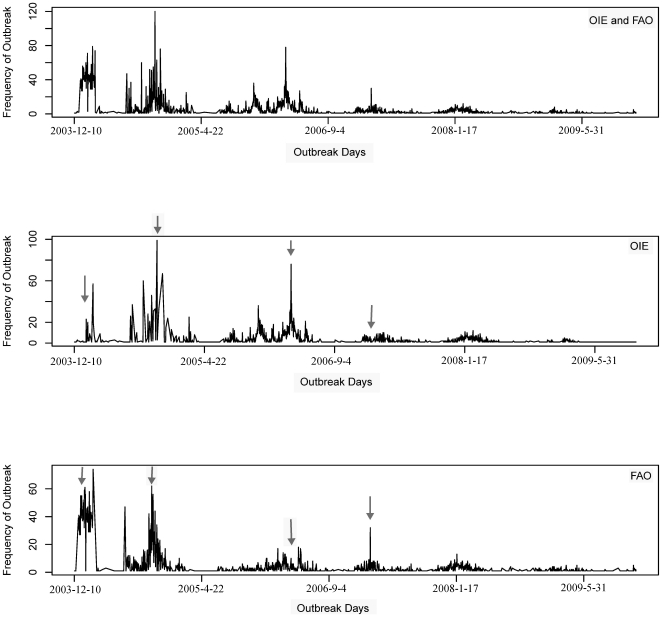
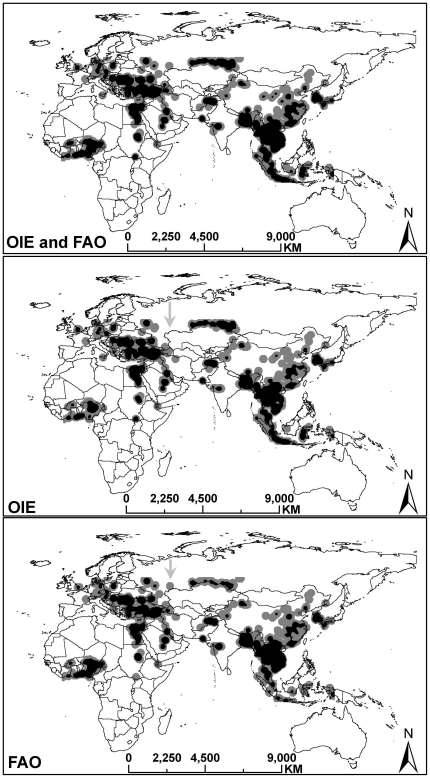
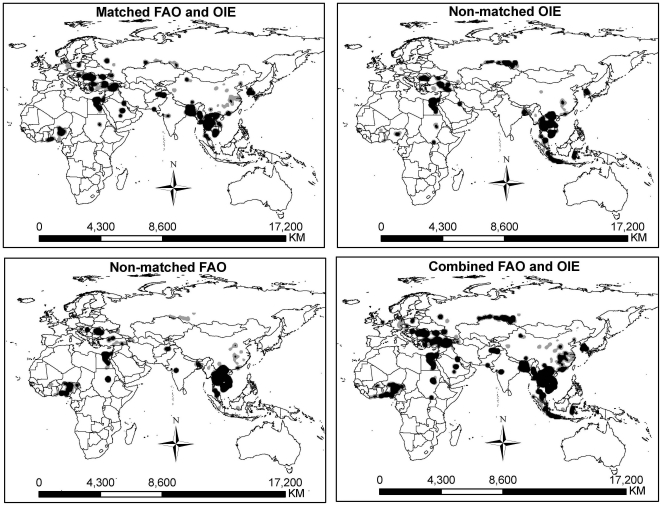
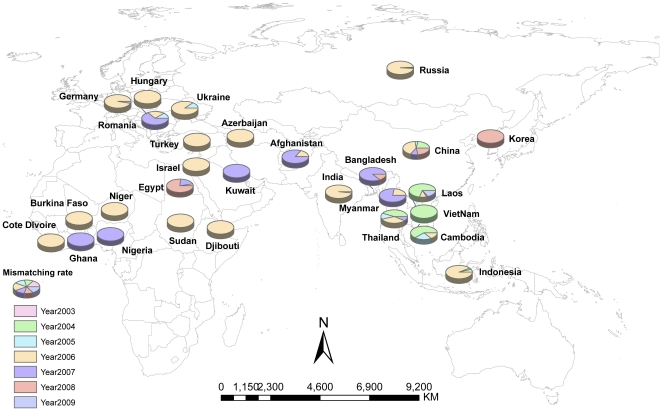
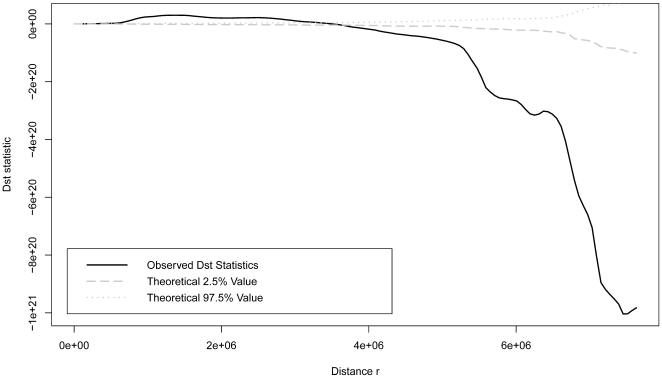
Highly pathogenic avian influenza subtype H5N1 is a zoonotic disease and control of the disease is one of the highest priority in global health. Disease surveillance systems are valuable data sources for various researches and management projects, but the data quality has not been paid much attention in previous studies. Based on data from two commonly used databases (Office International des Epizooties (OIE) and Food and Agriculture Organization of the United Nations (FAO)) of global HPAI H5N1 outbreaks during the period of 2003-2009, we examined and compared their patterns of temporal, spatial and spatio-temporal distributions for the first time. OIE and FAO data showed similar trends in temporal and spatial distributions if they were considered separately. However, more advanced approaches detected a significant difference in joint spatio-temporal distribution. Because of incompleteness for both OIE and FAO data, an integrated dataset would provide a more complete picture of global HPAI H5N1 outbreaks. We also displayed a mismatching profile of global HPAI H5N1 outbreaks and found that the degree of mismatching was related to the epidemic severity. The ideas and approaches used here to assess spatio-temporal data on the same disease from different sources are useful for other similar studies.
Conflict of interest statement
Figures
References
-
- Nelson MI, Holmes EC. The evolution of epidemic influenza. Nature. 2007;8:196. - PubMed
-
- Kaiser J. A one-size-fits-all flu vaccine? Science. 2006;312:380–382. - PubMed
-
- Alexander DJ. A review of avian influenza in different bird species. Vet Microbiol. 2000;74:3–13. - PubMed
-
- Alexander DJ. Summary of avian influenza activity in Europe, Asia, Africa, and Australasia, 2002–2006. Avian Dis. 2007;51:161–166. - PubMed
-
- Capua I, Alexander DJ. Avian influenza infection in birds: a challenge and opportunity for the poultry veterinarian. Poult Sci. 2009;88:842–846. - PubMed
Publication types
MeSH terms
LinkOut - more resources
Full Text Sources
Medical
