


Intestinal damage determines the inflammatory response and early complications in patients receiving conditioning for a stem cell transplantation
- PMID: 21188146
- PMCID: PMC3004799
- DOI: 10.1371/journal.pone.0015156
Intestinal damage determines the inflammatory response and early complications in patients receiving conditioning for a stem cell transplantation
Abstract
Background: Stem cell transplantation (SCT) is still complicated by the occurrence of fever and inflammatory complications attributed to neutropenia and subsequent infectious complications. The role of mucosal barrier injury (MBI) of the intestinal tract therein has received little attention.
Methods: We performed a retrospective analysis in 163 SCT recipients of which data had been collected prospectively on intestinal damage (citrulline), inflammation (C-reactive protein), and neutrophil count. Six different conditioning regimens were studied; 5 myeloablative (MA) and 1 non-myeloablative (NMA). Linear mixed model multivariate and AUC analyses were used to define the role of intestinal damage in post-SCT inflammation. We also studied the relationship between the degree of intestinal damage and the occurrence of early post-SCT complications.
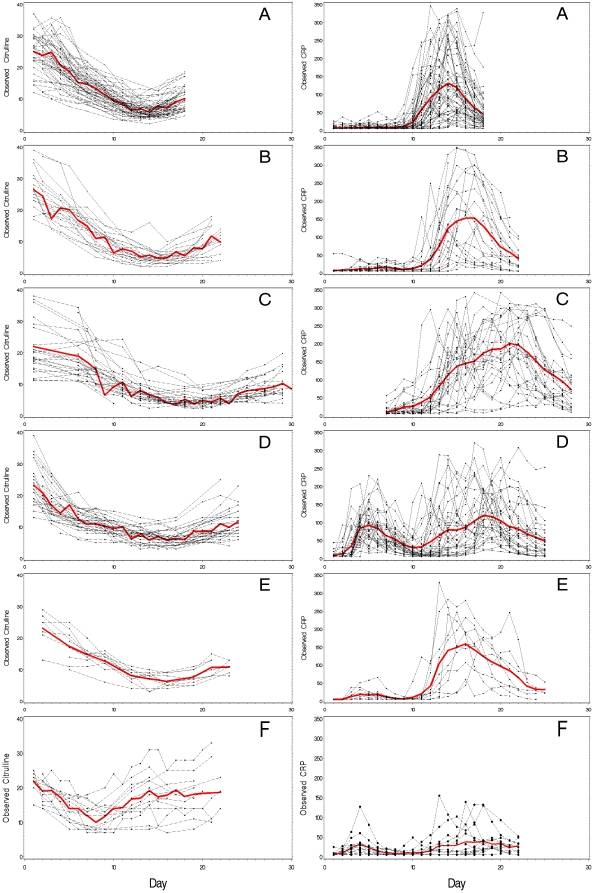
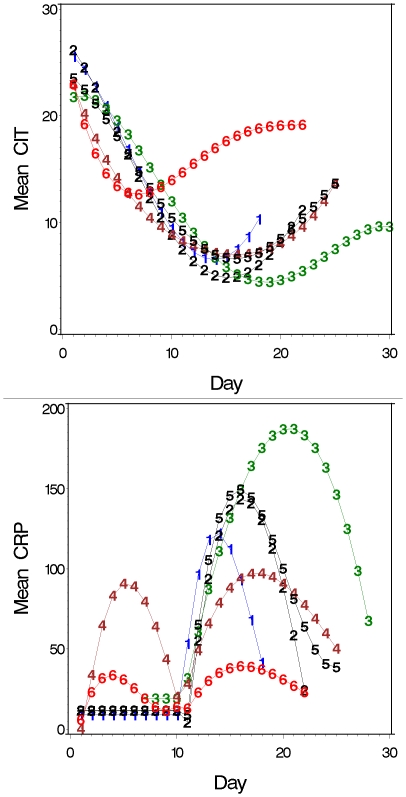
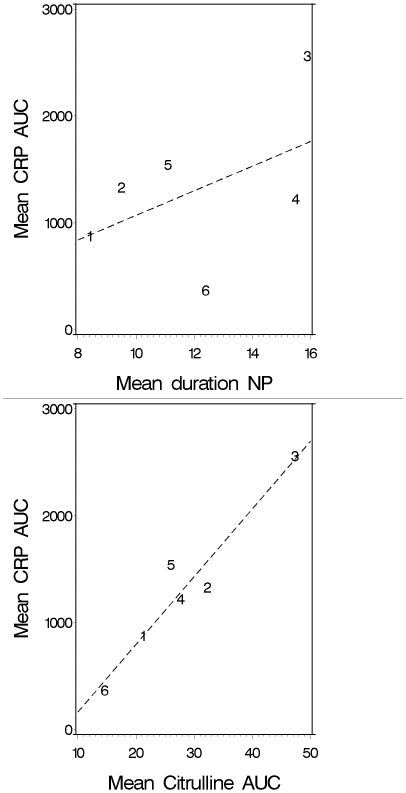
Results: In the 5 MA regimen there was a striking pattern of inflammatory response that coincided with the occurrence of severe intestinal damage. This contrasted with a modest inflammatory response seen in the NMA regimen in which intestinal damage was limited. With linear mixed model analysis the degree of intestinal damage was shown the most important determinant of the inflammatory response, and both neutropenia and bacteremia had only a minor impact. AUC analysis revealed a strong correlation between citrulline and CRP (Pearson correlation r = 0.96). Intestinal damage was associated with the occurrence of bacteremia and acute lung injury, and influenced the kinetics of acute graft-versus-host disease.
Conclusion: The degree of intestinal damage after myeloablative conditioning appeared to be the most important determined the inflammatory response following SCT, and was associated with inflammatory complications. Studies should explore ways to ameliorate cytotoxic therapy-induced intestinal damage in order to reduce complications associated with myeloablative conditioning therapy.
Conflict of interest statement
Figures
References
-
- Bodey GP, Buckley M, Sathe YS, Freireich EJ. Quantitative relationships between circulating leukocytes and infection in patients with acute leukemia. Ann Intern Med. 1966;64:328–340. - PubMed
-
- From the Immunocompromised Host Society. The design, analysis, and reporting of clinical trials on the empirical antibiotic management of the neutropenic patient. Report of a consensus panel. J Infect Dis. 1990;161:397–401. - PubMed
-
- Andersen J, Heilmann C, Jacobsen N, Nielsen C, Bendtzen K, et al. Differential effect of conditioning regimens on cytokine responses during allogeneic stem cell transplantation. Bone Marrow Transplant. 2006;37:635–640. - PubMed
-
- Blijlevens NM, Donnelly JP, DePauw BE. Inflammatory response to mucosal barrier injury after myeloablative therapy in allogeneic stem cell transplant recipients. Bone Marrow Transplant. 2005;36:703–707. - PubMed
-
- Schots R, Van Riet I, Othman TB, Trullemans F, De Waele M, et al. An early increase in serum levels of C-reactive protein is an independent risk factor for the occurrence of major complications and 100-day transplant-related mortality after allogeneic bone marrow transplantation. Bone Marrow Transplant. 2002;30:441–446. - PubMed
MeSH terms
Substances
LinkOut - more resources
Full Text Sources
Other Literature Sources
Research Materials
Miscellaneous
