Anaemia and pregnancy: Anaesthetic implications
- PMID: 21189874
- PMCID: PMC2991646
- DOI: 10.4103/0019-5049.71026
Anaemia and pregnancy: Anaesthetic implications
Abstract
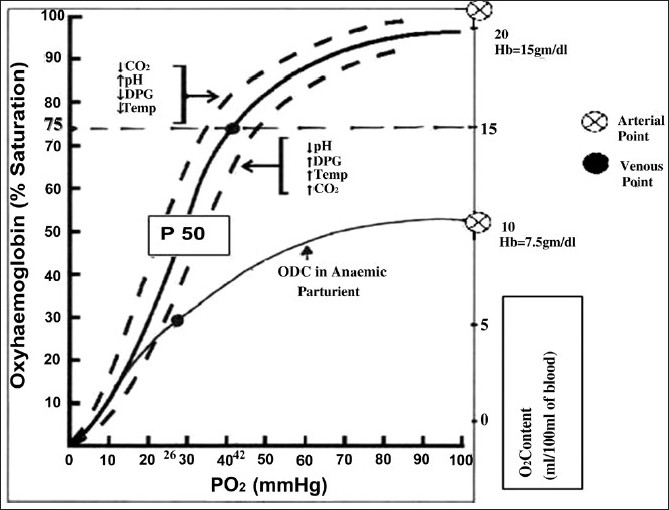
Anaemia in pregnancy defined as haemoglobin (Hb) level of < 10 gm/dL, is a qualitative or quantitative deficiency of Hb or red blood cells in circulation resulting in reduced oxygen (O2)- carrying capacity of the blood. Compensatory mechanisms in the form of increase in cardiac output (CO), PaO(2), 2,3 diphosphoglycerate levels, rightward shift in the oxygen dissociation curve (ODC), decrease in blood viscosity and release of renal erythropoietin, get activated to variable degrees to maintain tissue oxygenation and offset the decreases in arterial O(2) content. Parturients with concomitant medical diseases or those with acute ongoing blood losses may get decompensated, leading to serious consequences like right heart failure, angina or tissue hypoxemia in severe anaemia. Preoperative evaluation is aimed at assessing the severity and cause of anaemia. The concept of an acceptable Hb level varies with the underlying medical condition, extent of physiological compensation, the threat of bleeding and ongoing blood losses. The main anaesthetic considerations are to minimize factors interfering with O(2) delivery, prevent any increase in oxygen consumption and to optimize the partial pressure of O(2) in the arterial blood. Both general anaesthesia and regional anaesthesia can be employed judiciously. Monitoring should focus mainly on the adequacy of perfusion and oxygenation of vital organs. Hypoxia, hyperventilation, hypothermia, acidosis and other conditions that shift the ODC to left should be avoided. Any decrease in CO should be averted and aggressively treated.
Keywords: Anaemia; anaesthetic considerations; compensatory mechanisms; pregnancy.
Conflict of interest statement
References
-
- Kalaivani K. Prevalence & consequences of anaemia in pregnancy. Indian J Med Res. 2009;130:627–33. - PubMed
-
- DeMaeyer E, Adiels-Tegman M. Prevalence of anaemia in the World. World Health Stat Q. 1998;38:302–16. - PubMed
-
- Ezzati M, Lopus AD, Dogers A, Vander HS, Murray C. Selected major risk factors and global and regional burden of disease. Lancet. 2002;360:1347–60. - PubMed
-
- Available from: http://www.biology-online.org/dictionary/Anaemia [last accessed on 2010 Jul 20]
-
- Nutritional anaemias. Report of a WHO Scientific Group. WHO Tech Rep Ser. 1968;405:5–37. - PubMed
LinkOut - more resources
Full Text Sources
Research Materials