


Type 2 diabetes genetic association database manually curated for the study design and odds ratio
- PMID: 21190593
- PMCID: PMC3022779
- DOI: 10.1186/1472-6947-10-76
Type 2 diabetes genetic association database manually curated for the study design and odds ratio
Abstract
Background: The prevalence of type 2 diabetes has reached epidemic proportions worldwide, and the incidence of life-threatening complications of diabetes through continued exposure of tissues to high glucose levels is increasing. Advances in genotyping technology have increased the scale and accuracy of the genotype data so that an association genetic study has expanded enormously. Consequently, it is difficult to search the published association data efficiently, and several databases on the association results have been constructed, but these databases have their limitations to researchers: some providing only genome-wide association data, some not focused on the association but more on the integrative data, and some are not user-friendly. In this study, a user-friend database of type 2 diabetes genetic association of manually curated information was constructed.
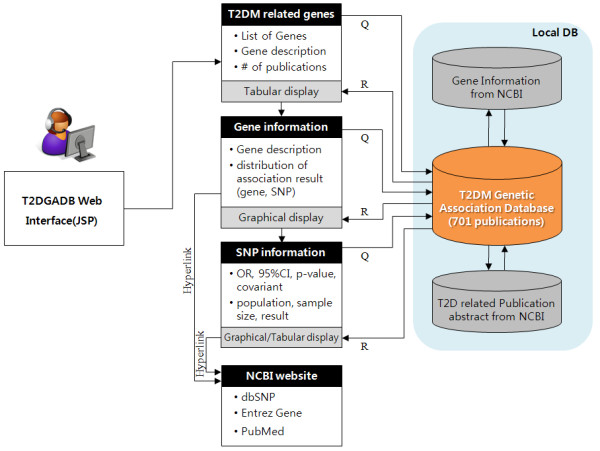
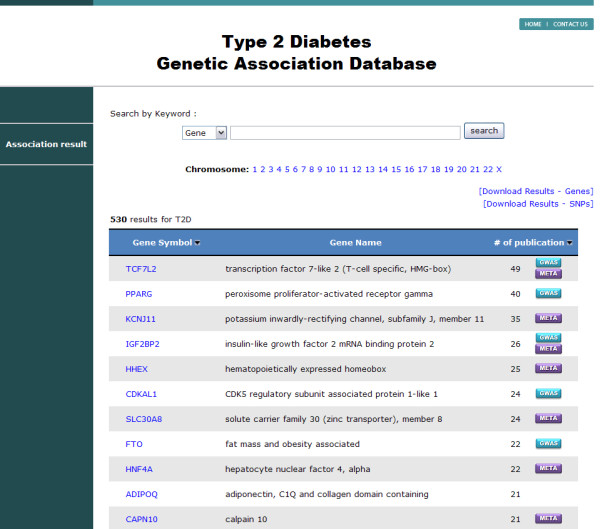
Description: The list of publications used in this study was collected from the HuGE Navigator, which is an online database of published genome epidemiology literature. Because type 2 diabetes genetic association database (T2DGADB) aims to provide specialized information on the genetic risk factors involved in the development of type 2 diabetes, 701 of the 1,771 publications in the type 2 Diabetes case-control study for the development of the disease were extracted.
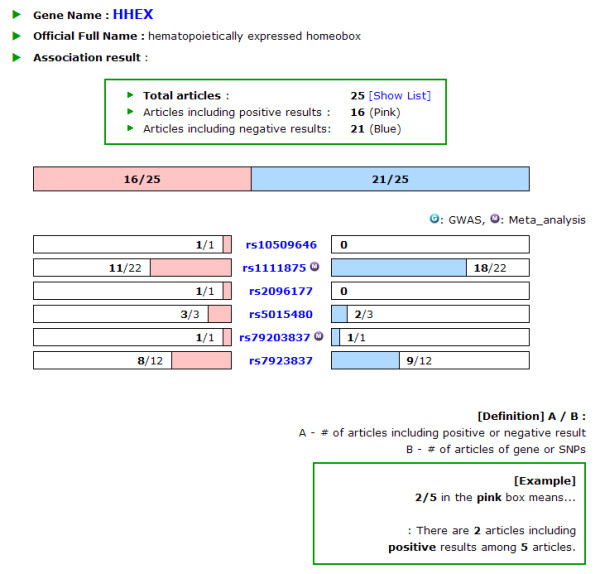
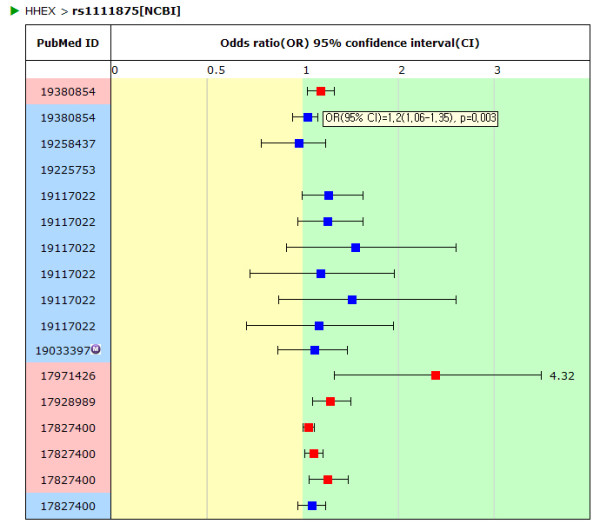
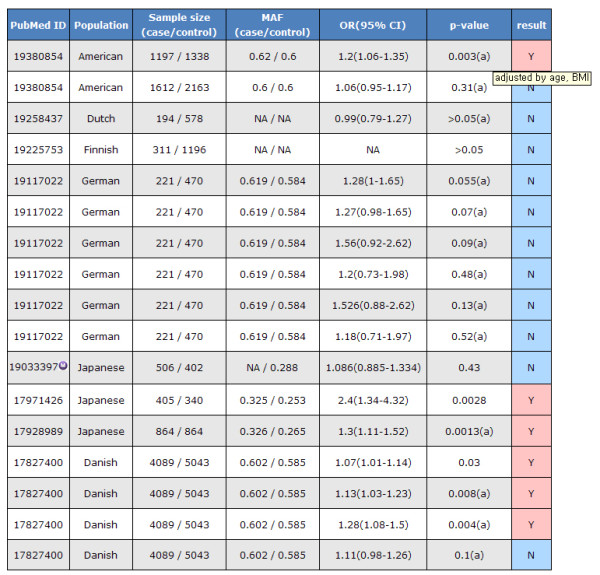
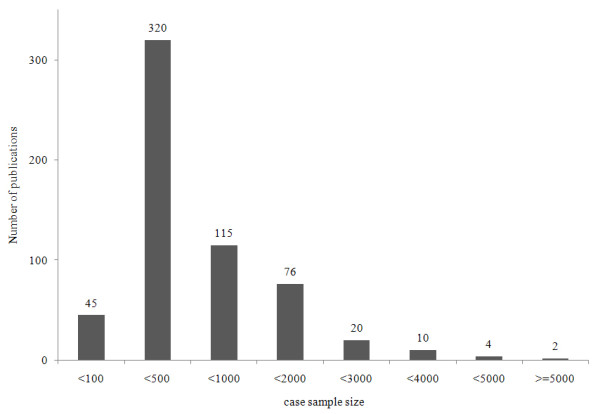
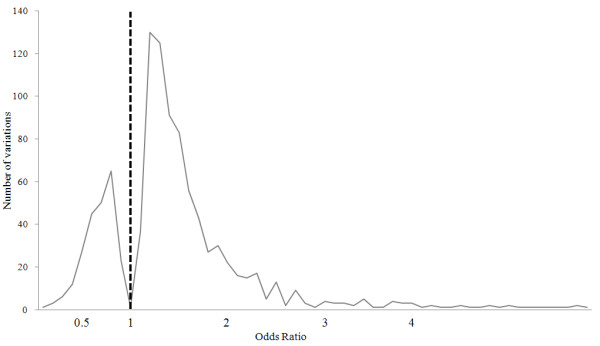
Conclusions: In the database, the association results were grouped as either positive or negative. The gene and SNP names were replaced with gene symbols and rsSNP numbers, the association p-values were determined manually, and the results are displayed by graphs and tables. In addition, the study design in publications, such as the population type and size are described. This database can be used for research purposes, such as an association and functional study of type 2 diabetes related genes, and as a primary genetic resource to construct a diabetes risk test in the preparation of personalized medicine in the future.
Figures
References
Publication types
MeSH terms
LinkOut - more resources
Full Text Sources
Medical
