Overcoming endogenous constraints on neuronal regeneration
- PMID: 21193367
- PMCID: PMC3408542
- DOI: 10.1109/TBME.2010.2103075
Overcoming endogenous constraints on neuronal regeneration
Abstract
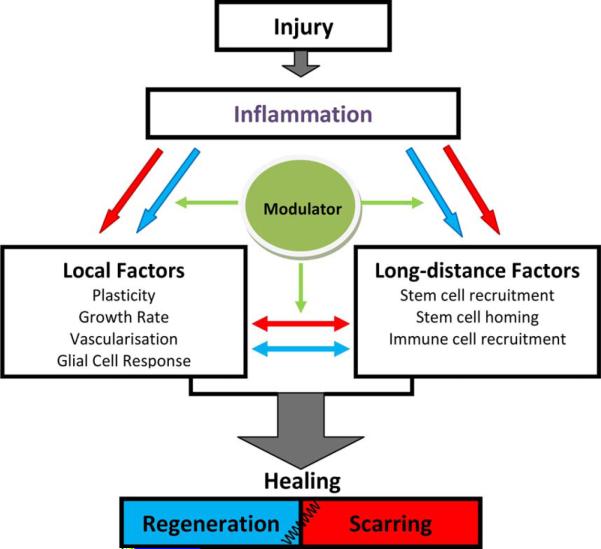
One of the grand challenges in neuroengineering is to stimulate regeneration after central nervous system (CNS) or peripheral nervous system (PNS) injury to restore function. The state of the art today is that PNS injuries heal to a limited extent, whereas CNS injuries are largely intractable to regeneration. In this context, we examine the underlying biochemical and cellular constraints on endogenous healing of neural tissues. Identification and characterization of endogenous "rate-limiting" processes that constrain regeneration would allow one to craft solutions to overcome critical impediments for accelerated healing. It is increasingly evident that biochemical pathways triggered by the nature and duration of injury-triggered inflammatory response may determine the endogenous constraints and subsequently determine regenerative fate. In this paper, critical endogenous constraints of PNS and CNS regeneration are identified, and the effects of modulating the phenotypes of immune cells on neuronal regeneration are discussed.
© 2010 IEEE
Figures