


Direct inhibition of hypocretin/orexin neurons in the lateral hypothalamus by nociceptin/orphanin FQ blocks stress-induced analgesia in rats
- PMID: 21195099
- PMCID: PMC3031765
- DOI: 10.1016/j.neuropharm.2010.12.026
Direct inhibition of hypocretin/orexin neurons in the lateral hypothalamus by nociceptin/orphanin FQ blocks stress-induced analgesia in rats
Abstract
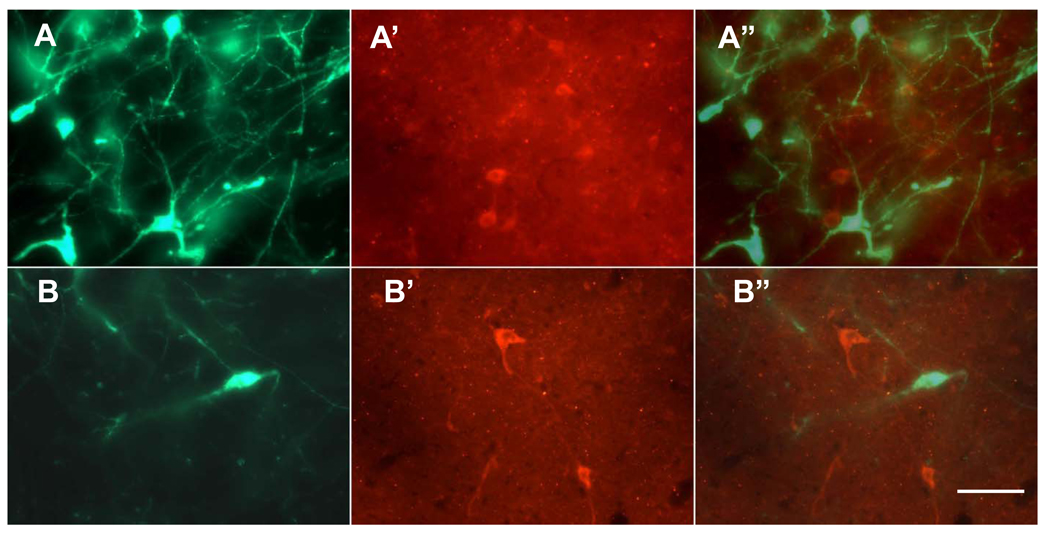
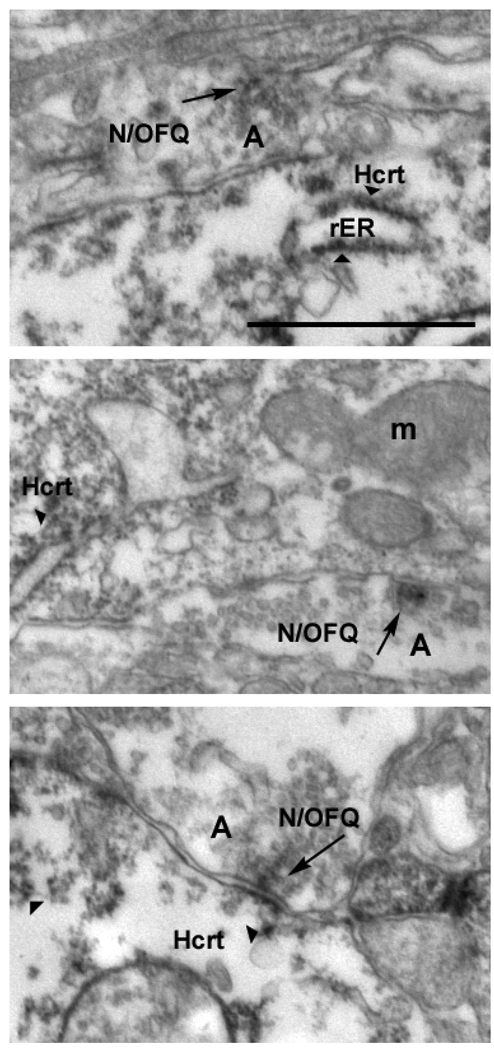
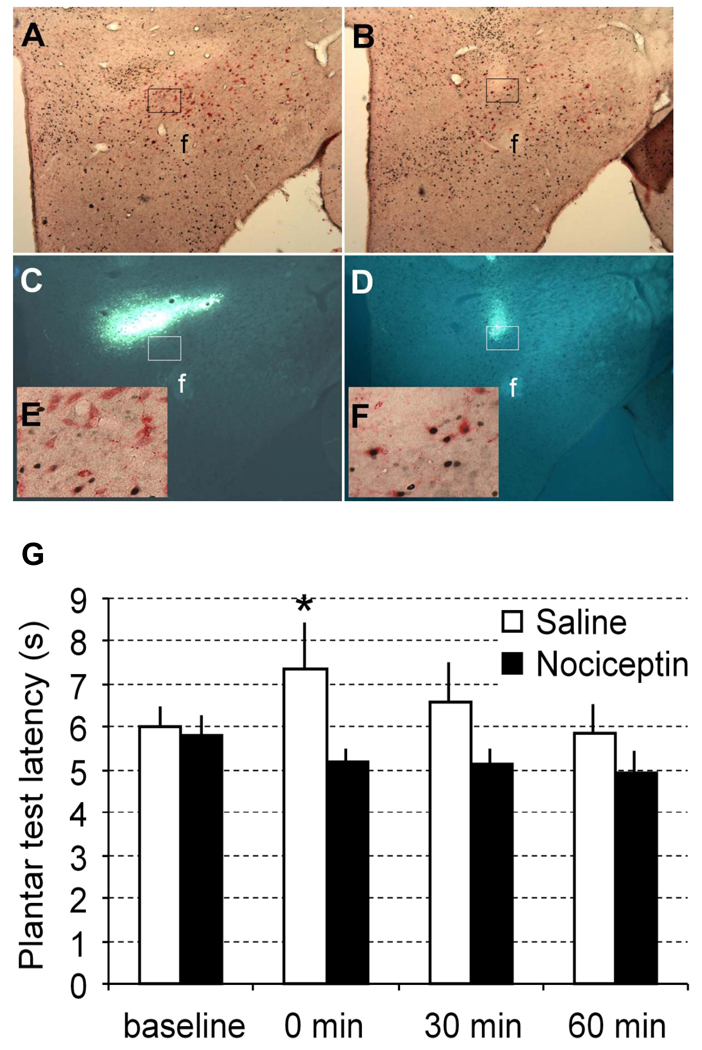
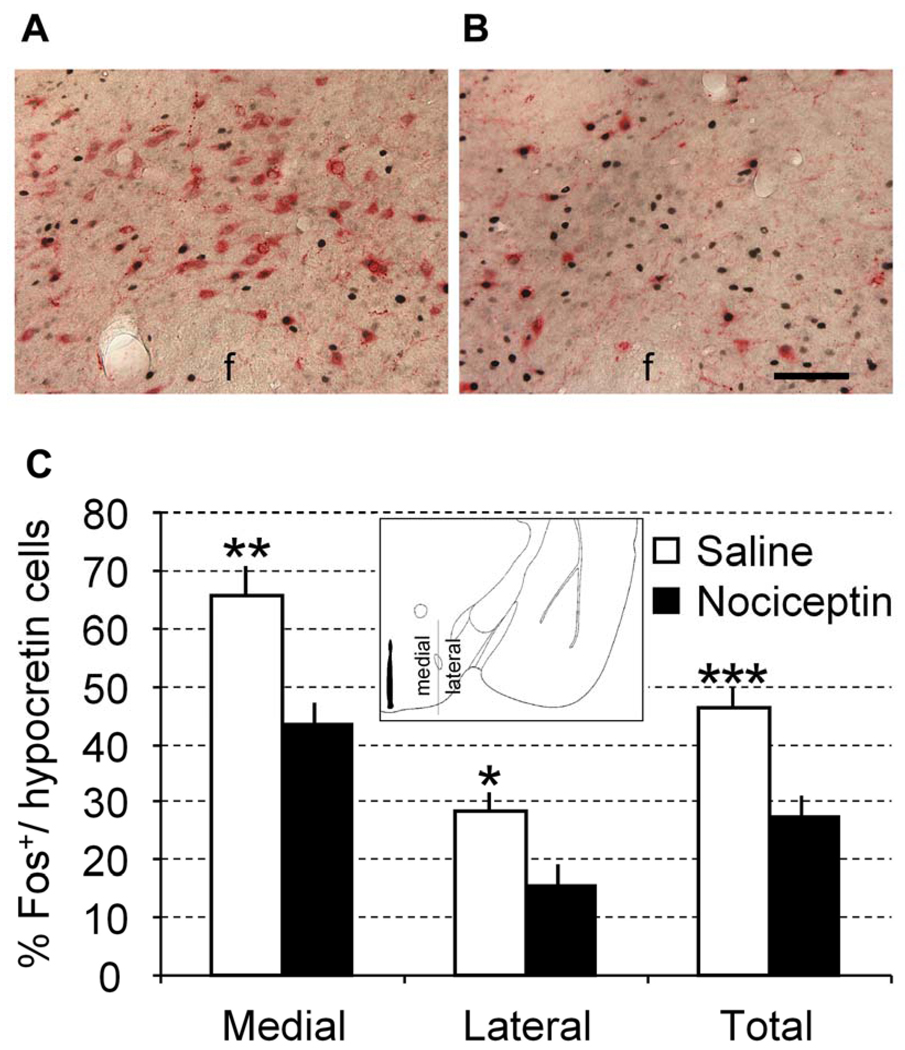
We recently demonstrated that hypocretin/orexin (Hcrt) and nociceptin/orphanin FQ (N/OFQ) systems coordinately regulate nociception in a mouse model of stress-induced analgesia (SIA). However, the site of N/OFQ action on modulation of SIA was elusive, since N/OFQ was administered via intracerebroventricular (i.c.v.) injection acting on widely distributed N/OFQ receptors (NOP) in the brain. In the present study, we tested the hypothesis that N/OFQ modulates the SIA directly via the inhibition of the Hcrt neurons in the lateral hypothalamus. Using both fluorescent and electron microscopy, we found that N/OFQ-containing neurons are located in the lateral hypothalamus and the N/OFQ-containing fibers make direct contacts with the Hcrt neurons. Paw thermal nociceptive test revealed that the immobilization restraint of the rat increased the thermal pain threshold by 20.5 ± 7.6%. Bilateral microinjection of N/OFQ (9 μg/side) into the rat perifornical area of the lateral hypothalamus, the brain area in which the Hcrt neurons are exclusively located, abolished the SIA. Activity of Hcrt neurons in the same animals was assessed using Fos immunohistochemistry. Percentage of Fos(+)/Hcrt neurons was lower in rats injected with N/OFQ than rats injected with saline, with the difference between groups stronger in the Hcrt neurons located medially to the fornix than in Hcrt neurons located laterally to the fornix. These results suggest that N/OFQ modulation of SIA is mediated by direct inhibition of Hcrt neuronal activity in the perifornical area. The uncovered peptidergic interaction circuitry may have broad implication in coordinated modulation by Hcrt and N/OFQ on other stress adaptive responses.
Copyright © 2010 Elsevier Ltd. All rights reserved.
Figures
References
-
- Amit Z, Galina ZH. Stress-induced analgesia: adaptive pain suppression. Physiol Rev. 1986;66:1091–1120. - PubMed
-
- Amit Z, Galina ZH. Stress induced analgesia plays an adaptive role in the organization of behavioral responding. Brain Res.Bull. 1988;21:955–958. - PubMed
-
- Anton B, Fein J, To T, Li X, Silberstein L, Evans CJ. Immunohistochemical localization of ORL-1 in the central nervous system of the rat. J.Comp Neurol. 1996 Apr 29;368:229–251. - PubMed
-
- Blair R, Galina ZH, Holmes LJ, Amit Z. Stress-induced analgesia: A performance deficit or a change in pain responsiveness? Behav.Neural Biol. 1982;34:152–158. - PubMed
-
- Butler RK, Finn DP. Stress-induced analgesia. Prog.Neurobiol. 2009;88:184–202. - PubMed
Publication types
MeSH terms
Substances
Grants and funding
LinkOut - more resources
Full Text Sources
Medical
