


Elsinoë fawcettii and Elsinoë australis: the fungal pathogens causing citrus scab
- PMID: 21199563
- PMCID: PMC6640467
- DOI: 10.1111/j.1364-3703.2010.00663.x
Elsinoë fawcettii and Elsinoë australis: the fungal pathogens causing citrus scab
Abstract
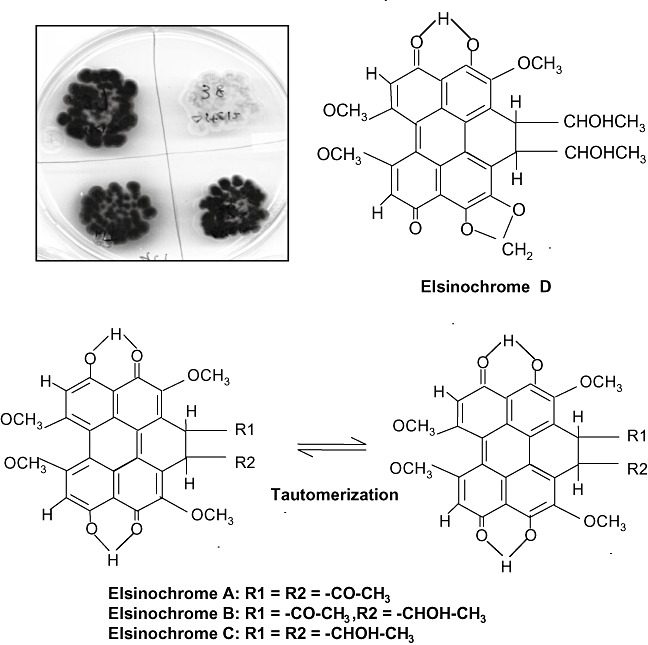
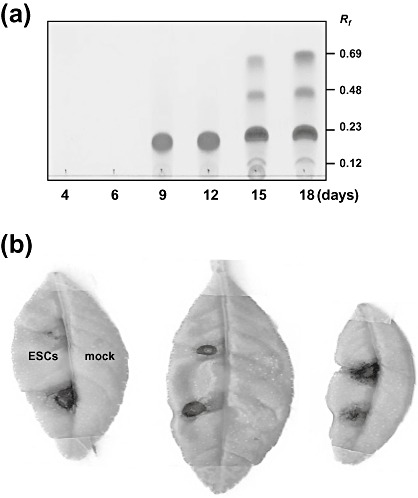
Elsinoë fawcettii and E. australis are important pathogens of citrus. Both species are known to produce red or orange pigments, called elsinochrome. Elsinochrome is a nonhost-selective phytotoxin and is required for full fungal virulence and lesion formation. This article discusses the taxonomy, epidemiology, genetics and pathology of the pathogens. It also provides a perspective on the cellular toxicity, biosynthetic regulation and pathological role of elsinochrome phytotoxin.
Taxonomy: Elsinoë fawcettii (anamorph: Sphaceloma fawcettii) and E. australis (anamorph: S. australis) are classified in the Phylum Ascomycota, Class Dothideomycetes, Order Myriangiales and Family Elsinoaceae.
Host range: Elsinoë fawcettii causes citrus scab (formerly sour orange scab and common scab) on various species and hybrids in the Rutaceae family worldwide, whereas E. australis causes sweet orange scab, primarily on sweet orange and some mandarins, and has a limited geographical distribution.
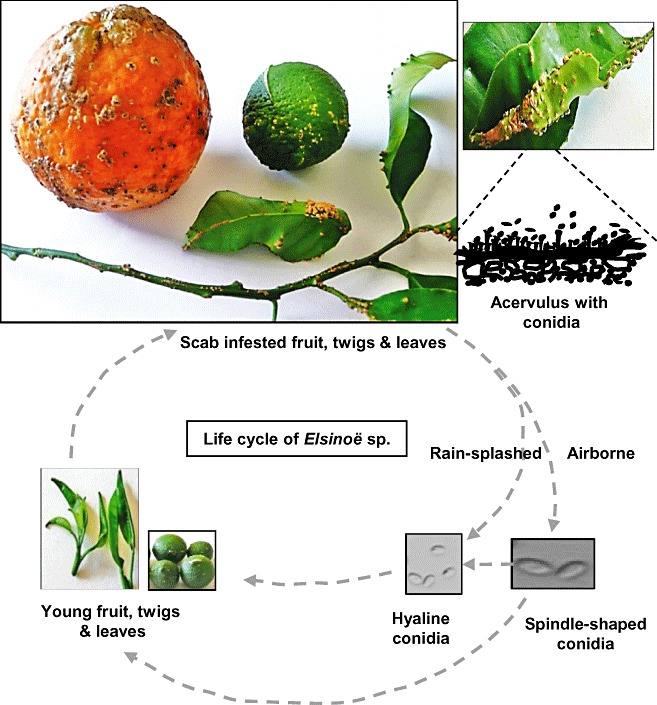
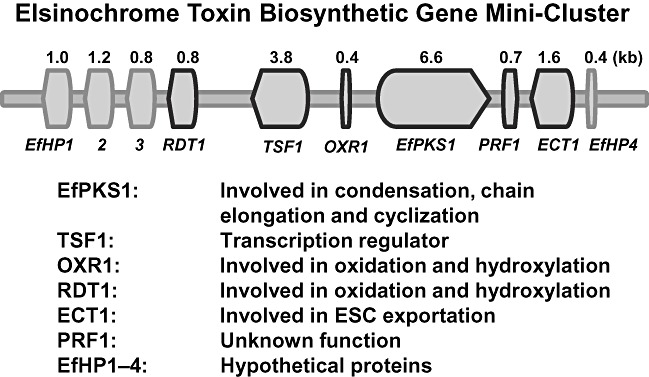
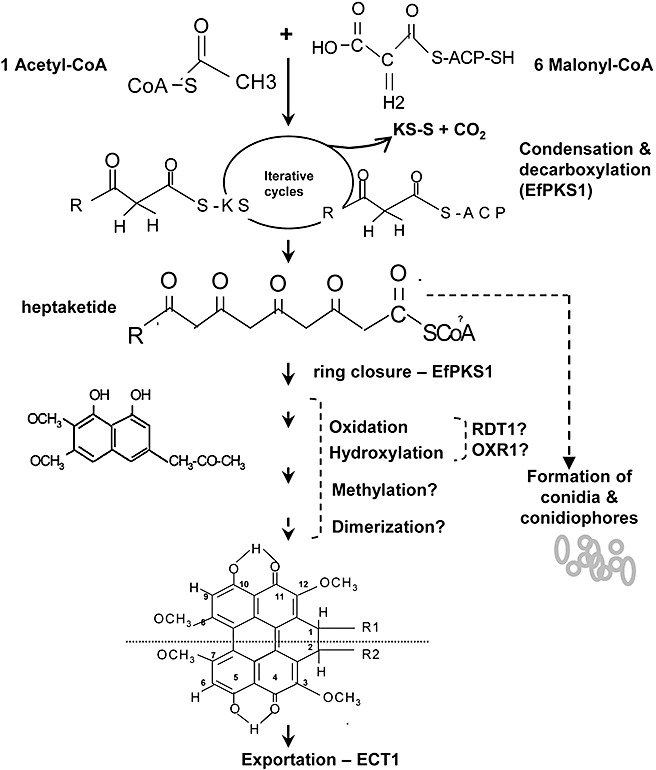
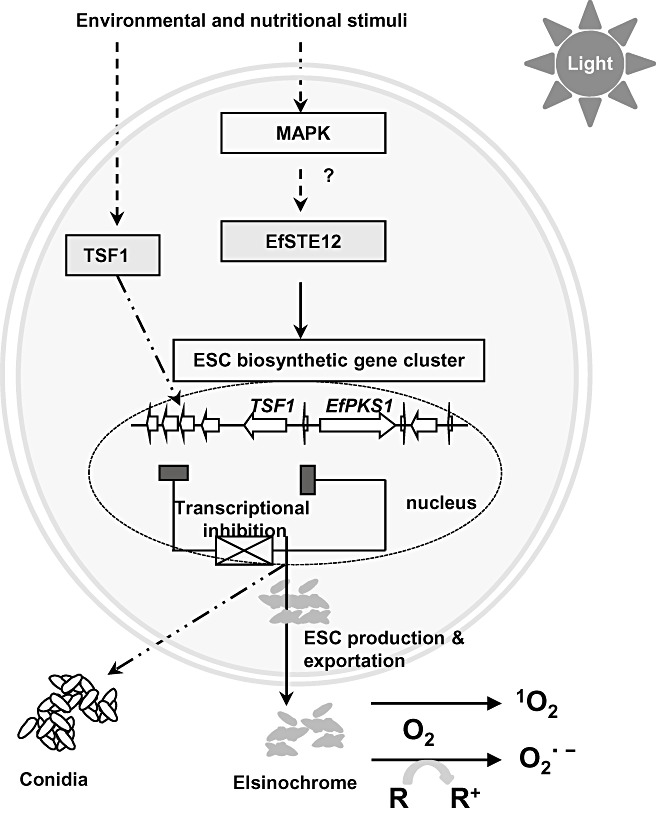
Disease symptoms: Citrus tissues infested with Elsinoë often display erumpent scab pustules with a warty appearance. TOXIN PRODUCTION: Elsinochrome and many perylenequinone-containing phytotoxins of fungal origin are grouped as photosensitizing compounds that are able to absorb light energy, react with oxygen molecules and produce reactive oxygen species, such as superoxide and singlet oxygen. Elsinochrome has been documented to cause peroxidation of cell membranes and to induce rapid electrolyte leakage from citrus tissues. Elsinochrome biosynthesis and conidiation are coordinately regulated in E. fawcettii, and the environmental and physiological inducers commonly involved in both processes have begun to be elucidated.
© 2010 The Author. Molecular Plant Pathology © 2010 BSPP and Blackwell Publishing Ltd.
Figures
References
-
- Adams, T.H. and Yu, J.H. (1998) Coordinate control of secondary metabolite production and asexual sporulation in Aspergillus nidulans . Curr. Opin. Microbiol. 1, 674–677. - PubMed
-
- Agostini, J.P. , Bushong, P.M. , Bhatia, A. and Timmer, L.W. (2003) Influence of environmental factors on severity of citrus scab and melanose. Plant Dis. 87, 1102–1106. - PubMed
-
- Ahonsi, M.O. , Boss, D. , Maurhofer, M. and Défago, G. (2006) Potential environmental fate of elsinochrome A, a perylenequinone toxin produced in culture by bindweed biocontrol fungus Stagonospora convolvuli LA39. Environmentalists, 26, 183–193.
-
- Aminian‐Saghafi, T. , Nasini, G. , Caronna, T. , Braun, A.M. and Oliveros, E. (1992) Quantum yields of singlet‐oxygen production by some natural quinoid fungal metabolites and derivatives. Helv. Chem. Acta, 75, 531–538.
Publication types
MeSH terms
Substances
LinkOut - more resources
Full Text Sources
