


Implications of the immunoregulatory functions of mesenchymal stem cells in the treatment of human liver diseases
- PMID: 21200380
- PMCID: PMC4002992
- DOI: 10.1038/cmi.2010.57
Implications of the immunoregulatory functions of mesenchymal stem cells in the treatment of human liver diseases
Abstract
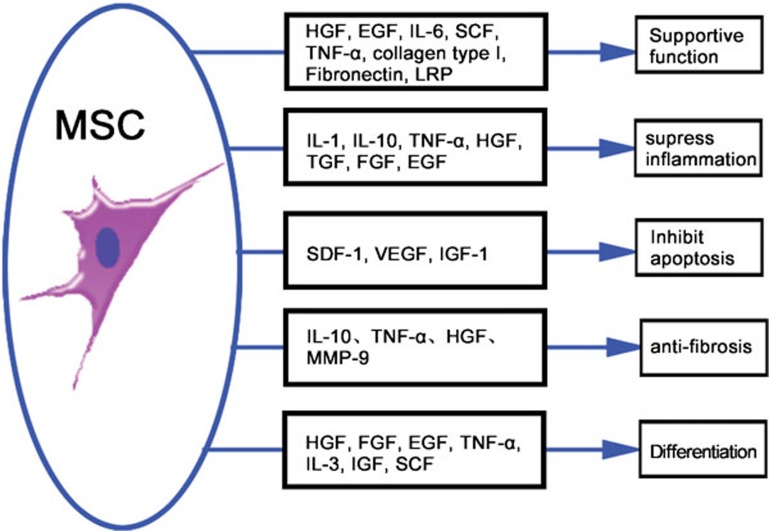
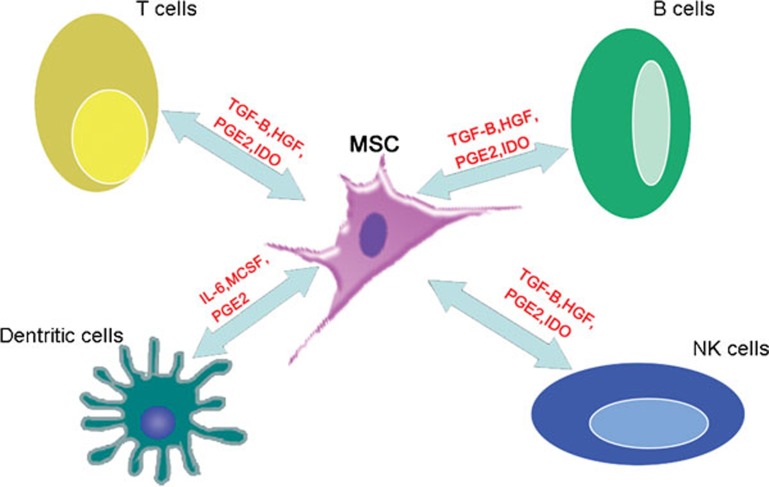
Transplantation of mesenchymal stem cells (MSCs) has been recently studied in animal models, and in clinical trials of patients with fulminant hepatic failure, end-stage liver diseases and inherited metabolic disorders. Modulatory cytokines produced by MSCs can inhibit immunocyte proliferation and migration to the liver, thereby attenuating inflammatory injury and reducing hepatocyte apoptosis. In addition, MSCs play an important role in regressing liver fibrosis and in supporting the function, proliferation and differentiation of endogenous hepatocytes under appropriate conditions. Although remarkable progress has been achieved in basic and clinical MSC studies, optimal therapeutic regimens for the clinical application of MSCs, such as optimal doses, transplantation routine and interval period for transplantation, need to be elucidated in detail. Furthermore, the long-term safety and therapeutic efficacy of MSC transplantation should be evaluated in future clinical trials. This review summarizes our current understanding of the immunomodulatory effects of MSC therapies on human liver diseases.
Figures
References
-
- Jiang Y, Jahagirdar BN, Reinhardt RL, Schwartz RE, Keene CD, Ortiz-Gonzalez XR, et al. Pluripotency of mesenchymal stem cells drived from adult marrow. Nature. 2002;418:41–49. - PubMed
-
- Deng X, Chen YX, Zhang X, Zhang JP, Yin C, Yue HY, et al. Hepatic stellate cells modulate the differentiation of bone marrow mesenchymal stem cells into hepatocyte-like cells. J Cell Physiol. 2008;217:138–144. - PubMed
-
- Okuyama H, Krishnamachary B, Zhou YF, Nagasawa H, Bosch-Marce M, Semenza GL. Expression of vascular endothelial growth factor receptor 1 in bone marrow-derived mesenchymal cells is dependent on hypoxia-inducible factor. J Biol Chem. 2006;281:15554–15563. - PubMed
-
- Aurich H, Sgodda M, Kaltwasser P, Vetter M, Weise A, Liehr T, et al. Hepatocyte differentiation of mesenchymal stem cells from human adipose tissue in vitro promotes hepatic integration in vivo. . Gut. 2009;58:570–581. - PubMed
-
- Bonora-Centelles A, Jover R, Mirabet V, Lahoz A, Bonora-Centelles A, Carbonell F, et al. Sequential hepatogenic trans-differentiation of adipose tissue-derived stem cells: relevance of different extracellular signaling molecules, transcription factors involved and expression of new key marker genes. Cell Transplant. 2009;18:1319–1340. - PubMed
Publication types
MeSH terms
Substances
LinkOut - more resources
Full Text Sources
Medical
